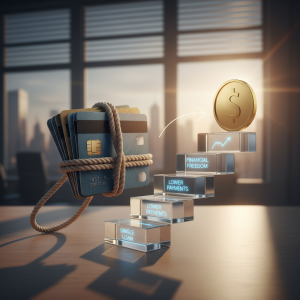







Managing multiple streams of debt can feel like a juggling act where dropping one ball leads to financial chaos. For many, the monthly ritual of tracking various due dates, interest rates, and minimum payments is a source of immense stress. This is where debt consolidation enters the conversation as a powerful tool for regaining control. By combining multiple liabilities into a single obligation, you can streamline your finances and potentially save money. However, approaching this strategy requires knowledge and discipline to ensure it serves as a ladder out of debt rather than a trap.
Debt consolidation is essentially the process of taking out a new loan to pay off other existing debts. These debts are typically unsecured, such as credit cards, medical bills, or personal loans. The primary goal is often to secure a lower interest rate or a fixed interest rate, which can reduce the total cost of the debt over time. But beyond the mathematics, there is a significant psychological benefit to simplifying your financial landscape. Instead of battling five or six creditors, you answer to just one.
The Compelling Reasons: Why You Should Consolidate
The most immediate benefit of debt consolidation is the potential for interest rate reduction. If your current debt consists largely of high-interest credit card balances—which can easily exceed 20% APR—consolidating into a personal loan with a rate of 10% or lower can save you thousands of dollars. This interest arbitrage allows more of your monthly payment to go toward the principal balance rather than vanishing into interest charges, accelerating your payoff timeline.
Another significant ‘why’ is the simplification of your cash flow. Missing a payment on a credit card can trigger late fees and penalty APRs, further damaging your credit score. By consolidating, you have a single due date to remember. This organizational shift reduces the cognitive load of financial management, making it easier to automate payments and avoid accidental delinquencies that drag down your creditworthiness.
Furthermore, debt consolidation can improve your credit score over time. Initially, applying for a new loan might cause a small, temporary dip due to the hard inquiry. However, paying off revolving credit card balances lowers your credit utilization ratio—a major factor in credit scoring models. As you make consistent, on-time payments on the new installment loan, your payment history improves, gradually boosting your overall score.
How to Consolidate: Exploring Your Options
There are several vehicles for consolidating debt, and choosing the right one depends heavily on your credit profile and financial discipline. The most common method is a unsecured personal loan. These loans are offered by banks, credit unions, and online lenders. Because they are unsecured, you do not need to put up collateral, but your interest rate will be heavily dependent on your credit score.
Another popular method is using a balance transfer credit card. These cards often offer a 0% introductory APR for a specific period, usually between 12 to 21 months. If you can aggressively pay down the debt within this window, this can be the cheapest way to consolidate. However, it requires strict discipline; if the balance isn’t paid off before the promotional period ends, the interest rate may skyrocket to levels higher than your original cards.
For homeowners, a Home Equity Loan or Line of Credit (HELOC) is an option. These are secured loans using your home as collateral. Because the lender has security, interest rates are typically much lower than personal loans. However, this method carries the highest risk: if you fail to make payments, you could face foreclosure and lose your home. This path should only be taken if your income is stable and the savings are substantial.
Strategies to Consolidate Wisely
To consolidate debt wisely, you must first perform a thorough financial audit. List all your debts, their interest rates, and monthly payments. Compare the weighted average interest rate of your current debts against the rate offered by a consolidation loan. If the new loan’s APR isn’t significantly lower, or if the origination fees outweigh the interest savings, consolidation may not be the right move mathematically.
It is crucial to read the fine print regarding fees. Many personal loans come with origination fees ranging from 1% to 8% of the loan amount. Balance transfer cards usually charge a transfer fee of 3% to 5%. These costs must be factored into your decision-making process to ensure that the consolidation actually yields a net positive financial result.
One of the most critical steps in wise consolidation is closing the spending loop. A common pitfall occurs when an individual pays off their credit cards with a consolidation loan but fails to change their spending habits. With zero balances on their cards, the temptation to spend returns, leading to a scenario where they have the new consolidation loan payment plus new credit card debt. This is known as ‘double-dipping’ and leads to financial disaster.
Developing a budget is non-negotiable. Once the consolidation is active, your focus must shift to cash flow management. Ensure that the monthly payment on your consolidation loan fits comfortably within your budget. If the term of the new loan is too long, you might end up paying more in interest over the life of the loan, even if the rate is lower. Aim for the shortest term you can afford to maximize savings.
When to Seek Professional Help
If your debt load is overwhelming and your credit score is too low to qualify for favorable consolidation rates, a Debt Management Plan (DMP) might be the wiser choice. Offered by non-profit credit counseling agencies, a DMP involves the agency negotiating with your creditors to lower interest rates and waive fees. You make one payment to the agency, and they distribute it to your creditors. Unlike settlement companies, they do not advise you to stop paying, preserving your credit integrity better than bankruptcy.
Ultimately, debt consolidation is a strategic maneuver, not a magic wand. It reorganizes debt to make it more manageable and less expensive, but it does not erase the obligation. By understanding the ‘why’—lower rates and simplicity—and executing the ‘how’ with discipline and foresight, you can use consolidation as a stepping stone toward a debt-free future and lasting financial stability.