






Living with debt has become a normalized part of modern society, yet it remains one of the most significant barriers to building true wealth and achieving financial independence. Whether it is student loans, credit card balances, or a hefty mortgage, debt acts as an anchor that drags down your financial potential. Understanding why you should pay off debt faster is the first step toward reclaiming your paycheck and reducing financial anxiety. This comprehensive guide will explore the compelling reasons to accelerate your repayment and provide actionable strategies on how to do it effectively.
The most obvious reason to eliminate debt quickly is the sheer cost of borrowing. Interest payments are essentially the price you pay for using someone else’s money, and over time, this cost can be astronomical. By paying off debt faster, you stop the bleeding of your hard-earned income into the pockets of lenders. Compound interest works against you when you are in debt; however, once that debt is gone, you can flip the equation and make compound interest work for you through investments. Every dollar saved on interest is a dollar that can be directed toward your future self.
Beyond the mathematics of finance, there is a profound psychological impact associated with being in the red. Debt often carries a heavy mental load, contributing to stress, sleep deprivation, and relationship strain. The feeling of owing money can limit your life choices, forcing you to stay in a job you dislike or delaying major life milestones like marriage or starting a family. Achieving a debt-free status provides an unparalleled sense of peace of mind and freedom, allowing you to live life on your own terms rather than at the behest of creditors.
Another critical factor is your credit score. High levels of revolving debt, particularly relative to your credit limits (credit utilization ratio), can severely damage your creditworthiness. By paying down balances aggressively, you lower your utilization ratio, which is a major factor in credit scoring models. A better credit score opens doors to lower interest rates on future necessities, such as a mortgage for a home or insurance premiums, creating a positive cycle of financial health.
Now that we understand the ‘why,’ we must pivot to the ‘how.’ Successfully paying off debt faster requires more than just good intentions; it demands a strategic plan. The foundation of any debt payoff strategy is a solid, realistic budget. You cannot accelerate payments if you do not know where your money is going. Start by auditing your finances to identify surplus cash flow—or create it by cutting discretionary spending—that can be reallocated toward your debt payments.
Strategy 1: The Debt Snowball Method
One of the most popular methods for debt elimination is the Debt Snowball. popularized by financial experts like Dave Ramsey, this approach focuses on behavioral psychology rather than pure math. You list your debts from smallest balance to largest balance, regardless of the interest rate. You make minimum payments on everything else but attack the smallest debt with every extra dollar you have. When the smallest debt is gone, you roll that payment amount into the next smallest debt. The quick wins build momentum and motivation, which are crucial for long-term adherence to the plan.
Strategy 2: The Debt Avalanche Method
If you are motivated by numbers and efficiency, the Debt Avalanche method might be superior. In this strategy, you list your debts from the highest interest rate to the lowest. You focus your extra payments on the debt with the highest interest rate while paying minimums on the rest. Mathematically, this method saves you the most money in interest over time and gets you out of debt the fastest. However, it requires discipline, as it may take longer to see the first debt completely disappear compared to the Snowball method.
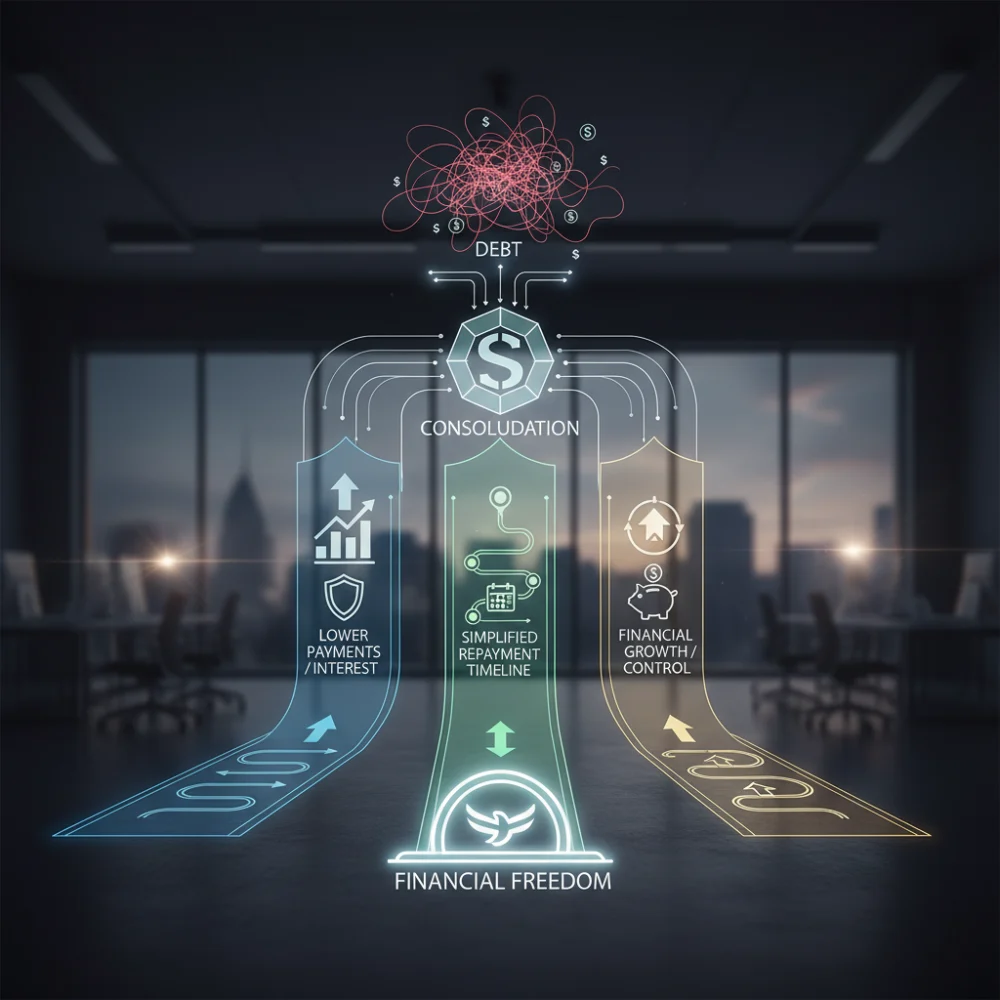
Whichever method you choose, the key is consistency. However, there are ways to supercharge your efforts. Consider debt consolidation if you have high-interest credit card debt. This involves taking out a personal loan with a lower interest rate to pay off multiple credit cards, or using a balance transfer credit card with a 0% introductory APR. This simplifies your payments into one monthly bill and reduces the interest accumulation, allowing more of your payment to go toward the principal balance.
Increasing your income is another powerful lever to pull. While cutting expenses has a floor (you still need to eat and have shelter), your income potential is theoretically unlimited. Taking on a side hustle, freelancing, or selling unused items around the house can generate immediate cash that should be applied directly to your debt. Even an extra $200 or $300 a month can shave years off your repayment timeline.
It is also essential to examine your ‘big wins’ regarding expenses. While skipping the daily latte helps, reducing major fixed costs moves the needle faster. This might mean refinancing your mortgage to a lower rate, shopping around for cheaper car insurance, or even downsizing your living arrangements temporarily. These structural changes to your budget free up significant capital that can be weaponized against your debt.
Another often-overlooked tactic is simply asking for a lower interest rate. Call your credit card issuers and negotiate. If you have a history of on-time payments, they may be willing to lower your APR to keep you as a customer. A reduction of even a few percentage points can save you hundreds of dollars, which can then be used to pay down the principal faster.
Automating your payments is a technical step that ensures you never miss a beat. Set up automatic transfers for your minimum payments to avoid late fees and penalty APRs. Then, manually make your extra payments based on your chosen strategy (Snowball or Avalanche). Automation removes the willpower variable from the equation, ensuring that your debt repayment becomes a non-negotiable part of your monthly routine.
Throughout this journey, it is vital to build a small emergency fund—typically $1,000 or one month of expenses—before aggressively attacking debt. Without this buffer, an unexpected car repair or medical bill could force you to borrow more money, effectively undoing your hard work. This safety net prevents the cycle of debt from restarting while you are trying to end it.
Staying motivated is perhaps the hardest part of the process. Debt fatigue is real. To combat this, track your progress visually. Create a chart or use an app to watch your balances decrease. Celebrate milestones, such as paying off a specific card or reaching the halfway mark, with non-monetary rewards. surrounding yourself with a community of like-minded individuals, whether online or in person, can also provide accountability and encouragement.
In conclusion, learning how to pay off debt faster is a transformative journey that goes beyond bank balances. It is about reclaiming your future. By understanding the financial and emotional weight of debt and applying structured strategies like the Snowball or Avalanche methods, you can break free from the chains of borrowing. Start today, even if it is small; the path to financial freedom begins with the decision to take control.