





In the world of personal finance, the word "debt" often carries a heavy stigma. Many people are raised with the belief that all debt is dangerous and should be avoided at all costs. However, this black-and-white thinking can severely limit your financial potential. To truly build wealth and achieve financial stability, it is essential to understand the nuanced difference between good debt and bad debt. By mastering these concepts, you can transform debt from a burden into a powerful tool for economic growth.
Defining Good Debt: The Path to Wealth Creation
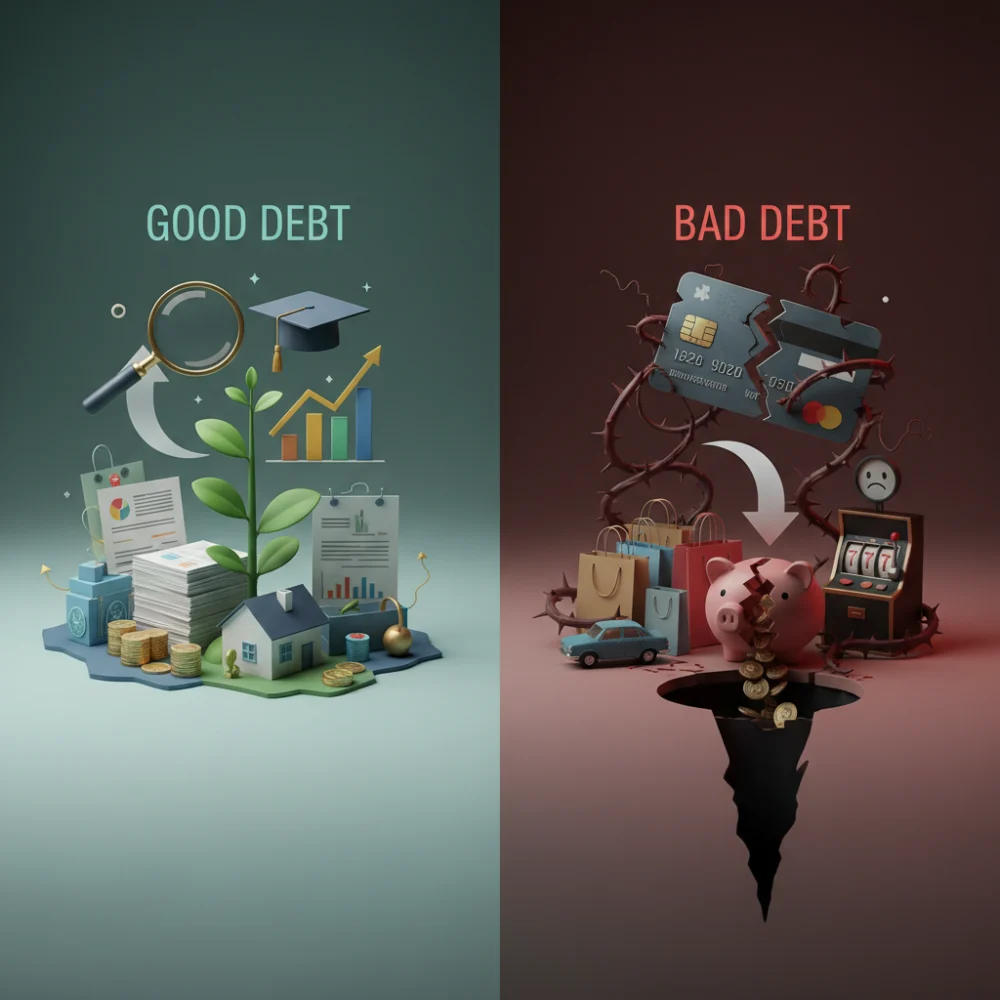
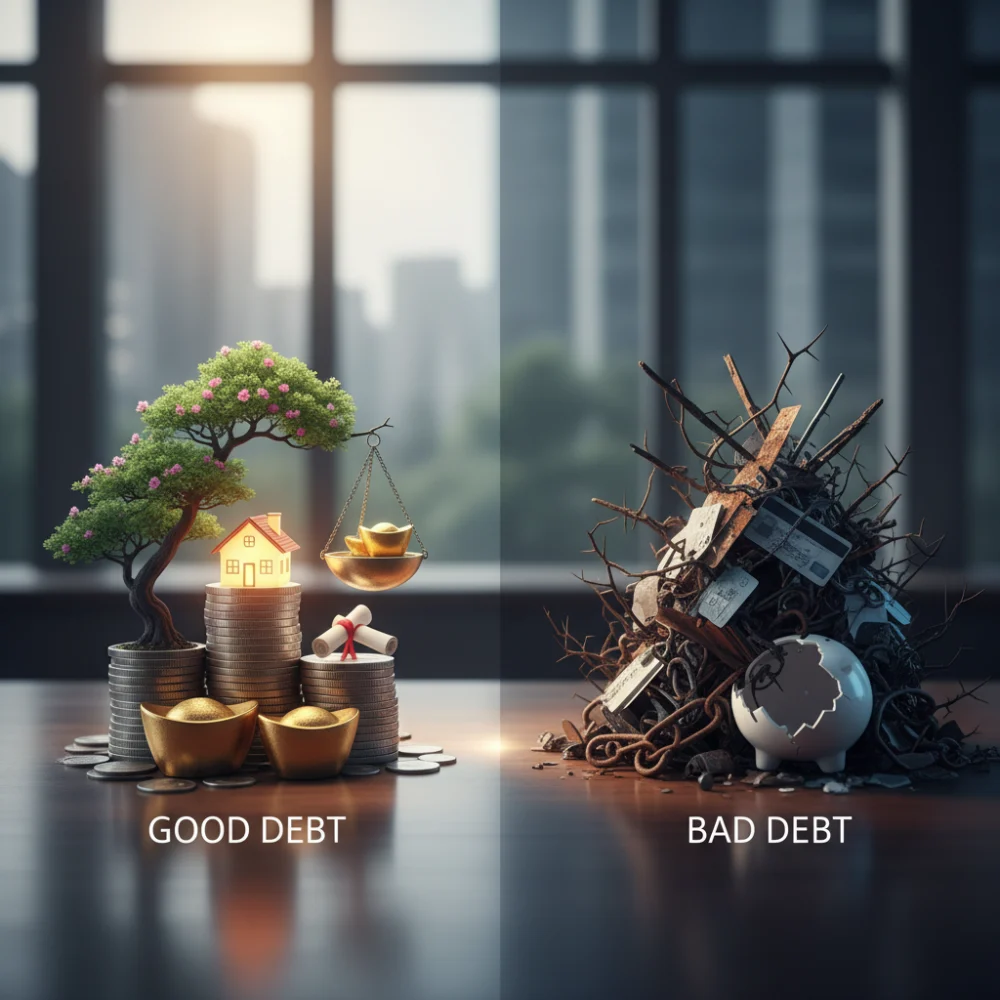
Good debt is defined as money borrowed to purchase assets that are expected to increase in value or generate income over time. The fundamental principle behind good debt is the concept of positive leverage. When you take on this type of liability, you are essentially betting on your future self or an asset to outperform the cost of borrowing. This approach allows individuals to acquire assets they otherwise could not afford upfront, thereby accelerating their journey toward financial independence.
One of the most common examples of good debt is a mortgage. While taking out a loan for hundreds of thousands of dollars can be daunting, real estate generally appreciates in value over the long term. Furthermore, if the property is used for rental purposes, the income generated can often cover the mortgage payments and maintenance costs, resulting in positive cash flow. In this scenario, the debt is serving you, rather than you serving the debt.
Another classic form of good debt is a student loan, provided the degree leads to a career with higher earning potential. Investing in your education is effectively investing in your human capital. Statistics consistently show that individuals with higher education degrees tend to have higher lifetime earnings compared to those without. However, it is crucial to calculate the Return on Investment (ROI) carefully; borrowing heavily for a degree in a field with low employment prospects may turn what should be good debt into a financial burden.
Small business loans also fall under the category of good debt. Entrepreneurs often require capital to purchase equipment, hire staff, or expand operations. If the business succeeds, the profits generated from this infusion of capital will far exceed the interest paid on the loan. This is the essence of using other people’s money (OPM) to build personal wealth. Without access to this type of financing, many successful businesses would never have gotten off the ground.
The Trap of Bad Debt: Wealth Destruction
Conversely, bad debt is money borrowed to purchase depreciating assets or to fund consumption. This type of debt does not generate income and does not increase in value. Instead, it creates a financial drain that can cripple your ability to save and invest. The hallmark of bad debt is that it makes you poorer the longer you hold it, primarily due to high interest rates and the loss of asset value.
The most notorious culprit of bad debt is high-interest credit card debt used for non-essential purchases. Using a credit card to buy clothes, electronics, or vacations—and then failing to pay the balance in full—results in paying significantly more for those items than their sticker price due to compound interest. Interest rates on credit cards can often exceed 20%, making it incredibly difficult to dig out of the hole once you fall behind.
Auto loans for brand-new luxury vehicles are another common form of bad debt. While a car is necessary for transportation, borrowing a large sum to buy a new car is financially inefficient because vehicles depreciate rapidly. The moment you drive a new car off the lot, it loses a significant percentage of its value. If you are paying interest on a loan for an asset that is worth less every single day, you are engaging in a wealth-destroying activity.
Payday loans and other predatory lending practices represent the absolute worst of bad debt. These loans often come with astronomical interest rates and fees, targeting individuals who are already in financial distress. Reliance on these financial products creates a cycle of dependency that is nearly impossible to break without drastic lifestyle changes or intervention. Avoiding these traps is paramount to maintaining financial health.
The Gray Areas and Risk Management
It is important to acknowledge that the line between good and bad debt can sometimes blur depending on your financial situation and the broader economic environment. For example, a Home Equity Line of Credit (HELOC) used to renovate a kitchen might increase the home’s value (good debt), but if used to pay for a luxury cruise, it becomes bad debt. Similarly, investment leverage (margin debt) is good when the market is up but can be catastrophic during a market crash.
Risk tolerance plays a massive role in how you should approach debt. Even "good" debt carries risk. If you lose your job, you still have to pay your mortgage. If your business fails, the loan doesn’t disappear. Therefore, understanding good vs. bad debt isn’t just about the asset class; it is also about affordability. A mortgage that consumes 50% of your take-home pay is risky, regardless of whether the house is appreciating.
Another factor to consider is the tax implication of your debt. In many jurisdictions, the interest paid on mortgages or student loans is tax-deductible, which effectively lowers the cost of borrowing. In contrast, interest on credit cards and personal loans is rarely deductible. This tax efficiency is another reason why strategic borrowing can be advantageous for wealthy individuals who understand the tax code.
Strategies for Debt Optimization
To optimize your financial health, you should adopt a strategy of eliminating bad debt while managing good debt responsibly. Two popular methods for clearing bad debt are the "Avalanche Method" (paying off the highest interest rate first) and the "Snowball Method" (paying off the smallest balance first for psychological wins). Prioritizing the elimination of high-interest consumer debt releases cash flow that can then be redirected toward investments.
Once bad debt is eliminated, focus on leveraging good debt to accelerate wealth. This might mean refinancing a mortgage to secure a lower interest rate or taking a calculated business loan to scale operations. The goal is to ensure that the cost of the debt is always lower than the rate of return on the asset it funds. This arbitrage is the secret weapon of the financially savvy.
Ultimately, understanding the distinction between good and bad debt empowers you to make smarter decisions. It moves you from a place of fear—where all borrowing is evil—to a place of strategy, where money is a tool. By minimizing liabilities that take money out of your pocket and maximizing assets that put money in, you lay a solid foundation for long-term prosperity.