





In the world of personal finance, the word "debt" often carries a heavy stigma. Many people are raised with the belief that all debt is inherently evil and should be avoided at all costs. However, this black-and-white thinking can actually hinder your ability to build substantial wealth. To truly master your financial destiny, it is crucial to understand the nuanced secrets behind good debt vs. bad debt. By distinguishing between the two, you can transform debt from a burden into a powerful tool.
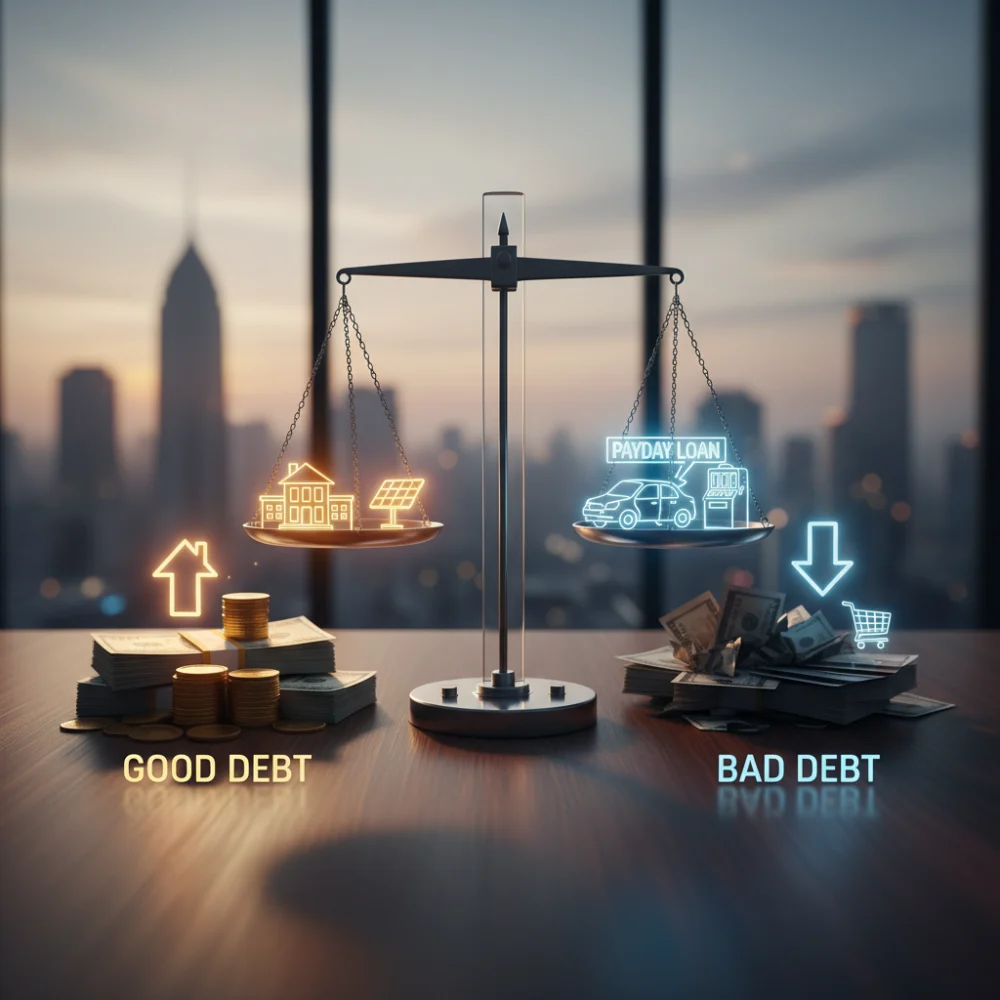
The fundamental difference between good and bad debt lies in the outcome of the borrowing. Simply put, good debt helps you generate income or increases your net worth over time, while bad debt drains your wealth and ties up your future income for things that lose value. Understanding this distinction is the first step toward financial literacy and long-term stability.
Defining Good Debt: The Path to Wealth Creation
Good debt is often referred to as "investment debt." It involves borrowing money to purchase assets that are likely to appreciate in value or generate a steady stream of income. The logic here is that the return on investment (ROI) will eventually outweigh the cost of the interest paid on the loan. This is the secret weapon used by wealthy individuals and corporations to expand their portfolios without liquidating their cash reserves.
One of the most common examples of good debt is a mortgage. When you borrow money to buy a home or a rental property, you are acquiring an asset that historically appreciates over time. Furthermore, real estate loans often come with tax advantages, such as mortgage interest deductions, which further reduces the effective cost of borrowing. If the property generates rental income that covers the mortgage and expenses, the debt is effectively paying for itself.
Another prime example is student loans, provided the education leads to a career with higher earning potential. While the cost of education is high, the increase in lifetime earnings can make the debt a worthwhile investment in your human capital. Similarly, small business loans can be considered good debt if the capital is used to expand operations, buy equipment, or launch a product that increases profitability.
The Trap of Bad Debt: Wealth Destruction
Conversely, bad debt is borrowing money to purchase depreciating assets or to fund a lifestyle you cannot afford. This type of debt does not generate income; instead, it creates a financial obligation that becomes harder to satisfy as interest accumulates. The defining characteristic of bad debt is that the item purchased loses value the moment you buy it, yet you continue to pay interest on it for months or years.
Credit card debt is the most notorious form of bad debt. With interest rates often exceeding 20%, carrying a balance on a credit card for consumer goods—like clothes, electronics, or dining out—is a rapid way to destroy wealth. You are essentially paying a premium for items that have no resale value, compounding the cost of your daily life.
Payday loans and high-interest personal loans for vacations or luxury items also fall into this category. These debts prey on the need for instant gratification. The secret danger here is the trap of minimum payments; by paying only the minimum, you service the interest without making a dent in the principal, keeping you in a cycle of debt for years.
The Gray Area: Context Matters
It is important to note that not all debt fits perfectly into one category; context matters. For example, an auto loan is generally considered bad debt because vehicles depreciate rapidly. However, if that vehicle is essential for you to get to work and earn an income, and the loan has a very low interest rate, it can be justified as a necessary expense. The key is to avoid over-borrowing for a luxury vehicle when a modest one would suffice.
Similarly, borrowing to consolidate debt can be a strategic move. If you take out a lower-interest personal loan to pay off high-interest credit cards, you are technically taking on new debt. However, this is a strategic maneuver to reduce interest costs and accelerate payoff, moving you closer to financial freedom.
The Secret of Leverage
The most profound secret regarding good debt is the concept of leverage. Leverage allows you to use other people’s money (the bank’s) to amplify your returns. For instance, if you put $20,000 down on a $100,000 property and the property value rises by 5%, your asset is now worth $105,000. That $5,000 gain represents a 25% return on your actual cash investment ($20,000), not just a 5% return. This power of leverage is why real estate investors love good debt.
However, leverage cuts both ways. If the asset value drops, your losses are also amplified relative to your equity. This is why understanding risk management is a critical component of utilizing good debt. You must ensure you have the cash flow to service the debt regardless of market fluctuations.
Strategies for Managing Your Debt Profile
To optimize your financial health, you should aim to eliminate bad debt aggressively while managing good debt responsibly. Use the avalanche method (paying off highest interest rates first) or the snowball method (paying off smallest balances first) to tackle consumer debt. Once the bad debt is gone, you can redirect that cash flow into investments or paying down good debt faster.
Furthermore, maintaining a healthy credit score is essential. A high credit score gives you access to lower interest rates, turning potential bad debt (like a car loan) into more manageable debt and maximizing the profitability of good debt (like a mortgage). Your creditworthiness is a valuable asset that needs protection.
In conclusion, simply avoiding all debt is a defensive strategy that may keep you safe, but it rarely makes you wealthy. By understanding the secrets of good debt vs. bad debt, you can transition to an offensive financial strategy. Eliminate the consumer debt that drags you down, and use strategic, low-interest borrowing to acquire assets that lift you up. This shift in mindset is the cornerstone of building lasting generational wealth.