





In the complex world of personal finance, the word "debt" often carries a negative connotation. Many people are raised with the belief that all debt is harmful and should be avoided at all costs. However, this simplified view can hinder your ability to build wealth. To truly master your financial destiny, it is imperative to understand the nuance between good debt and bad debt. Not all borrowing is created equal, and knowing the difference is the cornerstone of financial literacy.
Understanding good debt vs. bad debt is not just about definitions; it is about strategy. Wealthy individuals often use debt as a lever to increase their net worth, while others find themselves trapped in a cycle of repayment that stifles their economic growth. By analyzing the return on investment (ROI) and the interest rates associated with borrowing, you can make informed decisions that serve your long-term goals.
What Defines Good Debt?
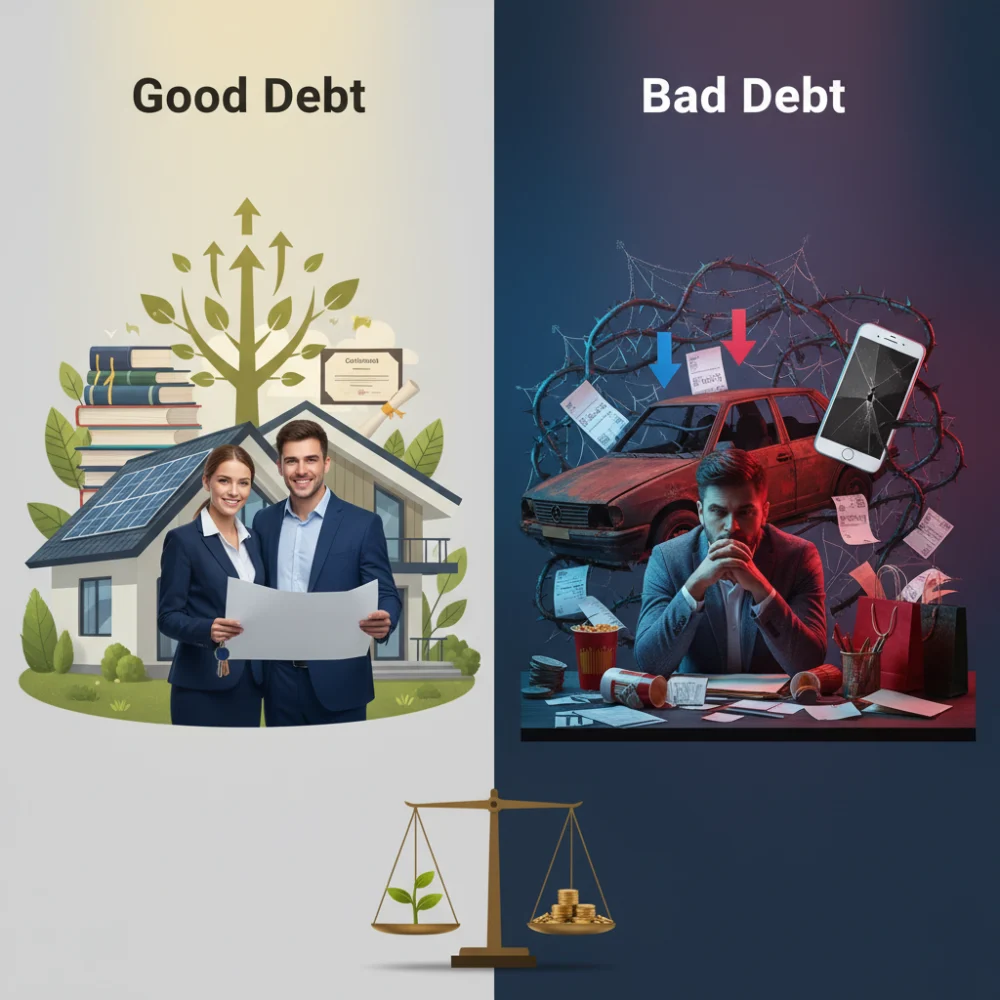
Good debt is generally characterized as money borrowed to purchase an asset that will appreciate in value or generate income over time. The underlying philosophy is that the debt will eventually pay for itself and leave you with a profit or a more valuable asset. essentially, good debt is an investment in your future self.
One of the primary indicators of good debt is the potential for a positive Return on Investment (ROI). If the money you borrow allows you to earn more money than the cost of the interest you are paying, it is working in your favor. Additionally, good debt often comes with lower interest rates and, in some tax jurisdictions, the interest payments may be tax-deductible.
Here are some classic examples of what financial experts consider good debt:
- Mortgages: Borrowing money to buy a home is the most common form of good debt. Real estate historically appreciates over time, and a mortgage allows you to build equity in an asset rather than paying rent.
- Student Loans: While controversial due to rising costs, education debt is often considered good because it increases your earning potential. A degree or certification can lead to a higher salary that outweighs the cost of the loan over a lifetime.
- Small Business Loans: Borrowing capital to start or expand a business can generate significant cash flow and enterprise value, far exceeding the cost of the loan.
The Reality of Bad Debt
In contrast, bad debt is money borrowed to purchase depreciating assets or for consumption. This type of debt does not generate income and does not increase in value. Instead, it drains your wealth through high-interest payments and leaves you with items that are worth less than what you paid for them the moment you purchase them.
Bad debt is often the result of living beyond one’s means. It is characterized by high interest rates and is used to fulfill immediate desires rather than long-term goals. The danger of bad debt lies in the compound interest that works against you, causing the amount you owe to balloon rapidly if not managed correctly.
Common forms of bad debt that you should strive to minimize or eliminate include:
- High-Interest Credit Cards: Using credit cards for consumables like clothes, dining out, or vacations without paying the balance in full is a wealth killer. The interest rates are often exorbitant.
- Payday Loans: These are predatory loans with astronomical interest rates intended for short-term relief but often lead to long-term financial ruin.
- Auto Loans for Luxury Vehicles: While a car is necessary for many, borrowing a large sum for a rapidly depreciating luxury vehicle is considered bad debt because the asset loses value daily.
The Gray Area of Borrowing
It is important to note that the line between good and bad debt can sometimes be blurred. For example, a consolidation loan might be considered "good" if it lowers your overall interest rate and helps you pay off bad debt faster. Conversely, a "good" investment like a home can become bad debt if you buy a property you cannot afford or if the housing market crashes.
Furthermore, borrowing for a car is often necessary to get to work and earn an income. In this specific context, a modest auto loan with a low interest rate falls into a gray area. It facilitates income generation, but because the car depreciates, it is not a true investment. The key is moderation and ensuring the loan terms are favorable.
Tips for Managing Your Debt Profile
1. Calculate Your Debt-to-Income Ratio: Before taking on new debt, always understand your current financial standing. Lenders look at this ratio to determine your creditworthiness. Keeping this ratio low ensures you are not over-leveraged, regardless of whether the debt is good or bad.
2. Prioritize High-Interest Repayment: If you have a mix of debts, adopt the "avalanche method." Focus all your extra payments on the debt with the highest interest rate (usually bad debt like credit cards) while making minimum payments on others. This strategy saves you the most money in the long run.
3. Leverage Good Debt Responsibly: Just because a loan is considered "good debt" does not mean you should max out your borrowing capacity. Always run the numbers. Ensure that the projected return on investment (e.g., rental income or salary increase) realistically covers the debt service and provides a profit.
In conclusion, understanding good debt vs. bad debt is a fundamental skill for financial success. By avoiding high-interest consumer debt and strategically using low-interest loans to acquire appreciating assets, you can accelerate your journey toward financial freedom. Remember, debt is a tool; how you use it determines whether it builds your house or tears it down.