





Understanding the distinction between good debt and bad debt is a fundamental pillar of financial literacy. While many people are taught from a young age that all debt should be avoided, the reality of modern finance is more nuanced. Debt is essentially a tool, and like any tool, its value depends entirely on how it is utilized by the borrower. When used strategically, debt can act as a catalyst for wealth creation, but when used recklessly, it can lead to a cycle of poverty and financial instability.
What Defines Good Debt?
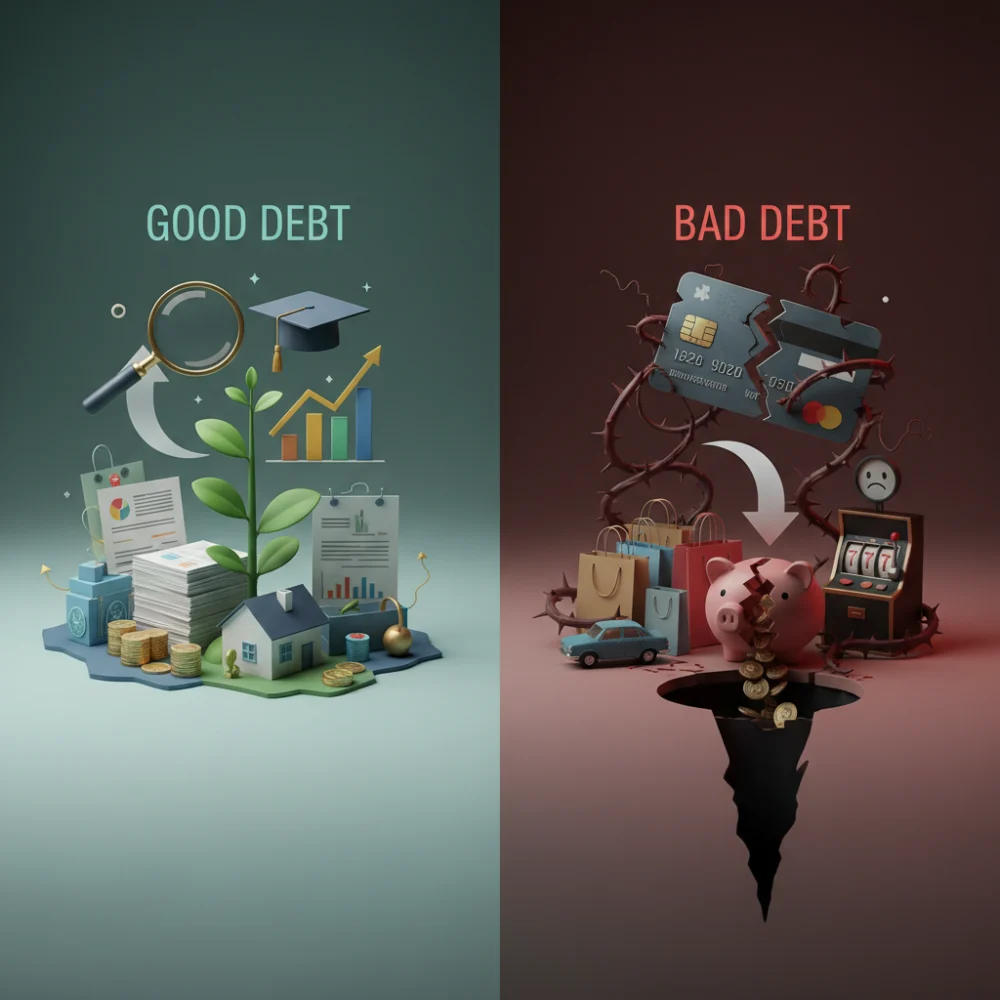
Good debt is generally defined as money borrowed for things that have the potential to increase your net worth or generate future income. These are often considered investments in your future self or your financial portfolio. Good debt typically carries lower interest rates and provides long-term benefits that outweigh the initial cost of borrowing. Examples include education, real estate, and business ventures.
A mortgage is perhaps the most common example of good debt. Since real estate generally appreciates over time, borrowing money to buy a home allows you to build equity. Instead of paying rent, which offers no return, your monthly mortgage payments contribute to an asset you own. Furthermore, mortgage interest is often tax-deductible in many jurisdictions, making it an even more attractive form of leverage.
Student loans are another classic example of good debt, provided they are used to obtain a degree in a field with strong earning potential. Education is an investment in human capital. By borrowing to increase your skills and knowledge, you are effectively increasing your lifetime earning capacity, which should theoretically allow you to pay back the loan and still come out ahead financially.
Business loans also fall into the category of good debt when they are used to start or expand a profitable enterprise. Entrepreneurs use debt to purchase equipment, hire talent, or scale operations. If the return on investment (ROI) from the business activities exceeds the interest rate on the loan, the debt is serving its purpose as a powerful wealth-building engine.
Identifying Bad Debt
In contrast, bad debt is money borrowed to purchase depreciating assets or items that do not generate income. These are typically consumer goods that lose value the moment they are purchased. Bad debt often comes with high interest rates, which can quickly spiral out of control if not managed properly. This type of debt drains your monthly cash flow without providing any long-term financial upside.
Credit card debt is the most notorious form of bad debt. Because credit cards often carry interest rates upward of 20 percent, carrying a balance from month to month can be financially devastating. Using a credit card for daily expenses like groceries or dining out without paying it off immediately means you are essentially paying a massive premium for temporary consumption.
High-interest personal loans and payday loans are also prime examples of bad debt. These financial products often target individuals in desperate situations, trapping them in a cycle of high-interest repayments. Unlike a mortgage or a business loan, these funds are rarely used for wealth-generating activities, leading to a net decrease in the borrower’s overall wealth.
Car loans can be a gray area but often lean toward bad debt, especially when used for luxury vehicles that depreciate rapidly. While a reliable car may be necessary for work, borrowing a large sum for a vehicle that loses 20 percent of its value in the first year is not a sound investment. To minimize the negative impact of a car loan, borrowers should aim for low interest rates and shorter terms.
The Role of Interest Rates and Terms
The distinction between good and bad debt often hinges on the cost of the capital. Even a loan for a good purpose can become bad if the interest rate is too high. For instance, a business loan with a 30 percent interest rate is much harder to justify than one at 5 percent. Understanding the Annual Percentage Rate (APR) and the repayment terms is crucial for evaluating whether a debt is worth taking on.
Risk Management and Debt
It is important to remember that even good debt carries risk. If the housing market crashes, your mortgage could end up underwater, meaning you owe more than the home is worth. If a business fails, the loan still needs to be repaid regardless of the outcome. Therefore, the hallmark of a savvy investor is not just taking on good debt, but managing the risks associated with that leverage through insurance and emergency funds.
Evaluating Your Debt-to-Income Ratio
Lenders use the debt-to-income (DTI) ratio to determine your creditworthiness. This ratio compares your total monthly debt payments to your gross monthly income. A high DTI ratio, even if the debt is technically good, can signal financial distress. Maintaining a healthy balance ensures that you have enough liquidity to handle unexpected expenses without resorting to high-interest bad debt.
Strategies for Managing Debt
If you find yourself burdened with bad debt, several strategies can help you regain control. Common methods include:
- The Debt Snowball: Paying off the smallest balances first to build psychological momentum.
- The Debt Avalanche: Focusing on the highest interest rates first to minimize the total cost of the debt.
- Debt Consolidation: Combining multiple high-interest debts into a single loan with a lower interest rate.
Leveraging debt is a strategy often used by the wealthy to accelerate their financial growth. By using other people’s money, you can control larger assets than you could with cash alone. However, this requires a high level of financial discipline and a deep understanding of market cycles. For the average consumer, the priority should always be eliminating bad debt before exploring complex leverage strategies.
Conclusion: Finding the Right Balance
Ultimately, the goal is not necessarily to be completely debt-free, but to be free of bad debt while strategically using good debt to enhance your financial future. By focusing on low-interest loans for appreciating assets and avoiding high-interest consumer credit, you can build a stable and prosperous financial foundation. Education and awareness are your best defenses against the pitfalls of bad debt and your best tools for maximizing the benefits of good debt.