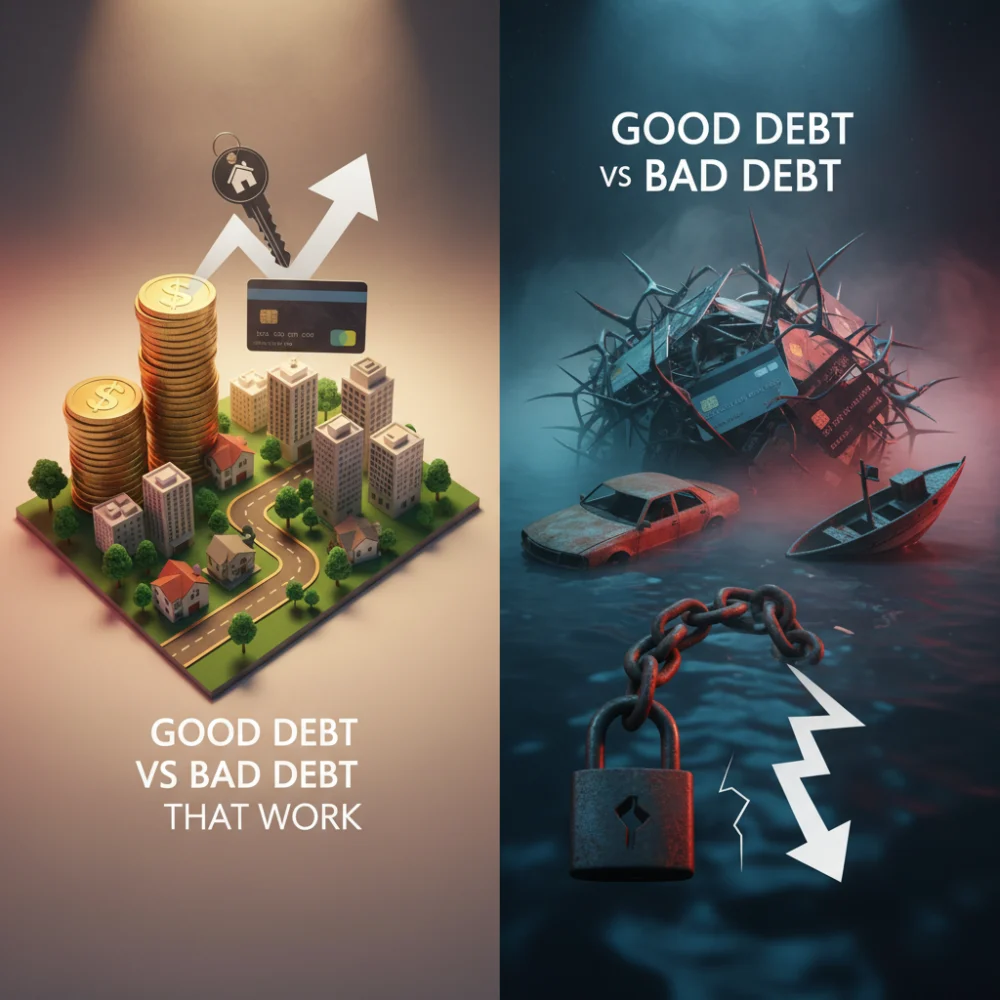







Understanding the Burden of Debt
Living with debt can feel like carrying an invisible weight that affects every aspect of your life, from your mental health to your long-term security. To escape debt permanently, one must move beyond quick fixes and embrace a holistic shift in financial behavior. This journey requires patience, discipline, and a structured plan that addresses both the mathematical and psychological components of money management. By following a systematic approach, you can regain control of your finances and build a future free from the constraints of creditors.
Step 1: Conduct a Comprehensive Debt Audit
The first step toward freedom is facing the reality of your financial situation. You must create a detailed list of every single debt you owe, including credit cards, personal loans, student loans, and medical bills. Transparency is key during this phase. Document the total balance, the minimum monthly payment, and the current interest rate for each account. Seeing these numbers in one place can be overwhelming, but it is the necessary foundation for building an effective repayment strategy.
Step 2: Analyze and Categorize Your Interest Rates
Not all debt is created equal. High-interest debt, such as credit card balances with 20% APR or higher, is particularly predatory and can prevent you from ever making progress on the principal balance. Categorize your debts by their interest rates to identify which ones are costing you the most money over time. Understanding the cost of borrowing allows you to make informed decisions about where to allocate your extra funds for maximum impact.
Step 3: Create a Realistic Zero-Based Budget
To pay off debt, you must know exactly where every dollar of your income is going. A zero-based budget is a method where your income minus your expenses equals zero. This doesn’t mean you have no money in your bank account; it means every dollar has a specific assignment.
- Track your spending for 30 days.
- Identify essential versus non-essential costs.
- Allocate a specific amount for debt overpayments.
This level of control ensures that you are not accidentally leaking money that could be used to shorten your debt timeline.
Step 4: Implement the Debt Snowball Method
The debt snowball method focuses on psychological momentum. In this strategy, you pay the minimum on all debts except for the smallest balance. You throw all your extra cash at that smallest debt until it is gone. The quick win of eliminating a debt completely provides a dopamine hit that encourages you to keep going. Once the smallest debt is paid, you move the entire payment amount to the next smallest debt, creating a ‘snowball’ effect that grows larger as you progress.
Step 5: Utilize the Debt Avalanche Method
If you prefer mathematical efficiency over psychological wins, the debt avalanche method is the way to go. With this approach, you prioritize the debt with the highest interest rate first. While it may take longer to see a debt disappear completely compared to the snowball method, you will save the most money on interest charges over the life of your repayment journey. This is often the fastest way to become debt-free for those who can maintain long-term discipline without immediate gratification.
Step 6: Cut Unnecessary Lifestyle Expenses
To accelerate your progress, you must temporarily reduce your standard of living. This involves a deep dive into your discretionary spending. Consider canceling unused subscriptions, cooking at home instead of dining out, and opting for free entertainment. Every dollar saved is a dollar that can be used to buy back your freedom. While these sacrifices are difficult, they are temporary measures intended to produce permanent results.
Step 7: Increase Your Income through Side Hustles
Sometimes, cutting expenses isn’t enough; you simply need more income. In the modern economy, there are numerous ways to earn extra cash, from freelance writing and graphic design to ride-sharing and selling unused household items. Directing 100% of your side hustle income toward your debt can drastically reduce your repayment timeline. Increasing the ‘gap’ between what you earn and what you spend is the ultimate engine for wealth creation.
Step 8: Negotiate Lower Interest Rates
Many people don’t realize that interest rates are often negotiable. Contact your credit card issuers and ask for a lower rate, especially if you have a history of on-time payments. A lower interest rate means more of your monthly payment goes toward the principal balance rather than profit for the bank. If they refuse, you might consider a balance transfer to a 0% APR card, provided you have a plan to pay it off before the promotional period ends.
Step 9: Explore Debt Consolidation Options
Debt consolidation involves taking out a new loan to pay off multiple smaller debts. This can simplify your life by reducing the number of payments you manage each month and potentially lowering your overall interest rate. However, consolidation is only a tool, not a cure. If you consolidate your debt but do not change the spending habits that led to the debt in the first place, you run the risk of running up your credit cards again while still owing the consolidation loan.
Step 10: Build an Initial Emergency Fund
One of the most common reasons people fall back into debt is an unexpected expense, like a car repair or medical bill. To break this cycle, you must build a small emergency fund—typically $1,000 to one month of expenses—before you start aggressively paying down debt. This ‘starter’ fund acts as a buffer between you and the credit card, ensuring that life’s surprises don’t derail your financial progress.
The Psychology of Spending and Habit Formation
Permanent debt freedom requires a shift in mindset. You must identify the emotional triggers that lead to overspending, whether it is stress, social pressure, or the desire for status. True wealth is not what you buy, but what you keep. Developing a habit of delayed gratification and finding contentment in what you already have are the most powerful defenses against future debt. Practice mindful spending by waiting 24 to 48 hours before making any non-essential purchase.
Automating Your Financial Success
Willpower is a finite resource. To ensure long-term success, automate your financial life as much as possible. Set up automatic transfers for your minimum payments and your extra debt contributions. When your financial plan runs on autopilot, you are less likely to make impulsive decisions or forget a due date. Automation removes the friction of doing the right thing and makes progress inevitable.
Tracking Progress and Celebrating Milestones
The road to debt freedom can be long and exhausting. To maintain motivation, track your progress visually using a chart or a dedicated app. Celebrate small milestones, such as paying off 25% of your total debt or closing a specific account. However, ensure your celebrations are low-cost or free so they don’t add to your financial burden. Recognizing your achievements reinforces the positive behavior and keeps you focused on the finish line.
Maintaining a Debt-Free Lifestyle for the Long Term
Once you have paid off your final debt, the real work begins. You must transition your debt-repayment habits into wealth-building habits. Continue to live on a budget, maintain an expanded emergency fund of three to six months of expenses, and begin investing for your future. Freedom is not just the absence of debt; it is the presence of options. By staying vigilant and disciplined, you can ensure that you never fall back into the debt trap and can instead enjoy a life of true financial independence.