





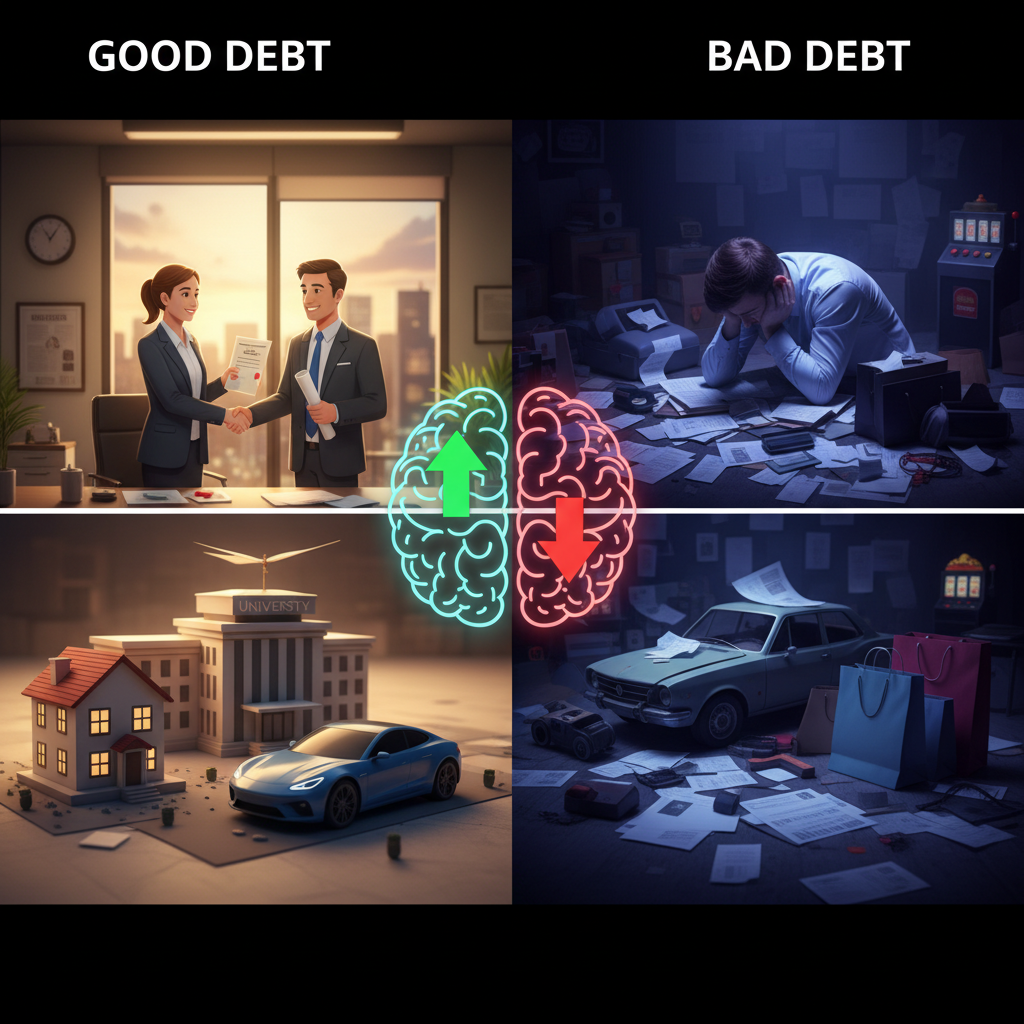
Understanding the distinction between good debt and bad debt is a cornerstone of financial literacy. While many people view all forms of borrowing as inherently negative, debt can actually serve as a powerful lever for wealth creation when managed correctly. The primary difference lies in how the borrowed funds are utilized and whether the underlying asset appreciates or generates income over time.
Defining Good Debt: An Investment in Your Future
Good debt is generally characterized as money borrowed for things that will increase in value or provide a long-term financial return. These are strategic investments that contribute to your net worth or future earning potential. By using someone else’s capital to acquire an asset, you can achieve financial goals much faster than saving cash alone.
A mortgage is perhaps the most common example of good debt. Real estate typically appreciates over time, and homeownership allows individuals to build equity. Unlike renting, where monthly payments provide no long-term ownership, a mortgage eventually leads to the full ownership of a valuable asset that can be sold or used as collateral.
Education loans are also frequently categorized as good debt. Investing in a college degree or specialized certification often leads to significantly higher lifetime earnings. The return on investment (ROI) for education is measured by the increased salary potential, which usually far outweighs the cost of the interest paid on the student loan.
Business loans represent another form of productive debt. Entrepreneurs often require capital to launch or expand a company. If the business generates a profit margin higher than the interest rate on the loan, the debt has successfully acted as a catalyst for economic growth and wealth accumulation.
The Pitfalls of Bad Debt: Draining Your Wealth
Conversely, bad debt involves borrowing money to purchase items that lose value quickly or provide no financial return. This type of debt often carries high interest rates and can trap consumers in a cycle of perpetual payments. Bad debt effectively transfers wealth from the borrower to the lender without providing any long-term benefit to the borrower.
Credit card debt is the most notorious form of bad debt. Because credit cards often have double-digit interest rates, carrying a balance can become extremely expensive. Using credit cards for everyday consumption like groceries or dining out—without paying the balance in full—means you are paying a premium for items that are consumed instantly.
Payday loans are another dangerous category of bad debt. These short-term, high-interest loans target individuals in financial distress. The astronomical interest rates and fees associated with payday lending can lead to a “debt trap,” where the borrower must take out new loans just to pay off the old ones.
While a car loan is often necessary for transportation, it is frequently viewed as bad debt because vehicles are depreciating assets. A new car loses a significant portion of its value the moment it leaves the dealership. To minimize the negative impact, financial experts suggest keeping car loan terms short and making a substantial down payment.
Key Indicators of Debt Quality
Determining whether a specific loan is good or bad often depends on several factors. Interest rates are perhaps the most significant, as high rates can quickly erode any potential gains from an investment. Additionally, one must consider asset appreciation and cash flow. If the debt helps you acquire something that grows in value or generates income, it is generally considered a sound financial move.
The Debt-to-Income (DTI) Ratio is a critical metric used by lenders to assess your financial health. It compares your total monthly debt payments to your gross monthly income. Maintaining a low DTI ratio ensures that you have enough cash flow to cover your obligations while still being able to save for the future.
To evaluate your debt, consider these four criteria:
- Interest Rates: High rates destroy wealth while low rates can be managed.
- Asset Class: Focus on borrowing for appreciating assets.
- Utility: Ensure the debt serves a productive purpose.
- Tax Benefits: Look for opportunities where interest is tax-deductible.
Strategic financial planning involves debt consolidation or refinancing to turn bad debt into more manageable terms. For instance, using a low-interest personal loan to pay off high-interest credit card balances can save thousands of dollars in interest and accelerate the path to becoming debt-free.
It is important to acknowledge the psychological impact of debt. Regardless of whether debt is technically “good” or “bad,” the stress of owing money can affect mental health and decision-making. A disciplined approach to repayment and a clear understanding of your financial goals are essential for maintaining peace of mind.
Tax implications play a significant role in the classification of debt. In many jurisdictions, the interest paid on student loans or mortgages can be deducted from taxable income, effectively lowering the cost of borrowing. This government incentive encourages individuals to take on “good debt” that benefits the broader economy.
Conclusion: Mastering Your Financial Portfolio
In summary, not all debt is created equal. Successful financial management requires the ability to distinguish between borrowing that builds wealth and borrowing that destroys it. By prioritizing the repayment of high-interest bad debt and strategically utilizing good debt to acquire appreciating assets, you can build a solid foundation for long-term financial independence.