





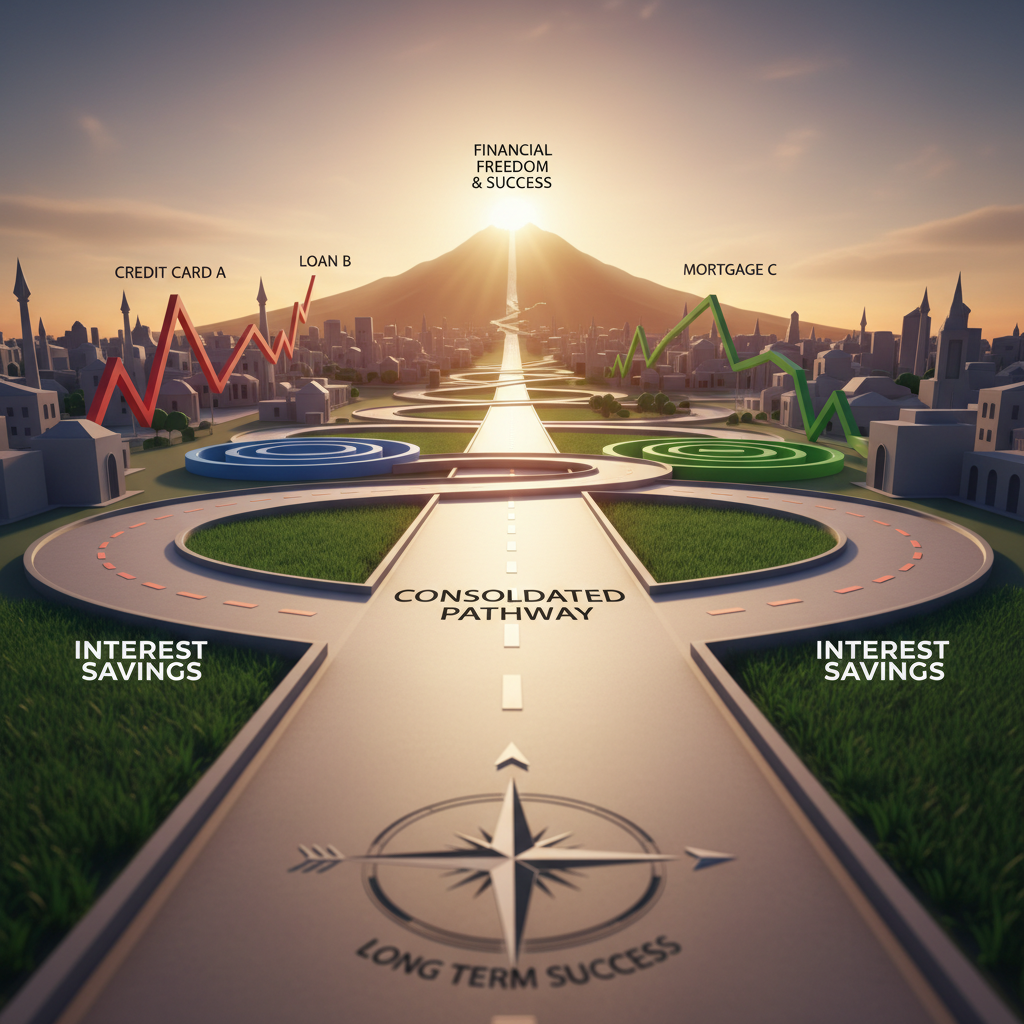
Debt consolidation is often touted as a lifeline for those drowning in multiple monthly payments and high-interest rates. However, simply moving money around without a strategic plan can lead to deeper financial trouble. To consolidate debt wisely, one must understand that it is not a cure for debt, but rather a tool to manage it more effectively. The ultimate goal is not just to simplify your bills, but to reduce the total cost of borrowing and accelerate your journey to financial freedom.
At its core, debt consolidation involves taking out a new loan to pay off multiple existing debts. Ideally, this new loan comes with a lower interest rate and a fixed monthly payment. This process streamlines your finances by replacing several due dates with a single one, reducing the mental load of financial management. Yet, for this strategy to yield long-term success, it must be paired with a fundamental shift in spending habits and financial discipline.
Assessing Your Financial Health Before Consolidating
Before applying for any consolidation loan, you must perform a comprehensive audit of your current financial situation. List every debt you owe, including credit cards, medical bills, and personal loans. Note the interest rate (APR), the outstanding balance, and the minimum monthly payment for each. This data is crucial because it establishes the baseline against which you will measure the effectiveness of any consolidation offer. If the new loan does not offer a significantly lower weighted average interest rate or a manageable monthly payment that reduces the principal faster, it may not be the right move.
Furthermore, checking your credit score is a mandatory step. Your credit score directly influences the interest rate lenders will offer you. If your score is low, you might only qualify for rates that are equal to or higher than what you are currently paying, negating the primary benefit of consolidation. In such cases, it might be wiser to focus on improving your credit score for a few months before attempting to consolidate.
Method 1: Unsecured Personal Loans
One of the most common methods for consolidating debt is obtaining an unsecured personal loan. These loans do not require collateral, meaning your home or car is not at risk if you default, though your credit score will suffer. The key advantage here is the fixed interest rate and a set repayment term, usually between two to five years. This structure forces you to pay down the principal balance every month, unlike credit cards where minimum payments often cover only the interest.
Method 2: Balance Transfer Credit Cards
For those with good to excellent credit, a balance transfer credit card can be a powerful tool. These cards often offer a 0% introductory APR for a specific period, typically ranging from 12 to 21 months. By transferring high-interest debt to one of these cards, every dollar you pay goes directly toward reducing the principal. However, this method requires strict discipline; if you fail to pay off the entire balance before the promotional period ends, you may be hit with retroactive interest or a significantly higher standard APR.
Method 3: Home Equity Loans and HELOCs
Homeowners often have the option to leverage the equity in their property through a Home Equity Loan or a Home Equity Line of Credit (HELOC). These secured loans generally offer the lowest interest rates available because the lender assumes less risk. While this can result in substantial savings on interest, it carries a severe risk: if you fail to make payments, you could lose your home to foreclosure. Consequently, this option should only be considered if you have a stable income and a rock-solid repayment plan.
The Trap of ‘Debt Reloading’
A critical aspect of consolidating wisely is avoiding the phenomenon known as "debt reloading." This occurs when an individual pays off their credit cards with a consolidation loan but fails to close the accounts or curb their spending. With zero balances available again, the temptation to spend returns, and within a year or two, the borrower ends up with a consolidation loan payment plus new credit card debt. To ensure long-term success, you must commit to not using those credit cards for consumer spending until the consolidation loan is fully paid off.
Creating a Post-Consolidation Budget
Consolidation is meaningless without a budget that prevents future debt accumulation. You must implement a zero-based budget or a similar tracking system where every dollar of income is assigned a job. Prioritize your new consolidation loan payment as a non-negotiable expense. Additionally, identify the spending leaks that caused the debt in the first place—whether it was dining out, online shopping, or lack of an emergency fund—and address them immediately.
Building an Emergency Fund
One of the primary reasons people fall back into debt after consolidating is an unexpected expense. Without a cash cushion, a car repair or medical bill goes straight back onto a credit card. Part of your long-term success strategy must include building an emergency fund. Even a small fund of $1,000 can protect your consolidation plan from minor financial shocks, keeping your progress on track.
Understanding the Impact on Your Credit Score
It is important to understand how consolidation affects your credit score. Initially, applying for a new loan will result in a hard inquiry, which may drop your score by a few points. However, paying off maxed-out credit cards with an installment loan lowers your credit utilization ratio, which is a major factor in credit scoring. Over time, making consistent on-time payments on your new loan will rebuild your credit history and improve your score significantly.
When to Seek Professional Help
If your total debt (excluding mortgage) is more than 50% of your gross annual income, or if you simply cannot find a consolidation loan with a lower interest rate, do-it-yourself consolidation might not be feasible. In these instances, a non-profit credit counseling agency can be invaluable. They can help you set up a Debt Management Plan (DMP), where they negotiate lower interest rates with creditors on your behalf and you make a single monthly payment to the agency.
Automating Your Success
To remove the risk of human error or forgetfulness, automate your consolidation loan payments. Set up a direct debit from your checking account for the day after payday. This ensures the priority debt is paid before you have the chance to spend the money on discretionary items. Automation is a key behavior of financially successful individuals who maintain a debt-free lifestyle.
The Long-Term Mindset Shift
Ultimately, consolidating debt wisely is about more than mathematics; it is about mindset. You must view debt not as a tool for acquiring things you cannot afford, but as an obstacle to your freedom. By using consolidation to lower your interest costs and combining it with aggressive repayment and strict budgeting, you transform a financial burden into a manageable challenge. This shift in perspective is what separates those who cycle in and out of debt from those who achieve permanent financial wellness.