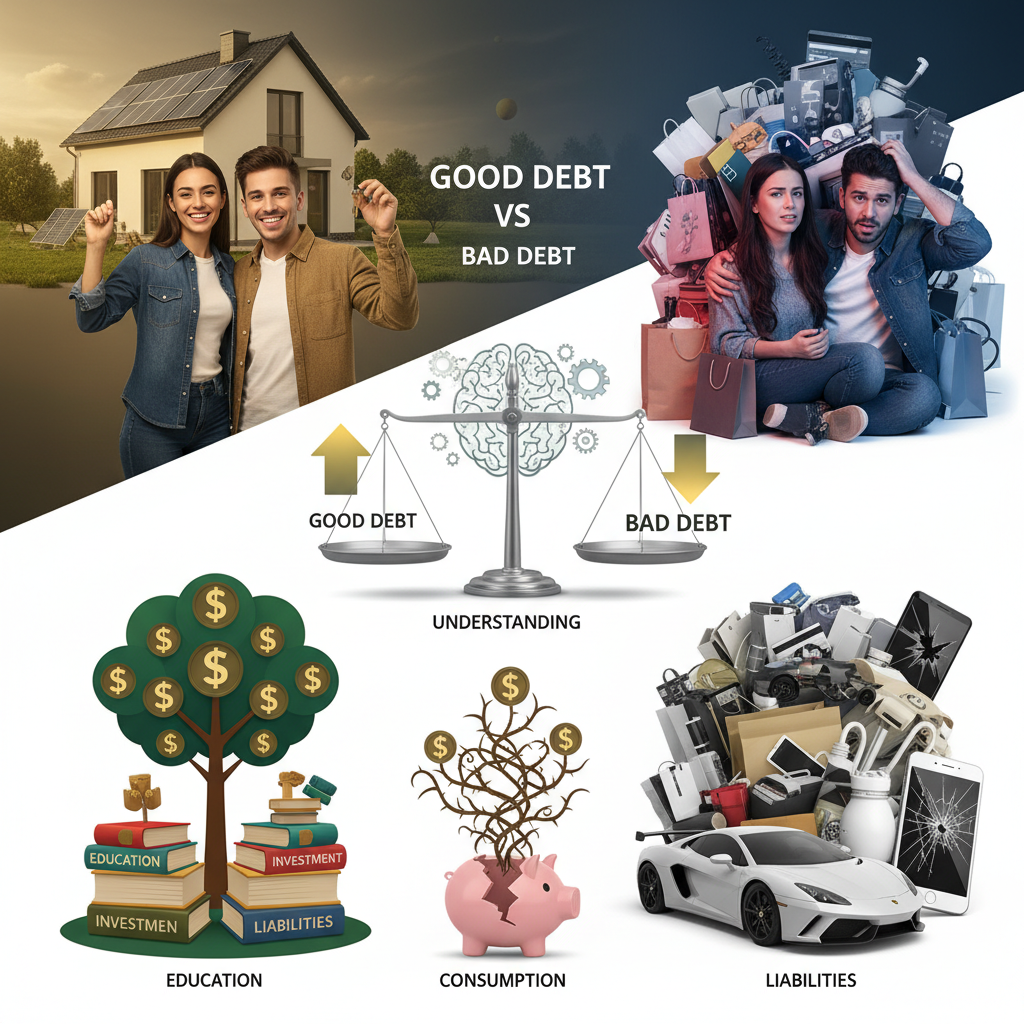






Managing multiple debts can feel like a juggling act where dropping one ball leads to a cascade of financial consequences. For many consumers, the sheer volume of payment due dates, varying interest rates, and different creditors creates a chaotic financial environment. This is where debt consolidation enters the conversation as a powerful tool for regaining control. By merging multiple liabilities into a single obligation, you can streamline your finances and potentially save a significant amount of money.
However, debt consolidation is not a magic wand that instantly erases what you owe. It is a strategic financial move that requires understanding, discipline, and the right methodology. To consolidate debt wisely, one must look beyond the immediate relief of a lower monthly payment and consider the long-term impact on their net worth and credit health. This guide explores why you should consider this path and the specific methods to execute it effectively.
Why You Should Consider Debt Consolidation
The primary motivation for most individuals seeking consolidation is the potential for lower interest rates. Credit cards often carry astronomical Annual Percentage Rates (APRs), sometimes exceeding 20% or 25%. By consolidating these high-interest debts into a personal loan or a balance transfer card with a significantly lower rate, more of your monthly payment goes toward the principal rather than servicing interest costs. Over time, this can save you thousands of dollars.
Another compelling reason is the simplification of your financial life. Instead of tracking five or six different payment dates and logging into multiple portals, consolidation leaves you with one creditor and one due date. This reduction in administrative burden significantly lowers the risk of missing a payment due to forgetfulness, which in turn helps protect your credit score from the damage of late payments.
Speaking of credit scores, consolidation can actually boost your credit rating if done correctly. One of the major factors in credit scoring is your credit utilization ratio—the amount of credit you are using compared to your limits. By paying off revolving credit card debt with an installment loan (like a personal loan), you lower your revolving utilization, which is often viewed favorably by credit scoring models.
Furthermore, consolidation often provides a fixed timeline for payoff. Minimum payments on credit cards are designed to keep you in debt for decades. In contrast, a consolidation loan typically comes with a set term, such as three or five years. This provides a clear finish line, offering psychological relief and a tangible goal to work toward.
How to Consolidate Debt Wisely: The Methods
Once you have decided that consolidation is the right path, choosing the correct vehicle is crucial. The first and most common method is obtaining a Personal Consolidation Loan. These are unsecured loans provided by banks, credit unions, or online lenders. To do this wisely, you must shop around for the lowest APR. If the loan’s interest rate is not lower than the weighted average of your current debts, this method may not be beneficial.
The second popular method is using a Balance Transfer Credit Card. These cards often offer a promotional 0% APR period ranging from 12 to 21 months. This is an aggressive strategy that allows you to pay zero interest for a specific period. However, to use this method wisely, you must have a plan to pay off the entire balance before the promotional period ends, otherwise, you may be hit with high retroactive interest rates.
For homeowners, a Home Equity Loan or Line of Credit (HELOC) is another option. Because these loans are secured by your property, they often offer the lowest possible interest rates. However, this method requires extreme caution. You are converting unsecured debt (credit cards) into secured debt. If you fail to make payments, you risk foreclosure on your home. This method should only be used if you have a stable income and a disciplined repayment plan.
Another avenue is a Debt Management Plan (DMP) offered by non-profit credit counseling agencies. Unlike a loan, a DMP involves the agency negotiating with your creditors to lower interest rates and waive fees. You make one payment to the agency, and they distribute it to your creditors. This is a wise choice for those who may not qualify for low-interest loans due to a lower credit score but still want to repay their debts in full.
Critical Strategies for Success
Regardless of the method you choose, the most critical aspect of wise consolidation is addressing the root cause of the debt. Consolidation treats the symptom (the balance), but not the disease (overspending). If you pay off your credit cards using a consolidation loan but continue to use those cards for daily expenses, you will end up in a worse position with double the debt. This phenomenon is known as ‘re-loading’.
To avoid this trap, you must create a comprehensive budget immediately after consolidating. Allocate every dollar of your income and ensure that you are living within your means. Many financial experts recommend cutting up or freezing the credit cards you just paid off to remove the temptation of using them while you are paying down the consolidation loan.
It is also essential to read the fine print regarding fees and penalties. Some personal loans come with origination fees (often 1% to 5% of the loan amount), and balance transfer cards usually charge a transfer fee (typically 3% to 5%). You must calculate these costs to ensure that the consolidation still makes mathematical sense. If the fees outweigh the interest savings, the consolidation is not wise.
Finally, consider establishing an emergency fund alongside your debt repayment plan. One of the main reasons people fall back into debt after consolidating is an unexpected expense, like a car repair or medical bill. Having a small cash cushion prevents you from reaching for the credit cards you just worked so hard to pay off.
In conclusion, debt consolidation is a robust strategy for those looking to optimize their finances, reduce interest costs, and simplify their lives. By carefully selecting the right method—whether it be a personal loan, balance transfer, or home equity product—and coupling it with disciplined budgeting and behavioral changes, you can pave a clear path toward financial freedom. The key is not just to move the debt, but to eliminate it effectively and permanently.