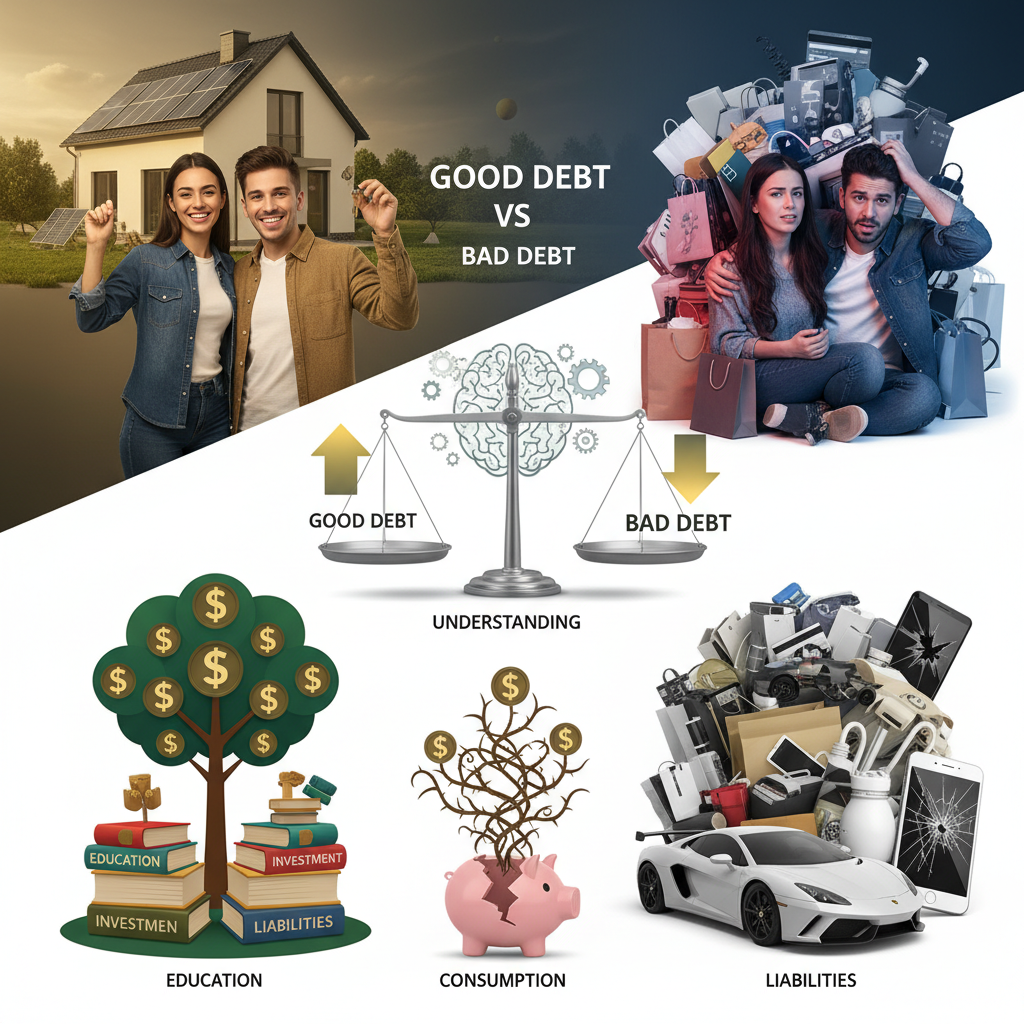






Achieving a debt-free lifestyle is a transformative journey that begins with a single, firm decision to stop borrowing money. This path is not just about the numbers on a spreadsheet; it is about reclaiming your freedom and reducing the stress that financial obligations often bring. By committing to this lifestyle, you are choosing to own your life and your labor, rather than handing over a significant portion of your income to financial institutions in the form of interest.
The Psychological Foundation of Financial Freedom
The most critical component of living debt-free is developing a strong financial mindset. Most people are conditioned to believe that debt is a normal part of life, but successful debt-free individuals view it as a barrier to wealth. You must cultivate a sense of contentment with what you have and resist the urge to keep up with others through financed purchases. This mental shift ensures that once you become debt-free, you stay that way permanently.
Before you can tackle your debts, you must perform a comprehensive financial audit. This involves listing every single debt you owe, including the total balance, the interest rate, and the minimum monthly payment. Seeing these numbers in one place can be overwhelming, but it is a necessary step to understand the scope of the challenge. This clarity allows you to create a realistic roadmap for elimination rather than guessing where your money should go.
Establishing a Starter Emergency Fund
One of the biggest reasons people fall back into debt is the occurrence of unexpected expenses. To prevent this, you should establish a starter emergency fund before aggressively paying down debt. Typically, this is a small amount, such as $1,000 to $2,000, kept in a separate savings account. This buffer acts as a financial shock absorber, allowing you to pay for a car repair or medical bill without reaching for a credit card.
Creating a zero-based budget is the next pillar of a debt-free strategy. In this system, every dollar of your income is assigned a specific job before the month begins. When your income minus your expenses equals zero, you have full control over your cash flow. This prevents mindless spending and ensures that every spare cent is directed toward your debt repayment goals. Budgeting is not about restriction; it is about giving yourself permission to spend on what truly matters.
The Debt Snowball Method Explained
The Debt Snowball method is a popular strategy that focuses on psychological wins. You list your debts from smallest balance to largest balance, regardless of interest rates. You pay the minimum on everything except the smallest debt, which you attack with all your extra funds. Once that is gone, you roll that payment into the next smallest debt. This creates momentum and motivation, as you see accounts being closed quickly.
The Debt Avalanche Method for Efficiency
For those who prefer a more mathematical approach, the Debt Avalanche method is highly effective. In this strategy, you list your debts from the highest interest rate to the lowest. By focusing on the debt that costs you the most in interest first, you minimize the total amount paid over time and potentially shorten your repayment period. While it may take longer to see the first account closed, it is the most mathematically efficient way to become debt-free.
Reducing your living expenses is a powerful way to accelerate your journey. This might involve temporary sacrifices in your lifestyle to free up more cash. Key areas to focus on include:
- Cutting down on subscription services and gym memberships.
- Adopting a meal-prepping routine to save on food costs.
- Shopping for insurance and utility providers to find better rates.
Every dollar saved in your daily life is a dollar that can be used to kill your debt faster.
Strategies to Increase Your Income
While cutting expenses is vital, there is a limit to how much you can cut. However, there is no limit to how much you can earn. Increasing your income through side hustles, overtime, or selling unused items can significantly shorten your timeline to debt freedom. Whether it is freelance work, a part-time job, or a career move, additional income streams provide the fuel needed to burn through debt balances rapidly.
Negotiating with your creditors can also yield surprising results. Many credit card companies are willing to lower your interest rate if you have a history of on-time payments and simply ask. Lower interest rates mean more of your payment goes toward the principal balance rather than interest charges. Additionally, for very old debts, you may be able to negotiate a settlement for less than the full amount owed, though this should be handled with caution.
The Role of Debt Consolidation
Debt consolidation can be a useful tool if used correctly, but it comes with risks. This involves taking out a new loan with a lower interest rate to pay off multiple high-interest debts. While this simplifies your payments and can save money on interest, it does not solve the underlying problem of overspending. Consolidation only works if you commit to never using credit again while paying off the new loan.
To maintain a debt-free life, you must learn to identify and avoid common credit traps. This includes “buy now, pay later” schemes, interest-free financing offers that hide high penalties, and the lure of credit card rewards. Often, the pursuit of points or cashback leads to spending more than intended. True financial security comes from using your own money rather than relying on the temporary convenience of borrowed funds.
Maintaining Psychological Resilience
The journey to becoming debt-free is often long and can be emotionally taxing. It is important to find ways to stay motivated, such as tracking your progress visually with a chart or celebrating small milestones. Surrounding yourself with a community of like-minded individuals, whether online or in person, can provide the accountability and encouragement needed to stay the course when the initial excitement wears off.
Investing in your financial education is a lifelong requirement for staying debt-free. Understanding how taxes, inflation, and investments work will help you make better decisions with the money you have freed up. Reading books, listening to podcasts, and following reputable financial advisors will keep you focused on your long-term goals and prevent you from falling back into old habits.
Transitioning from Debt Repayment to Wealth Building
Once the final debt is paid off, the real fun begins. The money that used to go toward interest and principal payments can now be redirected into investing and wealth building. This is where you start to see the true power of compound interest working in your favor rather than against you. A debt-free life is the foundation upon which you can build a legacy of generosity and financial security for generations to come.