





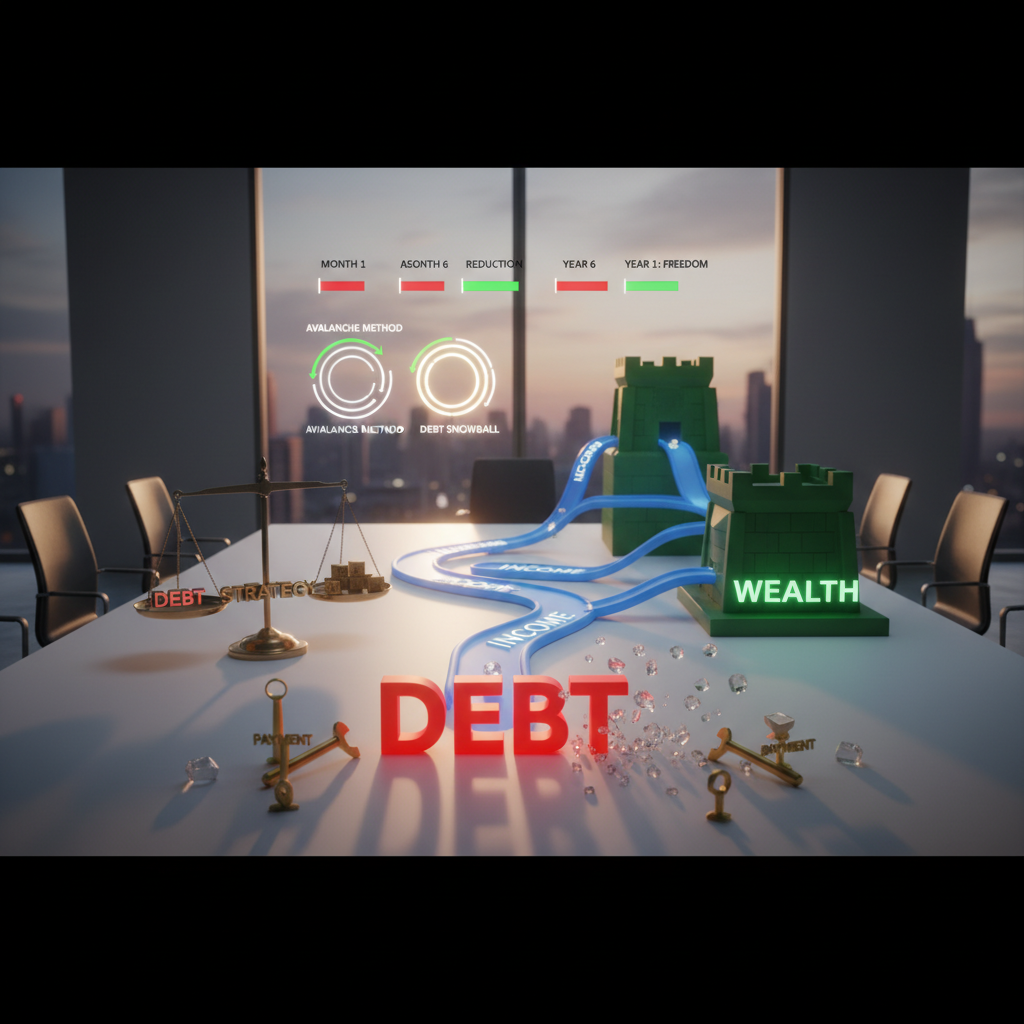
Achieving financial freedom is a journey that begins with a single, decisive step: creating a debt reduction plan that actually works. Many individuals find themselves trapped in a cycle of high-interest payments, feeling as though they are running in place. However, by applying proven techniques and maintaining a disciplined mindset, it is entirely possible to dismantle even the most daunting debt structures. The key lies in selecting a strategy that fits your personality and financial capacity, ensuring that you stay motivated throughout the process.
Building a Comprehensive Debt Inventory
The first practical technique in any debt reduction plan is the creation of a detailed inventory. You cannot fight an enemy you cannot see. Start by gathering all your financial statements and creating a spreadsheet that includes the name of the creditor, the total balance remaining, the annual percentage rate (APR), and the minimum monthly payment. This transparency is crucial because it highlights exactly where your money is going and which debts are growing the fastest due to high interest rates. Total awareness of your liabilities is the foundation upon which all successful plans are built.
The Debt Snowball Method
One of the most popular techniques for debt reduction is the Debt Snowball method. This technique prioritizes psychological wins over mathematical optimization. You start by paying off the smallest debt first while making minimum payments on all other obligations. Once the smallest debt is gone, you take the money you were paying toward it and apply it to the next smallest balance. This creates a momentum effect, as the quick disappearance of small debts provides the motivation needed to tackle larger ones later on.
The Debt Avalanche Method
For those who prefer a mathematically efficient approach, the Debt Avalanche method is often the superior choice. Unlike the snowball method, the avalanche technique focuses on interest rates. You allocate all extra funds toward the debt with the highest APR first, while maintaining minimum payments on the rest. By targeting the most expensive debt, you minimize the total interest paid over time and potentially shorten your overall repayment period. This method requires more discipline since it may take longer to see a debt completely disappear, but it is the most cost-effective strategy.
Comparing Snowball vs. Avalanche
When choosing between these two primary techniques, it is essential to consider your behavior. The Snowball method is ideal for individuals who need frequent rewards to stay on track. Conversely, the Avalanche method is best for those who are strictly focused on saving money on interest.
- Snowball: Best for psychological motivation.
- Avalanche: Best for minimizing interest costs.
Both methods are effective as long as you remain consistent and do not take on new debt while paying off the old.
Utilizing Debt Consolidation Loans
Debt consolidation involves taking out a new loan to pay off multiple smaller debts, effectively merging them into a single monthly payment. This technique works best when the new loan has a significantly lower interest rate than the average of your previous debts. Consolidation simplifies your financial life and can reduce the total amount of interest you pay, provided you do not use the newly freed-up credit card space to spend more money. It is a tool for restructuring, not for eliminating the debt itself.
The Power of 0% APR Balance Transfers
If you have a relatively good credit score, a balance transfer credit card can be a powerful debt reduction tool. These cards often offer an introductory period of 12 to 21 months with 0% interest on transferred balances. By moving high-interest credit card debt to a 0% APR card, every dollar you pay goes directly toward the principal balance. However, you must be wary of transfer fees and ensure that you can pay off the balance before the introductory period ends and the high interest rates return.
Negotiating with Your Creditors
Many people do not realize that interest rates and payment terms are often negotiable. If you have a history of on-time payments, you can call your creditors and ask for a lower interest rate. Explain your situation and express your commitment to paying off the debt. Creditors would often rather receive a lower interest rate than risk you defaulting on the loan entirely. This simple phone call can save you hundreds or even thousands of dollars over the life of your debt reduction plan.
Implementing a Zero-Based Budget
A debt reduction plan cannot succeed without a strict budgeting framework. Zero-based budgeting is a technique where every dollar of your income is assigned a specific purpose before the month begins. Your income minus your expenses should equal zero. By giving every dollar a job—whether it is for rent, groceries, or debt repayment—you prevent mindless spending and ensure that every available cent is working toward your goal of becoming debt-free.
The Necessity of an Emergency Fund
It may seem counterintuitive to save money while you are in debt, but having a small emergency fund is vital. Without a financial cushion, an unexpected car repair or medical bill will likely end up on a credit card, derailing your progress. Aim to save at least $1,000 to $2,000 as a starter emergency fund before aggressively attacking your debt. This safety net ensures that you can handle life’s surprises without falling back into the debt trap.
Cutting Expenses to the Bone
To accelerate your debt reduction, you must look for ways to reduce your monthly expenses. This might include canceling unused subscriptions, cooking at home instead of eating out, or finding cheaper insurance providers. Every dollar saved in your monthly budget is another dollar that can be applied to your debt. Temporary sacrifice in your lifestyle can lead to permanent financial freedom. Review your bank statements for the last three months to identify areas where you can trim the fat.
Generating Additional Income Streams
While cutting expenses is important, there is a limit to how much you can save. There is, however, no limit to how much you can earn. Increasing your income is one of the fastest ways to speed up a debt reduction plan. Consider taking on a side hustle, selling items you no longer need, or asking for a raise at your current job. Directing 100% of this extra income toward your debt can drastically shorten your timeline and provide a significant boost to your morale.
Seeking Professional Credit Counseling
If your debt feels unmanageable despite your best efforts, professional credit counseling may be necessary. Non-profit credit counseling agencies can help you review your finances and set up a personalized debt management plan. These agencies often have agreements with creditors to lower interest rates and waive fees for their clients. It is a structured way to regain control when the burden of debt becomes overwhelming, providing you with expert guidance and a clear path forward.
Understanding Debt Management Plans (DMP)
A Debt Management Plan is a formal agreement where you make one monthly payment to a credit counseling agency, which then distributes the funds to your creditors. These plans typically last three to five years and often result in lower interest rates. While a DMP may require you to close your credit card accounts, it provides a disciplined framework that ensures your debt is paid off in a timely manner. It is a strategic alternative to bankruptcy that protects your credit score over the long term.
Addressing Psychological Spending Triggers
Long-term debt reduction requires a change in behavior. Many people fall into debt because of emotional spending or a lack of financial boundaries. Identifying your triggers—whether it is stress, social pressure, or boredom—is essential for preventing future debt. Developing healthy coping mechanisms and focusing on long-term goals rather than short-term gratification will help you maintain your debt-free status once you achieve it. True financial health is as much about mindset as it is about mathematics.
Maintaining Consistency and Tracking Progress
The final technique for a successful debt reduction plan is consistency. It is easy to be motivated in the first month, but the middle of the journey can feel like a grind. Use visual aids, such as charts or apps, to track your progress and celebrate small milestones. Seeing your balances decrease over time provides a sense of accomplishment that fuels your drive to continue. Remember that debt reduction is a marathon, not a sprint, and every payment brings you one step closer to the ultimate prize of financial liberty.