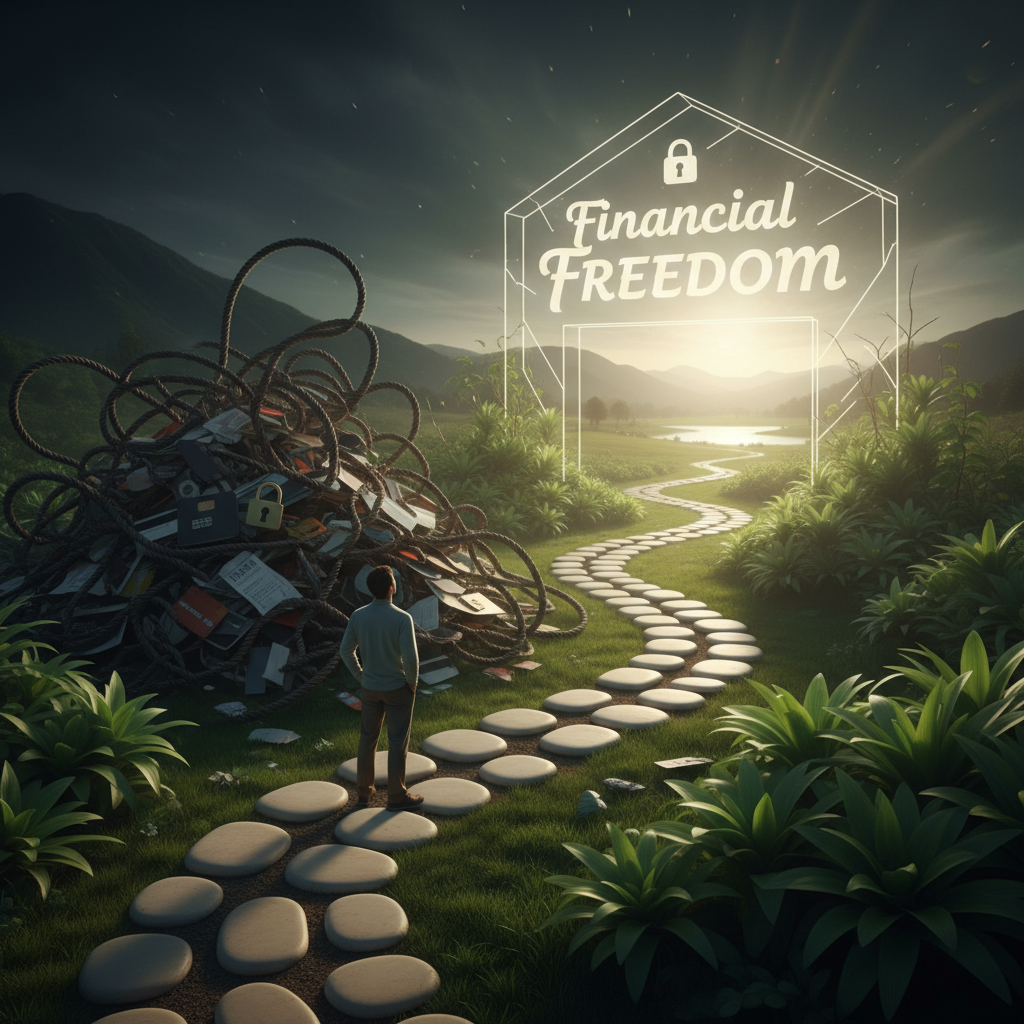






In an era where consumerism is often fueled by credit cards and easy financing, the concept of debt-free living has emerged as a powerful counter-movement. Living without debt is not merely about having a zero balance on your credit card statements; it is a profound lifestyle shift that prioritizes financial independence, security, and peace of mind over instant gratification. By choosing to eliminate debt, individuals reclaim ownership of their future income, rather than pledging it to lenders for years to come.
The primary reason why you should consider this lifestyle is the psychological liberation it offers. Debt is often described as a heavy weight or a dark cloud that follows you everywhere. The stress associated with monthly payments, interest rates, and the fear of defaulting can lead to significant anxiety and sleep disturbances. When you eliminate these financial obligations, you experience a sense of relief that permeates every aspect of your life, allowing you to focus on personal growth, relationships, and career aspirations without the constant hum of financial worry.
The True Cost of Borrowing: Understanding Interest
One of the most compelling arguments for debt-free living is the mathematical reality of interest. When you carry debt, you are paying a premium for everything you buy. Whether it is a mortgage, a car loan, or credit card balance, the interest accumulates over time, often doubling or tripling the original cost of the item. By living debt-free, you stop making banks richer and start keeping your hard-earned money in your own pocket. This shift allows you to leverage the power of compound interest in your favor through investments, rather than having it work against you.
Consider the opportunity cost of your monthly debt payments. If you are paying $500 a month toward a car loan and another $300 toward credit cards, that is $800 of your monthly income that is unavailable for saving or investing. Over a decade, that money—if invested wisely—could grow into a substantial nest egg. Living debt-free means your income is truly yours to command, giving you the flexibility to build wealth rapidly.
Unlocking Financial Agility and Freedom
Financial agility is the ability to pivot when life throws you a curveball or presents a golden opportunity. When you are tethered to debt, your options are limited. You may feel forced to stay in a toxic job because you need the steady paycheck to cover your loan payments. Conversely, debt-free living grants you the freedom to take calculated risks, such as starting a business, changing careers, or taking a sabbatical to travel, because your baseline expenses are significantly lower.
Furthermore, debt-free living provides an unparalleled safety net during economic downturns. In times of recession or job loss, those with high debt loads are the most vulnerable to bankruptcy and foreclosure. If you have no debt and a modest emergency fund, losing a job becomes a manageable hurdle rather than a catastrophic event. This security allows you to navigate life’s uncertainties with confidence rather than fear.
Improving Relationships and Mental Health
Money is frequently cited as one of the leading causes of divorce and relationship strain. The pressure to meet financial obligations can cause arguments, resentment, and secrecy between partners. Adopting a debt-free philosophy often requires couples to communicate openly, align their goals, and work together as a team. This shared mission can strengthen bonds and eliminate the friction caused by financial stress, leading to a happier and more harmonious home life.
Actionable Tips to Achieve a Debt-Free Life
Transitioning to a debt-free life requires a strategic approach and a shift in mindset. The first step is to assess your financial reality. You must face the numbers head-on by listing every single debt you owe, including the total balance, interest rate, and minimum monthly payment. This inventory provides a clear picture of what you are up against and serves as the baseline for your repayment plan.
Once you know your numbers, you need a robust budget. A zero-based budget, where every dollar is assigned a job before the month begins, is highly effective. This ensures that you are not overspending and helps you identify areas where you can cut costs to free up more cash for debt repayment. To accelerate the process, consider the following strategies:
- The Snowball Method: Focus on paying off the smallest debt first while making minimum payments on the rest. The psychological win of eliminating a bill motivates you to keep going.
- The Avalanche Method: Focus on the debt with the highest interest rate first. This saves you the most money mathematically over the long run.
- Side Hustles: temporarily increasing your income through freelance work or a second job can drastically shorten your debt-free timeline.
Another crucial tip is to stop the bleeding. You cannot get out of debt if you continue to borrow. This might mean cutting up credit cards or freezing your accounts so that you are forced to rely on cash or debit. Establishing a small emergency fund (typically $1,000 to start) is essential before you aggressively attack debt; this fund prevents you from reaching for a credit card when an unexpected expense, like a car repair, arises.
Embracing Minimalism and Contentment
Succesful debt-free living often correlates with a shift toward minimalism. It involves questioning the societal narrative that more stuff equals more happiness. By learning to be content with what you have and distinguishing between needs and wants, you naturally reduce your spending. This change in consumer behavior is sustainable and ensures that once you pay off your debt, you do not slide back into old habits.
Ultimately, the journey to becoming debt-free is a marathon, not a sprint. It requires discipline, sacrifice, and patience. However, the reward is a life of autonomy. When you owe nothing to anyone, you own your time, your choices, and your future. The peace of mind that comes from knowing you are financially secure is worth every sacrifice made along the way.