The United States Securities and Exchange Commission has formally approved a significant rule change requested by Cboe BZX, clearing the path for the listing of six ambitious triple-leveraged exchange-traded products managed by Volatility Shares. The newly approved lineup spans both digital assets and traditional commodities, featuring exchange-traded products linked to Bitcoin, Ethereum, gold, silver, crude oil, and natural gas.
This regulatory milestone marks another chapter in the evolving relationship between traditional financial regulators and the cryptocurrency sector, opening up high-risk, high-reward instruments for institutional and retail market participants alike.
According to the structural design of these new offerings, the products are engineered to deliver three times the daily performance of their underlying reference assets. To illustrate how this functions in practice, if an underlying asset experiences a 1% increase during a standard trading session, the corresponding triple-leveraged product is structured to achieve approximately a 3% gain. Conversely, if the underlying asset declines by 1%, the product will suffer a loss of roughly 3%.
Industry analysts have quickly taken note of the approval. Eric Balchunas, a senior exchange-traded fund analyst at Bloomberg Intelligence, took to social media to highlight the development, calling the SEC’s green light a "big win" for Volatility Shares while pointing out the broader shift in the U.S. regulator’s overall posture toward cryptocurrency-linked financial products over the past several years.
Despite the heavy focus on digital assets, none of the six newly approved products will hold physical Bitcoin, Ethereum, precious metals, or crude oil directly. Instead, the funds will rely on regulated futures contracts. For the cryptocurrency offerings specifically, the products will track futures contracts actively traded by the CME Group, maintaining a derivative-based exposure model similar to other established crypto investment vehicles.
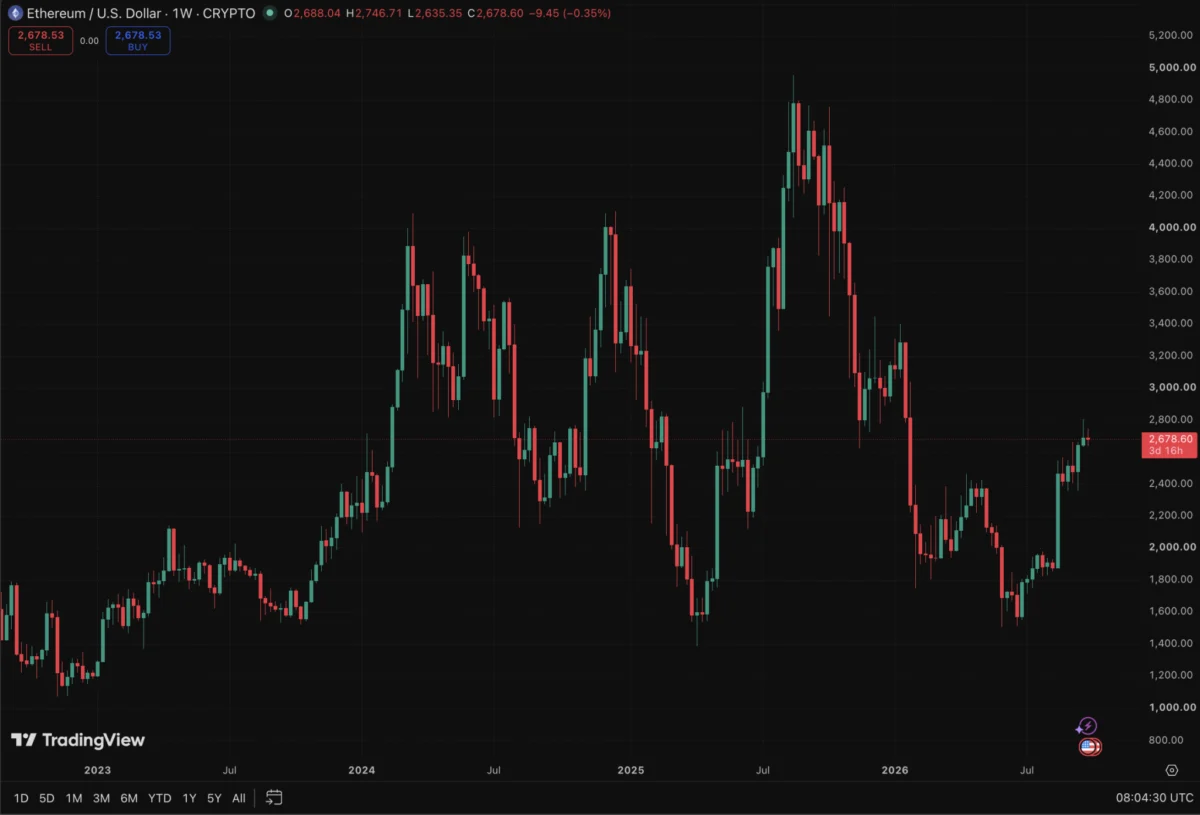
The news of the regulatory approval arrived while Bitcoin was changing hands at approximately $85,000, registering a modest daily gain of roughly 0.8%. Meanwhile, Ethereum managed to reclaim ground above the $2,700 threshold, advancing roughly 1% overnight and successfully clearing a key technical resistance barrier at that level in the process.

Volatility Shares Expands Its Leveraged Product Suite
The SEC granted its official approval for the listing on October 2, 2026. Under the umbrella of the VS Trust, the newly sanctioned instruments include triple-leveraged products tied to Bitcoin and Ethereum, complemented by equivalents tracking gold, silver, crude oil, and natural gas under the Securities Act of 1933.
Volatility Shares is already an established player in the leveraged crypto space, currently managing double-leveraged exchange-traded funds for the largest digital assets. These include the 2x Bitcoin Strategy ETF, widely known by its ticker BITX, alongside the 2x Ether ETF, designated as ETHU. The regulator’s recent determination allows the firm to significantly broaden its catalog by introducing much more aggressive instruments that scale daily market exposure threefold.
Market observers have emphasized, however, that the approval of the exchange rule change does not mean that trading can commence immediately. Before these triple-leveraged products can officially launch and begin accepting capital on the open market, a separate Form S-1 registration statement must also receive formal review and clearance from the regulatory authorities.
U.S. ETF Inflows Surge Amid Broad Market Momentum
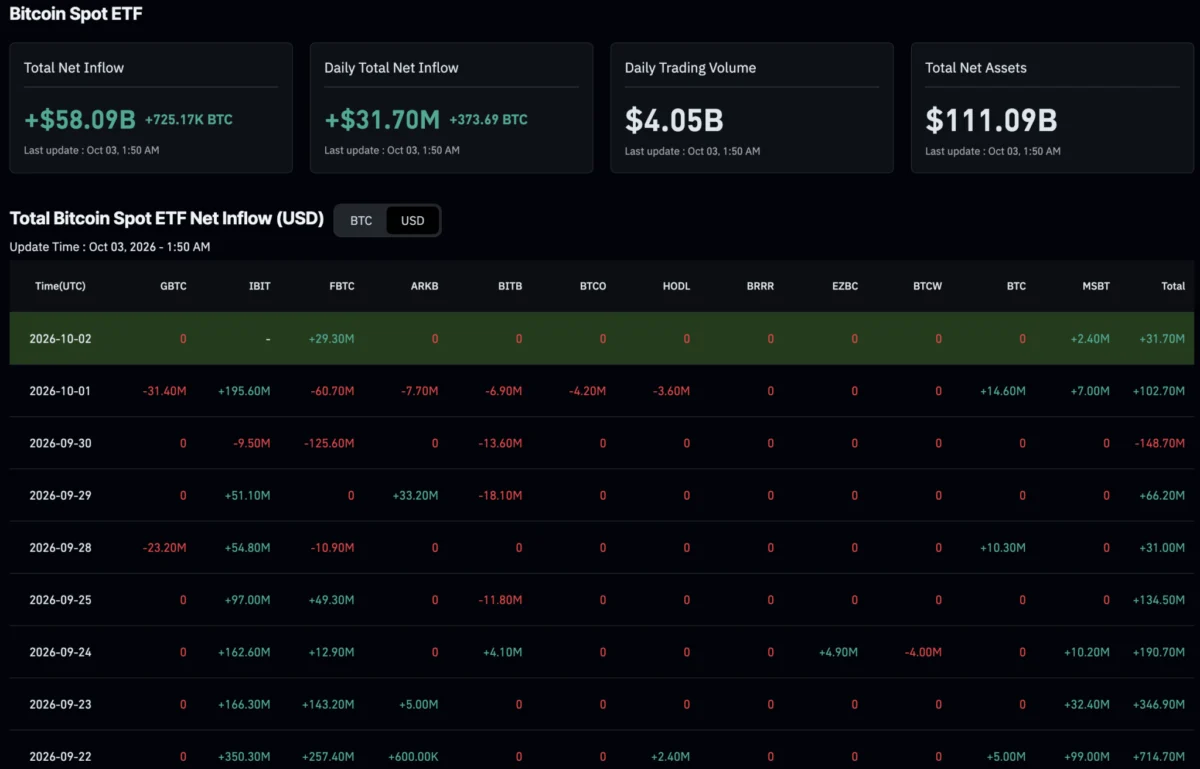
The introduction of these new exchange-traded products coincides with an unprecedented wave of investor demand for ETFs across the United States. Data compiled through the end of September indicates that total capital inflows into U.S. exchange-traded funds have already eclipsed the cumulative totals recorded during any previous full calendar year.
Equity funds continue to capture the lion’s share of this incoming capital, reflecting a sustained preference among modern investors for exchange-traded funds over traditional mutual funds. If current capitalization rates persist through the remainder of the year, the broader U.S. ETF market is firmly on track to establish entirely new historic volume benchmarks by the conclusion of 2026.

This surging activity comes against the backdrop of heightened regulatory scrutiny in adjacent financial sectors. Previously reported developments highlighted that the U.S. Treasury Department and the Internal Revenue Service have intensified their examinations of ETF-based tax deferral strategies utilized by high-net-worth investors, as authorities seek to determine whether these complex financial maneuvers align strictly with existing tax laws.
Bitcoin Price Dynamics and Near-Term Technical Outlook
As the market digests the implications of the new triple-leveraged offerings, Bitcoin continues to anchor the wider digital asset economy. Currently changing hands at approximately $84,800, BTC boasts a circulating market capitalization of roughly $1.7 trillion. Data from market aggregators shows that the leading cryptocurrency has added about 1% over the trailing week and roughly 7.9% over the past thirty days, pointing to steady, moderate positive momentum following an extended phase of price consolidation.
From a technical standpoint, Bitcoin trades comfortably below its all-time high of $126,080, leaving substantial structural headroom for a potential recovery rally. Over recent sessions, price action has largely oscillated between $82,600 and $87,100. Market technicians view the $87,000 mark as an immediate near-term resistance barrier; a sustained, high-volume breakout above this threshold could clear the path toward a targeted recovery range of $90,000 to $100,000.
On the downside, a pullback toward the $82,500 mark risks softening the prevailing bullish sentiment and could expose the deeper $80,000 support zone to retesting. With Bitcoin dominance holding steady at approximately 57%, the asset continues to exert a dominant influence on overall market direction as traders await the next wave of institutional product launches.