For millions of American workers, health insurance is far more than a routine employment benefit. It is a critical anchor that quietly shapes nearly every major professional decision—dictating whether they take a new job, cling to an unfulfilling position they have long outgrown, or put their entrepreneurial ambitions and career changes on hold entirely.
A recent survey conducted by ValuePenguin reveals that the deep-seated link between employment and healthcare coverage leaves a substantial portion of the American workforce feeling trapped. While employer-sponsored health insurance provides vital financial protection and peace of mind, the steep cost of securing alternative coverage on the open market creates a powerful phenomenon known as "job lock." This systemic friction prevents countless professionals from pivoting to new industries, starting their own businesses, or simply walking away from toxic work environments.
The findings underscore a complex economic reality where the desire for career mobility constantly battles with the fear of losing access to affordable medical care.
Health Coverage is a Make-or-Break Factor When Choosing Where to Work
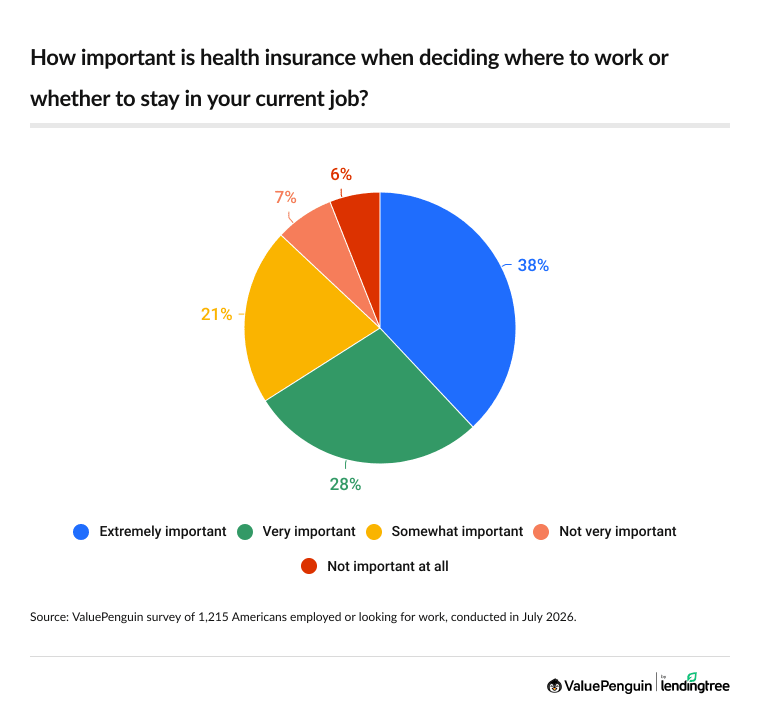
To the modern American job seeker, health insurance is rarely treated as an afterthought. Among those who are currently employed or actively hunting for a new position, an overwhelming 87% report that the health plan attached to a prospective job matters at least somewhat when deciding whether to accept an offer or stick around in their current role. For more than a third of these respondents—specifically 38%—the quality and availability of health coverage is categorized as an extremely important part of that calculus.
This heavy reliance on workplace benefits generally delivers positive results for those who are already covered. Among insured survey respondents, 76% express satisfaction—ranging from somewhat to very satisfied—with their current health insurance plans. Only a tiny minority of 8% report outright dissatisfaction.
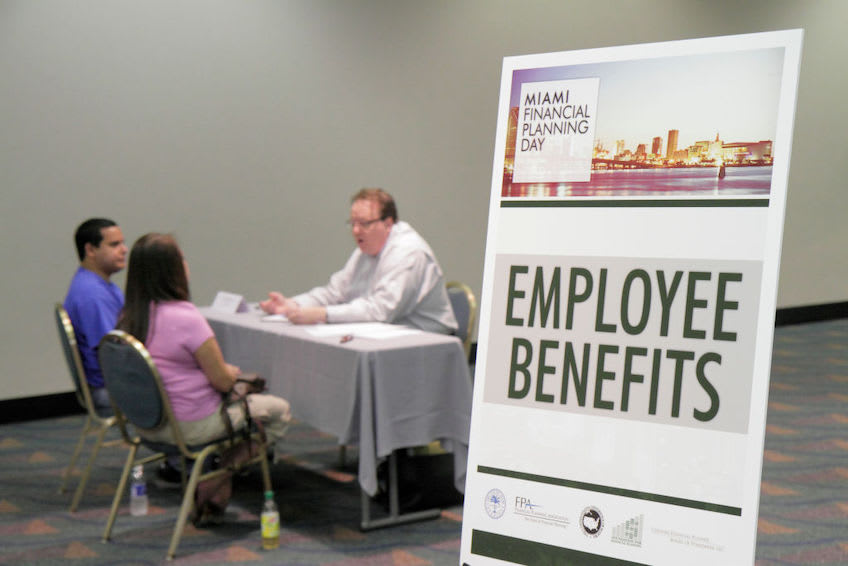
According to ValuePenguin health insurance expert Cate Deventer, workers have learned to look past the mere presence of a health plan to evaluate the actual mechanics of the coverage. The specific details of a policy are ultimately what move the needle.
"The biggest aspect of an employer-sponsored health insurance plan that employees or potential employees should consider is the total value of the coverage," Deventer explains. This comprehensive evaluation requires workers to weigh monthly payroll deductions against the amount their employer contributes, followed by a rigorous examination of the summary of benefits. Deventer highlights prescription drug coverage as a particularly frequent sticking point. If a worker relies on an expensive maintenance medication and a prospective employer’s health plan excludes it or places it on an unaffordable tier, that deficiency alone can be enough to break a deal.
‘Job Lock’ Traps Millions of Workers in Positions They’d Rather Leave
While employer-sponsored health insurance serves as a powerful recruitment magnet, it simultaneously acts as an anchor, preventing millions of workers from leaving positions they have long outgrown.
Among Americans who are not students, stay-at-home caregivers, or individuals with disabilities, 38% admit they have stayed at a job longer than they desired simply because they or a family member depended entirely on the attached health coverage. This sense of entrapment is even more pronounced among younger demographics. Half of all Gen Z respondents aged 18 to 29, along with 44% of millennials aged 30 to 45, report facing this exact dilemma. Furthermore, parents raising children younger than 18 are significantly more likely than nonparents to report feeling stuck due to healthcare dependencies, standing at 53% compared to just 32%.
The underlying driver of this phenomenon is the stark financial disparity between group coverage provided by employers and individual plans purchased on the open market.
"Employer-sponsored health insurance tends to be much cheaper than plans on the marketplace or from private insurance companies," Deventer notes. "Without a plan from their job, many people would struggle to afford health insurance, which creates ‘job lock,’ where people stay in jobs they want to leave because they can’t afford to lose coverage."
Despite this widespread trap, the appetite to break free is remarkably strong. Among employed respondents who currently receive health insurance through their jobs, 51% indicate they would be very or somewhat likely to leave their positions within the next year if a comparable, independently accessible health plan were available at a similar price point.
Intuitively, job lock appears more prevalent among higher-earning workers than lower-earning ones, primarily due to access patterns. Only 6% of Americans earning less than $30,000 annually receive health coverage through their own employer, compared to 36% of those earning $100,000 or more. Consequently, lower earners face starker vulnerabilities, with 16% going completely uninsured, contrasted with just 4% in the higher income bracket.
Coverage Worries Reshape Career Paths
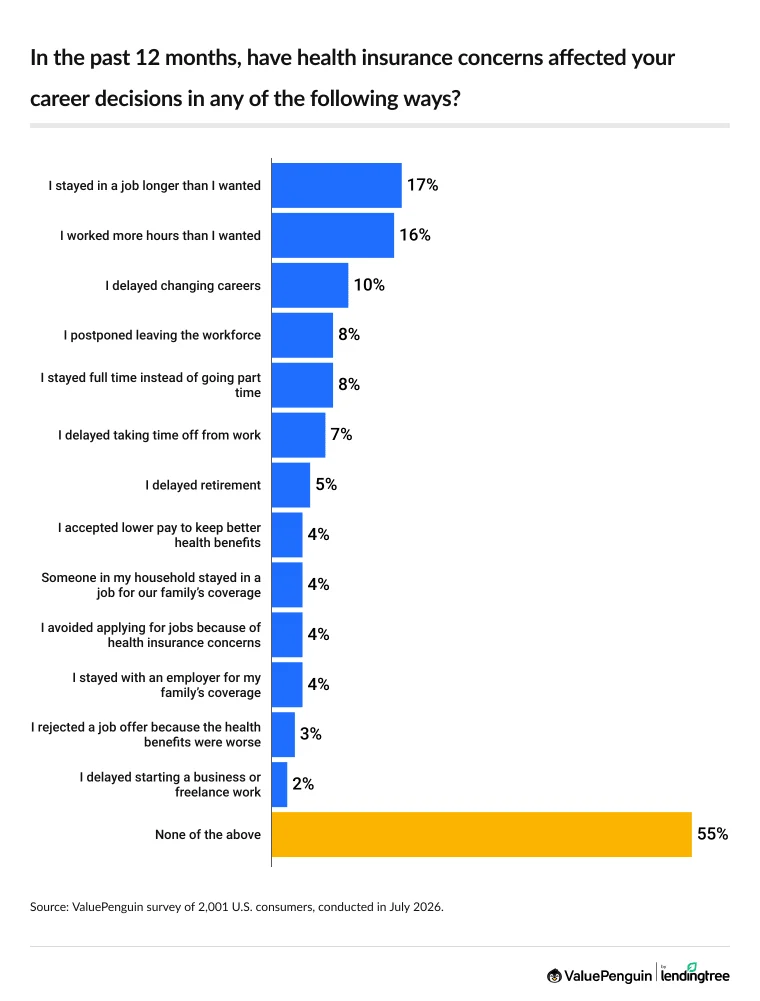
The anxieties surrounding healthcare extend far beyond forcing employees to linger in uninspiring jobs; they actively distort broader professional trajectories. Over the preceding year, 17% of Americans reported staying in a job longer than they preferred specifically due to insurance concerns. Additionally, 16% admitted to working more hours than they desired, while 10% shelved plans for a complete career change.
Parents of young children feel these career constraints with acute intensity. Among parents with kids under 18, 27% stayed in jobs longer than intended, 28% logged unwanted extra hours, and 18% delayed major career switches because of health insurance anxieties. Meanwhile, Gen Z workers encounter the highest friction of any age group: 29% worked more hours than preferred, 24% stayed in undesired jobs, and 22% delayed career transitions over coverage fears.
Deventer points out that cost remains the fundamental barrier underpinning these statistics. For ambitious workers eyeing self-employment, freelance work, or a major industry pivot, the unsubsidized price of an individual health plan creates an insurmountable hurdle. Without corporate subsidies, the financial risk of going without adequate medical protection forces professionals to put their ambitions on indefinite hold.
Nearly a Third of Workers are Staying in Jobs They Dislike Just for the Coverage
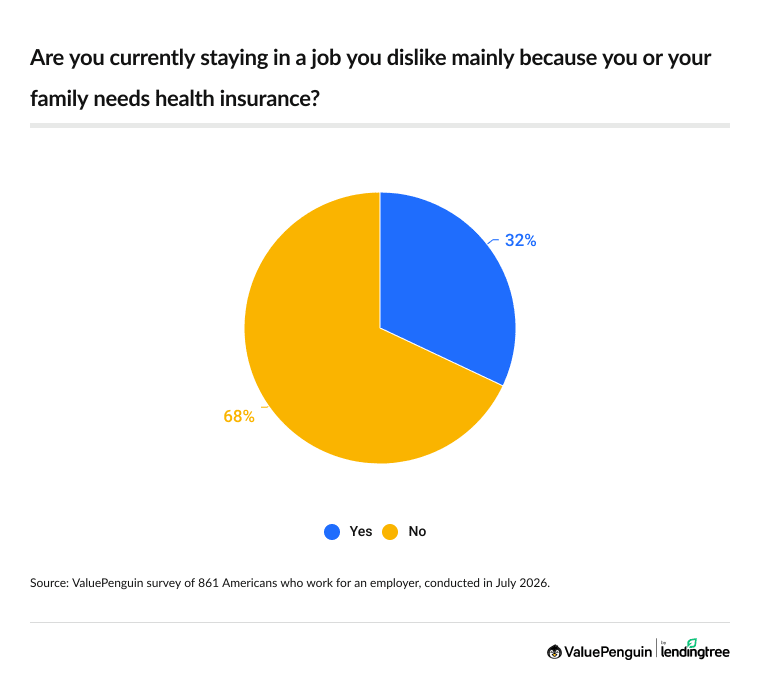
For a significant slice of the American labor force, job dissatisfaction takes a definitive backseat to the preservation of health benefits. Nearly one in three workers employed by a company—32% overall—freely admit they are currently staying in a job they actively dislike primarily because they cannot afford to lose the accompanying health insurance.
This sentiment spikes sharply among younger professionals. A staggering 54% of Gen Z workers and 32% of millennials acknowledge staying in undesirable positions for coverage, compared to 26% of Gen Xers aged 46 to 61. Parents of minor children also experience this pressure at higher rates, with 38% feeling bound to unpalatable jobs compared to 29% of nonparents.
According to Deventer, specific plan features often dictate whether an unhappy employee decides to grit their teeth and stay. When an employer covers a remarkably generous share of the monthly premium, or when a policy includes specialized care and robust prescription drug benefits that address ongoing medical needs, walking away becomes a formidable financial gamble.
Tight Budgets Keep Employer Coverage Feeling Like the Only Realistic Option
A major reason workers remain tethered to employer-sponsored healthcare is the stark reality of their personal budgets. When asked how much they could comfortably spend monthly on health insurance outside of a workplace plan, 42% of Americans stated they could manage less than $100. Another 23% indicated they could stretch their budgets to between $100 and $249 a month.
Given these strict financial boundaries, it is perhaps unsurprising that 52% of Americans agree health insurance should ideally remain tied to employment. This protective view is especially popular among parents of young children, 66% of whom support the traditional employment-linked model, compared to 46% of parents with adult children and 46% of nonparents. Millennials share this perspective, with 59% voicing support for keeping coverage tied to a job.
Deventer explains that this public sentiment is rooted in pragmatic math. The primary advantage of the system is direct cost reduction, as employers shoulder a large portion of monthly premiums to make medical care manageable for families. However, she cautions that this convenience extracts a heavy toll on career mobility, locking workers into positions they might otherwise abandon in search of greater fulfillment or professional growth.
Methodology
The insights detailed in this report are derived from an online survey commissioned by ValuePenguin and administered by QuestionPro. The research surveyed 2,001 U.S. consumers ranging in age from 18 to 80 between July 2 and July 8, 2026. The survey utilized a nonprobability-based sample, implementing specific quotas to ensure the demographic makeup accurately reflected the broader U.S. population. All collected responses underwent rigorous quality control reviews by researchers prior to analysis.