Paying for health care has become an overwhelming challenge for millions of households across the United States. Even for families equipped with medical insurance, the relentless upward march of premiums, deductibles, and out-of-pocket costs creates a continuous financial squeeze. Far from offering total peace of mind, traditional coverage often leaves consumers exposed to steep expenses that strain their everyday budgets, forcing difficult decisions just to keep up with basic medical needs.
A comprehensive new survey by ValuePenguin reveals that a substantial share of insured Americans are routinely forced to take on debt simply to pay for medical expenses. The financial burden falls especially hard on parents, with nearly half of insured respondents who have children younger than 18 reporting that they have gone into debt for healthcare. To cope with these escalating pressures, many households are looking beyond conventional means, considering alternative options such as borrowing money from friends and family members, exploring medical care outside the United States, or turning to online crowdfunding campaigns when personal savings fall short. Ultimately, these rising costs are driving some Americans to fundamentally reconsider their relationship with insurance, prompting many to contemplate dropping their coverage entirely or to delay and forgo necessary medical treatments altogether.
Insured Americans Take on Debt for Medical Care
The vast majority of survey respondents—some 90%—report that they currently maintain some form of health insurance. Employer-sponsored health plans and major government programs, including Medicare and Medicaid, remain the bedrock of this coverage, anchoring the nation’s healthcare system and serving as the primary mechanisms through which Americans access medical services.
However, coverage rates are not uniform across the entire population, with younger adults facing distinct hurdles in maintaining consistent protection. Younger demographics are notably more likely than older groups to lack insurance altogether. Nearly one-fifth of Gen Z respondents, defined as those ages 18 to 29, report having no health insurance, representing the highest uninsured rate among any generation. Millennials ages 30 to 45 follow closely behind, with 14% reporting a lack of coverage. These disparities suggest that younger workers face significant economic barriers when attempting to secure and maintain stable health insurance.

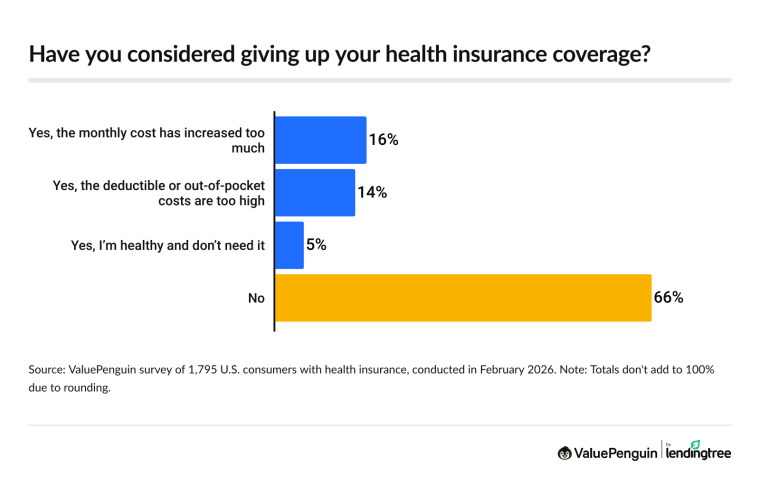
Even among those who successfully maintain coverage, the promise of financial protection often falls short. The ValuePenguin survey indicates that 32% of insured Americans have taken on debt to cover medical expenses. Among insured parents with children under the age of 18, that figure skyrockets to 47%. These statistics underline a harsh reality: holding an insurance card is no longer a guaranteed shield against crippling medical debt for American families.
As traditional coverage becomes increasingly expensive, some consumers are forced to explore alternative ways to pay for care. Borrowing money from friends or family is cited by 16% of respondents as a strategy they have considered or used. Furthermore, 11% report considering travel health insurance, while 10% have contemplated moving to a foreign country with a more affordable healthcare infrastructure. When insurance and personal savings fail, many also turn to online crowdfunding platforms, relying on the generosity of digital donors to bridge the gap left by soaring medical bills.
Many Considering Dropping Coverage Entirely
Despite widespread enrollment in health plans, soaring costs have led a significant portion of insured Americans to question whether maintaining coverage is financially viable. More than one-third of insured respondents—34%—admit they have seriously considered dropping their health insurance entirely to relieve monthly budgetary pressures.
The anxiety surrounding coverage retention is particularly acute among younger generations. Two-thirds of Gen Z respondents report having contemplated giving up their health insurance, a proportion drastically higher than that of older age cohorts. When pressed on their motivations, insured Gen Z respondents point primarily to overwhelming cost pressures, high monthly premiums, and the belief that they rarely use medical services enough to justify the expense.
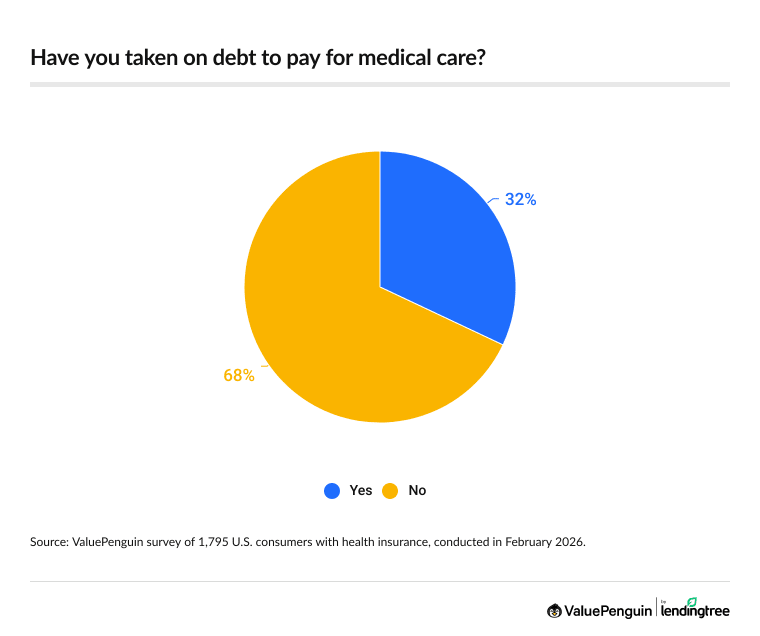
For some, these thoughts have already translated into action. Fifteen percent of currently insured respondents acknowledge that they have previously dropped coverage at some point in the past, while another 13% have actively cut back on the comprehensiveness of their plans, and 6% have done both. The share of individuals who have either dropped or reduced their coverage climbs steeply when looking at specific vulnerable groups, reaching 64% among Gen Z respondents and 54% among parents of young children.
While dropping coverage may provide immediate relief to a strained monthly budget, insurance experts warn that the gamble carries severe long-term financial dangers. Cate Deventer, a ValuePenguin senior writer and licensed health insurance agent, notes that going without coverage exposes consumers to catastrophic medical bills in the event of an accident or unexpected illness. Without insurance, patients are billed the full, unadjusted cost of care, which can easily overwhelm household finances during an emergency. An urgent care visit can quickly run between $120 and $184, while the average cost of an emergency room visit climbs to approximately $1,700, according to data from UnitedHealthcare. Without a health plan to shoulder a portion of these expenses, a single unexpected health crisis can lead to immediate and devastating financial ruin.
Some Delay or Avoid Medical Care Due to Costs
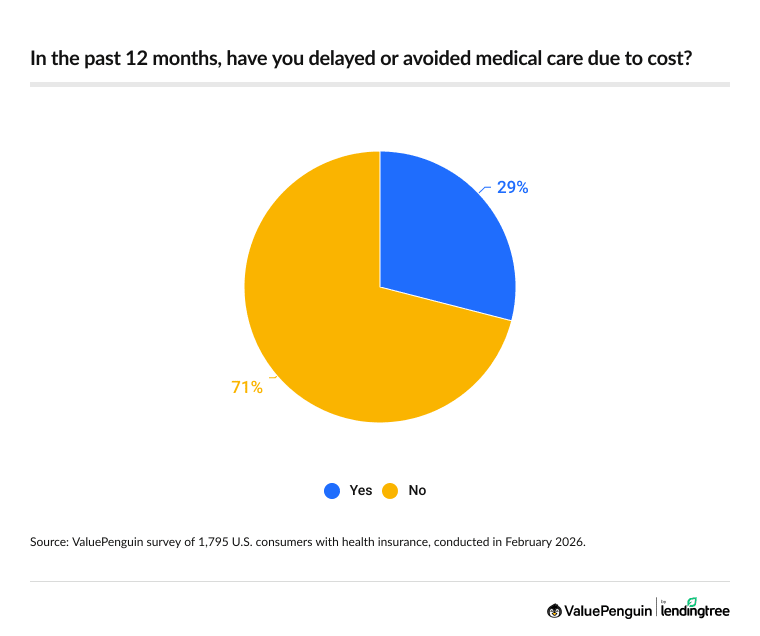
The impact of rising healthcare expenses extends far beyond monthly budgeting, fundamentally altering how and when Americans seek medical attention. The survey reveals that 29% of insured Americans have delayed or avoided medical care entirely over the past year strictly due to cost concerns.
This hesitation is even more pronounced among younger adults and parents. More than two in five parents with children younger than 18, and 41% of Gen Z respondents, report putting off needed medical care because of financial barriers. Prescription drug management is similarly compromised, with one-quarter of insured respondents admitting that they have cut pills in half, skipped doses, or chosen not to fill a prescription at all in an effort to save money. Healthcare professionals warn that stretching medications in this manner not only heightens immediate health risks but often results in more severe, expensive medical interventions down the line.
Parents frequently bear the brunt of these difficult trade-offs. Roughly one-third of insured Americans with children state that they have skipped their own necessary medical care simply to afford treatment for their kids. Among younger households, this self-sacrifice is even more widespread, with 57% of Gen Z parents and 50% of millennial parents reporting that they have foregone their own healthcare to ensure their children receive care.
Deventer emphasizes that delaying treatment often backfires economically. Deferring care for a routine illness like the flu can allow the condition to escalate, increasing the likelihood that a patient will ultimately require intensive, high-cost medical intervention. Furthermore, skipping preventive visits increases the risk that physicians will fail to catch chronic or emerging health issues during their earliest, most treatable stages, compounding both physical and financial tolls.
Nearly Half with Insurance Make Financial Sacrifices to Afford It
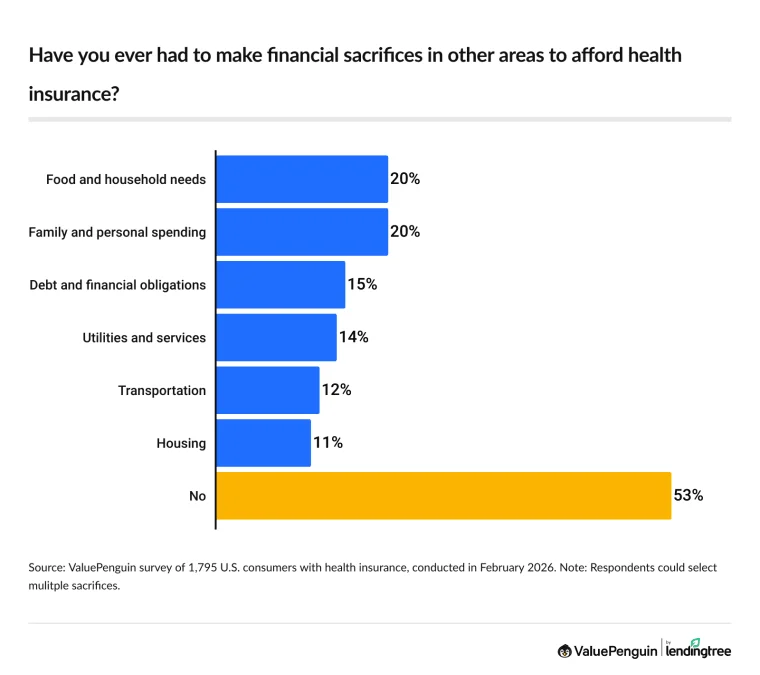
Even as insurance provides a crucial safety net against massive hospital bills, the price of maintaining that protection forces nearly half of insured Americans—47%—to make painful financial sacrifices in their daily lives.
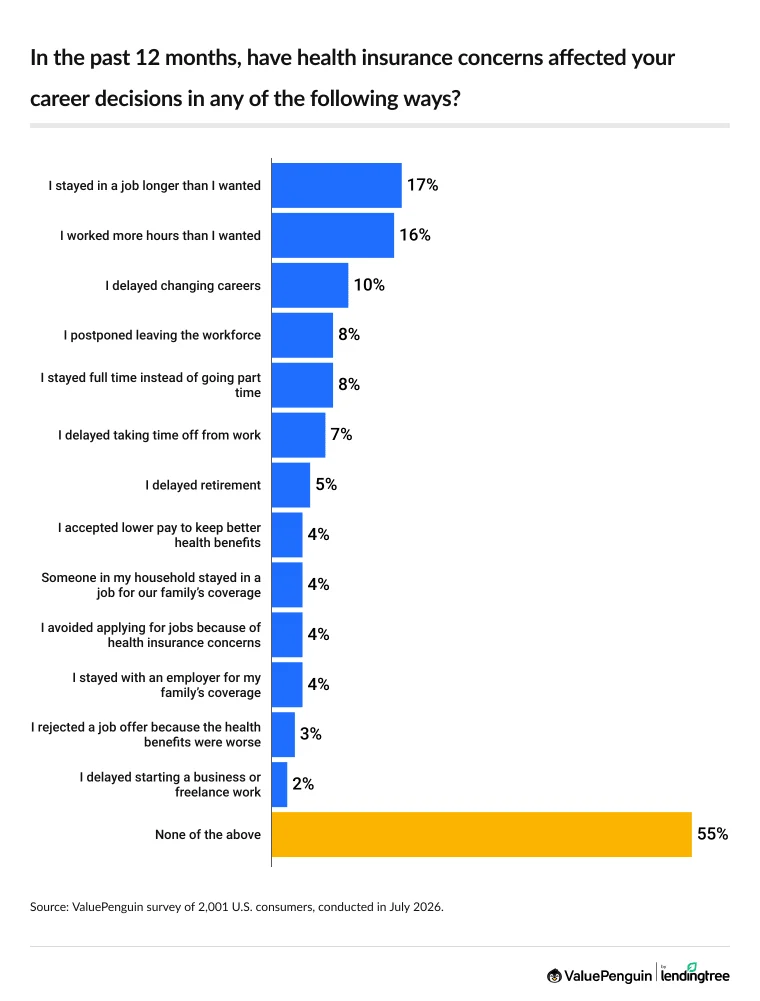
These trade-offs directly impact everyday consumer spending. To pay their monthly health insurance premiums, households report cutting back on discretionary spending, drawing down their personal savings accounts, delaying major purchases, or reducing contributions to retirement funds. For many, the financial strain is so acute that it dictates major life milestones. One in five insured Americans report that they have changed jobs, delayed their retirement timeline, or remained anchored to a specific employer strictly to retain their health insurance benefits. Because employer-sponsored plans remain the primary vehicle for healthcare access in the United States, job mobility is frequently restricted by the fear of losing coverage.
Despite these widespread sacrifices and financial strains, the majority of insured Americans maintain a positive view of their coverage’s ultimate utility. Eighty percent of insured respondents report that their healthcare expenses are generally manageable, and 77% feel that their health insurance provides good value for the money spent. Nearly one in four insured individuals pay nothing out of pocket for their monthly premiums, thanks to employer subsidies or government assistance programs, while others shoulder varying monthly costs. These sentiments illustrate that while the price of admission is high, most insured consumers ultimately view health insurance as a necessary and worthwhile safeguard.
Methodology for the findings is based on an online survey commissioned by ValuePenguin and conducted by QuestionPro, which polled 2,000 U.S. consumers between ages 18 and 80 in February 2026. Quotas were utilized to ensure the demographic sample accurately represented the broader national population.