Financial technology heavyweights, including corporate spend management platform Ramp and global payments giant Stripe, are continuing their aggressive push for direct access to the United States Federal Reserve’s core payment systems. Executives from both companies used a high-profile industry gathering last month to advocate for structural reforms, casting a spotlight on a pending congressional bill that could fundamentally alter how non-bank financial institutions interact with the nation’s financial plumbing.
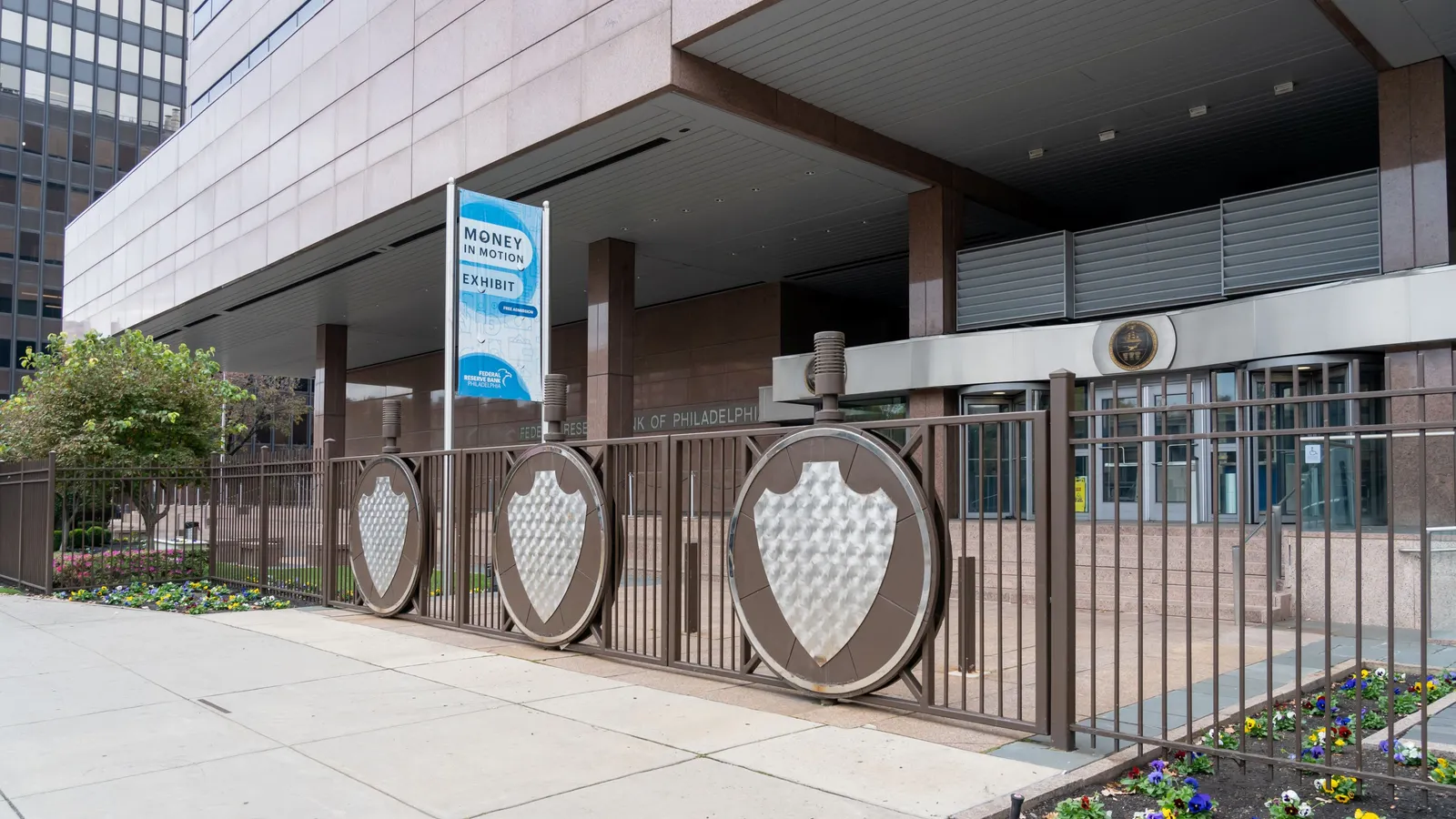
Speaking at the Philadelphia Federal Reserve Bank’s annual fintech conference, corporate leaders argued that the current framework locks innovative technology companies out of essential infrastructure despite handling billions of dollars in economic activity daily. The core of their argument centers on the Federal Reserve’s payment systems, which comprise the Fedwire Funds Service, the FedNow Service for instant payments, and FedACH Services for automated clearing house transactions.
Stripe, which processes massive volumes of transactions globally, currently lacks direct access to a Federal Reserve master account. Jonah Crane, the head of global regulatory and policy at Stripe, addressed the limitation during a September 25 panel discussion at the conference, pointing out the operational friction this creates for modern financial enterprises.
"Stripe has no access to a Federal Reserve master account, even though we settle lots of payments every day, and it would be really efficient and really safe for our users to be able to do so," Crane said during the panel discussion.
He further emphasized the structural disconnect between modern business models and century-old regulatory frameworks. "The core challenge we see is just the mismatch between our business and the sort of legacy regulatory boxes, and we constantly have these square-peg, round-hole problems," Crane added.
The legislative vehicle at the center of this ongoing debate was introduced earlier this year in April, when California Republican Representative Young Kim introduced the Payments Access and Consumer Efficiency (PACE) bill. The proposed legislation is specifically designed to address the longstanding desire of fintech companies for broader Federal Reserve access. Under the terms of the measure, eligible non-bank financial firms would be permitted to utilize U.S. electronic payment systems, albeit under a newly established, specialized oversight regime managed by the Office of the Comptroller of the Currency (OCC).
The PACE bill has managed to attract bipartisan interest in the House of Representatives. Representative Sam Liccardo, a Democrat representing a Silicon Valley district that includes parts of San Jose, California, signed on as an initial cosponsor. Momentum for the legislation continued into the summer when Representative Pete Sessions, a Texas Republican, added his name as a second cosponsor in June.
Advocates for the legislation argue that opening up the payment rails would yield substantial benefits for both everyday consumers and corporate clients by increasing market competition and reducing transactional friction. Alissa Kratsios, Ramp’s head of global policy, championed this perspective during the discussions surrounding the bill.
"We think that the bill would enable faster, cheaper payments for consumers and for the businesses that we serve," Kratsios said.
Ramp, a New York-based financial technology company specializing in corporate spend management, commands a massive footprint in the American economy. According to Kratsios, the company processes approximately $200 billion in corporate payments each year, accounting for roughly 3% of all corporate card spending in the United States.
Given the nature of its business-to-business operations, access to specific payment rails is of paramount importance to the firm’s day-to-day efficiency. Kratsios noted that Fed ACH access is particularly vital to Ramp’s operations, as approximately 90% of the company’s payments rely upon that specific network rail. She firmly rejected the notion that fintech companies are attempting to bypass necessary regulatory oversight through these legislative efforts.
Furthermore, Kratsios highlighted an international discrepancy that puts the United States at odds with its economic peers. The United States remains the only G7 member nation that does not permit direct payment access for non-bank firms, creating a competitive disadvantage for American companies.
"This is a great initiative that would allow well-regulated firms to apply for access to Fedwire, FedNow, and FedACH with oversight from the OCC," Kratsios said, emphasizing that the framework incorporates robust supervisory controls rather than unregulated participation.
Despite the advocacy from major fintech players, the legislative path forward remains uncertain. According to records on Congress’s website, there is currently no companion legislation filed in the Senate. Analysts and industry observers suggest that the prospects for the bill’s passage are limited given the legislative calendar and political realities. A spokesperson for Representative Young Kim did not respond to requests for comment regarding the bill’s ongoing progress in the House.
Nevertheless, industry groups are already looking ahead to the next legislative term. The Financial Technology Association (FTA) views Representative Kim’s bill as a critical item on its policy agenda.
A spokesperson for the FTA stated in an email that the organization views the PACE bill as a priority to revisit in the new Congress, noting that the group continues to see sustained demand in the marketplace for faster, cheaper payment solutions. The FTA’s chief executive, Penny Lee, notably moderated the Fed panel discussion last month where the executives voiced their frustrations.
In addition to the legislative push in Congress, the executive branch has also initiated parallel efforts to address the issue. The Federal Reserve has been working to accommodate an executive order signed by President Donald Trump in May. That directive explicitly instructs the central bank to review its current practices and policies with the ultimate goal of opening U.S. payment rails to a broader array of qualified fintech companies.
Under the current regulatory paradigm, many non-bank fintech providers must navigate a complex, fragmented landscape, acquiring money transmitter licenses on a state-by-state basis in order to offer financial services to the public. If enacted, the PACE bill would streamline this process by establishing a dedicated payments service provider registration mechanism overseen federally by the OCC. This pathway would theoretically become available to a range of prominent non-bank entities operating in the digital finance space, including companies like Chime, Ramp, and Stripe.
However, the prospect of granting non-bank entities direct access to the nation’s core financial infrastructure has faced fierce resistance from traditional banking institutions. Banking sector trade groups and lobbyists have sharply criticized the proposal, voicing their opposition most recently during a June hearing held by the House Financial Services Committee to examine the legislation.
During these hearings and in subsequent public statements, traditional banks have emphasized the rigorous compliance, capital requirements, and strict regulatory standards they must constantly satisfy to maintain their own master accounts and service the payment rails. Banking representatives have consistently raised concerns that extending similar privileges to less-regulated fintech firms could introduce systemic risks and vulnerabilities into the broader U.S. payments ecosystem.