The phenomenal stock rally of Micron Technology (MU) continues to command the attention of global financial markets, fueled by an acute shortage of High Bandwidth Memory (HBM), record-shattering earnings reports, and an aggressive wave of upward revisions from major Wall Street analysts. As the broader technology sector navigates an insatiable appetite for artificial intelligence infrastructure, Micron has cemented its position as a critical beneficiary of the ongoing semiconductor boom.
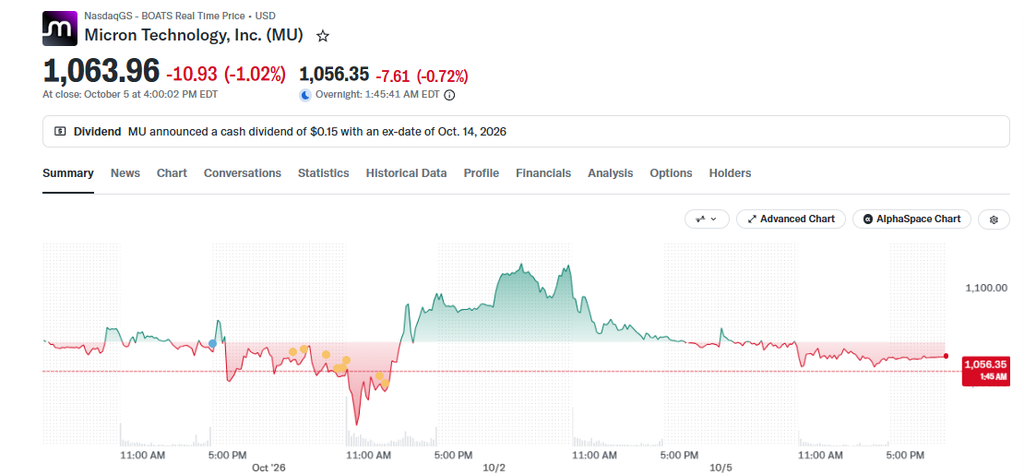
At the market close on October 5, the Micron stock price settled at $1,063.96, marking an astonishing year-to-date gain of 272.78%. This exponential growth is underpinned by unprecedented fundamental performance, highlighted by the fact that Micron’s HBM supply contracts have already locked in the vast majority of its manufacturing capacity well through calendar year 2027. Amid this historic ascent, the average one-year Micron stock price target on Yahoo Finance stands at $1,535.57. With executive leadership projecting an even more constrained global memory market throughout 2027 and 2028, the overarching market sentiment among institutional forecasters remains overwhelmingly bullish, even as analysts weigh emerging operational risks against the company’s unprecedented pricing power.
Micron Stock Rally, HBM Demand, Price Targets And Key Risks
The accelerating momentum behind the Micron stock rally intensified significantly following the release of the company’s fiscal 2026 financial results, which revealed annual revenue soaring to $133.19 billion, a staggering leap from the $37.38 billion reported during the previous fiscal year. Demonstrating its urgency to capture skyrocketing market demand, Micron announced plans to aggressively accelerate its HBM manufacturing capacity across four major operational sites in Taiwan. Furthermore, the company’s Mobile and Client unit delivered a phenomenal performance in the fourth quarter, posting an 88% operating margin driven primarily by higher average selling prices across its product portfolio.
At the heart of this corporate triumph is the unprecedented demand for Micron’s HBM solutions, which are vital for powering advanced AI accelerators and data center architectures. During the company’s recent earnings call, Sanjay Mehrotra, Chairman and CEO of Micron Technology, provided critical insight into the company’s commercial positioning.
"We have completed agreements for the vast majority of our calendar 2027 HBM bit supply with significant price increases year over year, narrowing the gross margin gap with conventional DRAM," Mehrotra told investors and analysts.
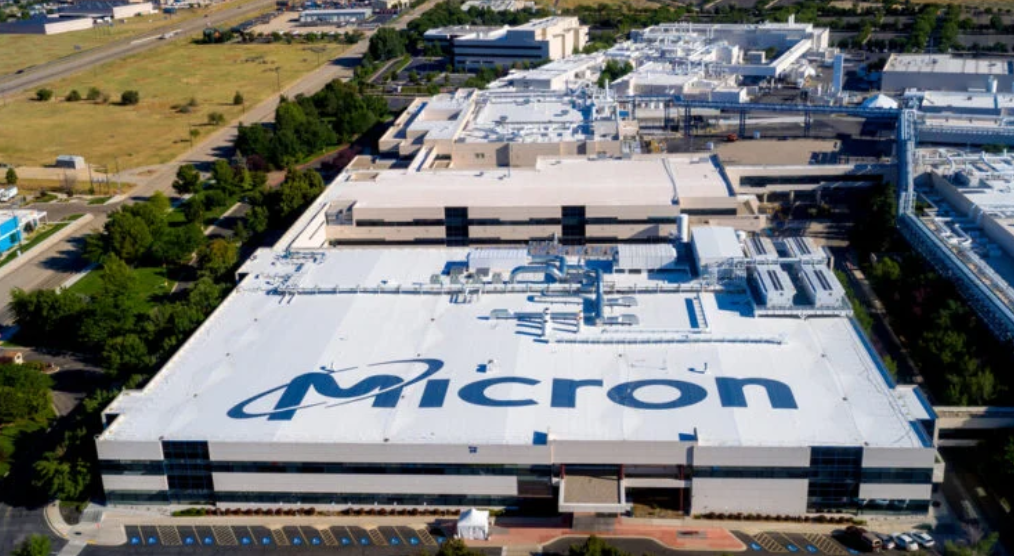
Further cementing its leadership in next-generation hardware, Mehrotra revealed that Micron is actively collaborating with tech giant Nvidia on the industry’s very first custom HBM4E implementation. Management projects that industry-wide HBM bit shipments will continue to outpace conventional DRAM growth through calendar year 2028, creating a foundational pillar of sustained confidence that continues to feed the ongoing Micron stock rally.
Analysts Lift The Micron Stock Price Target
Wall Street financial institutions have found themselves scrambling to adjust their models in order to keep pace with the sheer velocity of the Micron stock rally. Major investment firms have steadily pushed their valuation metrics higher, reflecting the immense pricing power currently enjoyed by the memory chip manufacturer. Baird notably raised its Micron stock price target from $1,280 to $1,520, while Bank of America reaffirmed its steady target of $1,550. Meanwhile, DA Davidson analyst Gil Luria staked out a position at the absolute high end of the Street, lifting his firm’s price target to a monumental $2,100 per share.
"Acute shortages are expected to persist in 2027," noted Baird analyst Tristan Gerra, emphasizing the severe supply-demand imbalance that continues to inflate memory prices across the global technology supply chain.
Not all institutional voices share the same unbridled optimism, however. Morgan Stanley analyst Joseph Moore has adopted a more cautious posture, maintaining a $1,200 price target while outlining a potential bear case target of $675 should the broader memory cycle experience a cyclical downturn by 2027. The inherent volatility of the current market environment was underscored when the Micron stock price slipped 1.02% in a single trading session, serving as a reminder of the swift price swings that accompany high-growth technology equities.
Micron Stock Forecast And Labor Risks In Taiwan
When pressed by financial analysts during the earnings conference call regarding the long-term outlook for semiconductor supply, CEO Sanjay Mehrotra offered a blunt and unvarnished assessment of the global industry landscape.
"In calendar 2027 as well as 2028, we see demand exceeding supply," Mehrotra stated. "In fact, we see greater tightness in the industry in 2027 and in 2028 versus 2026. Overall, the supply-demand environment is only getting tighter. We do not have line of sight to when supply and demand will return to balance."
This stark scarcity narrative forms the structural bedrock of the bullish Micron stock forecast heading into the company’s upcoming earnings report, which is tentatively estimated for release on December 23. Even in the wake of the historic stock rally, Micron shares are currently trading at a modest multiple of roughly 14 times trailing earnings, supported by a robust trailing earnings-per-share (EPS) figure of $74.33.
Despite the overwhelmingly positive financial metrics and soaring revenue projections, the Micron stock rally is not entirely without vulnerability. The most immediate external risk to operations is centered in Taiwan, where labor unions have actively pushed for a profit-sharing agreement that would allocate 15% of company earnings directly to workers. Following a breakdown in official mediation rounds, representatives from the Taoyuan union have floated the prospect of a strike vote. Simultaneously, leadership from the Taichung union has advanced into critical negotiation sessions with corporate management, marking a delicate labor juncture for the multinational chipmaker.
For the time being, the extraordinary valuation and upward trajectory of Micron stock rest securely upon market scarcity and unyielding pricing power. Provided that existing HBM supply contracts hold firm and conventional DRAM pricing remains resilient, market observers note that the Micron stock price retains ample room to climb back toward its 52-week high of $1,255, representing an upside of approximately 15% above the early October close. Conversely, any escalation of labor disruptions in Taiwan or an unexpected shift in memory pricing dynamics would likely serve as the first tangible indicators that the powerful Micron stock rally is finally beginning to encounter resistance.