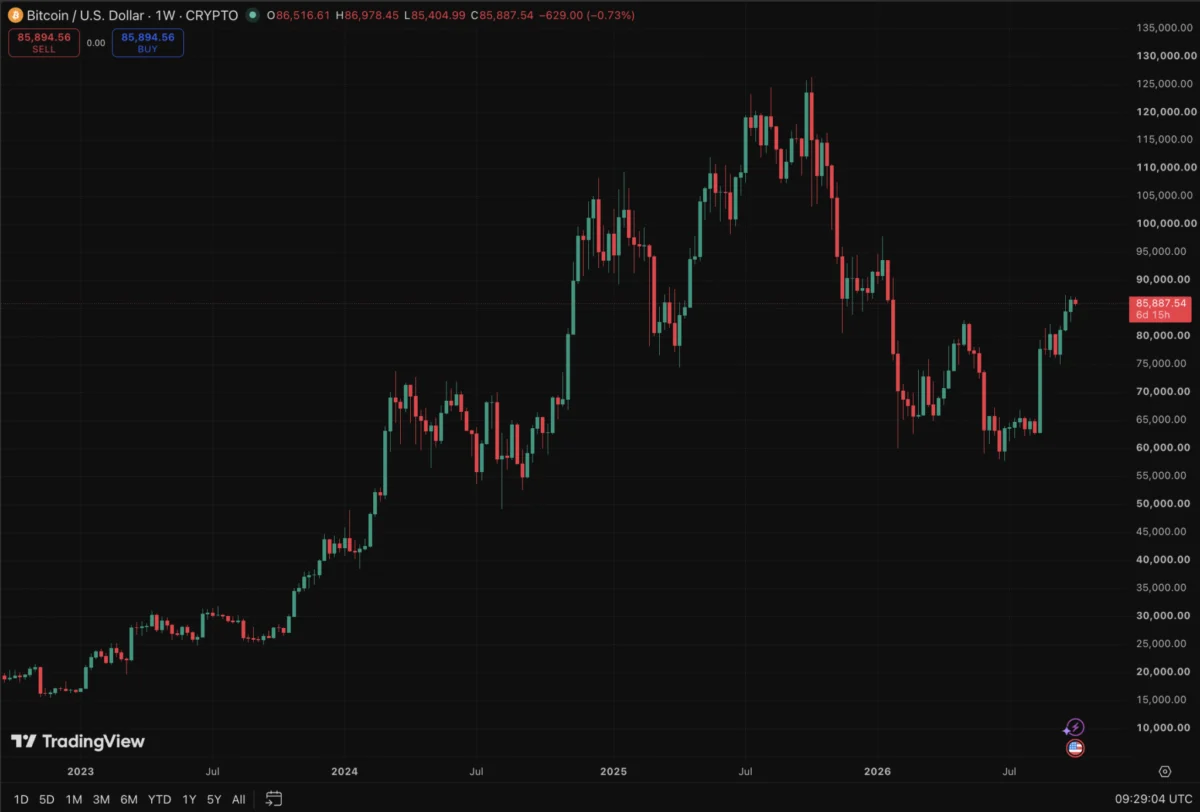
As Bitcoin stages a tentative recovery, climbing back above the $80,000 threshold to trade near $85,500, the digital asset’s recent momentum is running straight into a wall of skepticism. Prominent economist and long-standing Bitcoin critic Peter Schiff has once again weighed in on the market’s trajectory, casting doubt on the sustainability of the recent rebound. According to Schiff, while renewed market confidence and short covering may have provided a temporary cushion for the world’s largest cryptocurrency, a broader technology-stock correction could quickly reverse these gains.
At the center of Schiff’s cautious outlook is Strategy, the corporate heavyweight led by Michael Saylor known for its massive, continuous accumulation of Bitcoin. Schiff has raised pointed questions regarding the company’s financing mechanism—specifically its ability to fund substantial new Bitcoin purchases through STRC. By linking the broader cryptocurrency market’s vulnerability to potential weaknesses in tech equities and shifting capital channels, Schiff’s analysis highlights the complex web of traditional financial market dynamics and corporate treasury strategies currently influencing digital assets.
Bitcoin Rebound Meets Schiff’s Tech Stock Warning
The latest market data places Bitcoin at roughly $86,000, reflecting a modest gain of over 2.5% across the week and more than 6.5% over the course of a month. Despite this recent upward movement, the asset remains down about 30% compared to its valuation from a year ago. This stark contrast underscores the reality that short-term recoveries have yet to erase the deeper downward trend experienced over longer horizons.
Schiff’s bearish perspective is rooted in a broader macroeconomic view. He points out that traditional equity markets have largely absorbed various weak economic signals—including softer inflation metrics and disappointing employment data—without undergoing meaningful corrections. In his assessment, this apparent resilience may leave mainstream markets overextended and vulnerable to a sharp reevaluation by investors. Furthermore, Schiff highlights declining bond prices and oil hovering near $91 a barrel as underlying indicators of broader economic strain.
While the veteran economist does not explicitly forecast an immediate market crash or draw a direct, mechanical link to daily Bitcoin price action, he maintains that a significant sell-off in technology stocks could inevitably spill over into digital assets. Such a correction would likely compress overall risk appetite across global portfolios and force institutional investors to rebalance their asset allocations. Compounding these worries are ongoing anxieties regarding potential overvaluations in artificial intelligence and broader technology sectors, which have driven high portfolio concentration in recent quarters.

STRC and Strategy’s Financing Test
Beyond macroeconomic indicators, Schiff’s critique targets the mechanics of corporate capital generation. He argues that Strategy may face mounting hurdles in securing the capital required to maintain its aggressive Bitcoin accumulation pace, suggesting that the firm may have lost some of its prior capacity to generate large-scale funding through STRC.
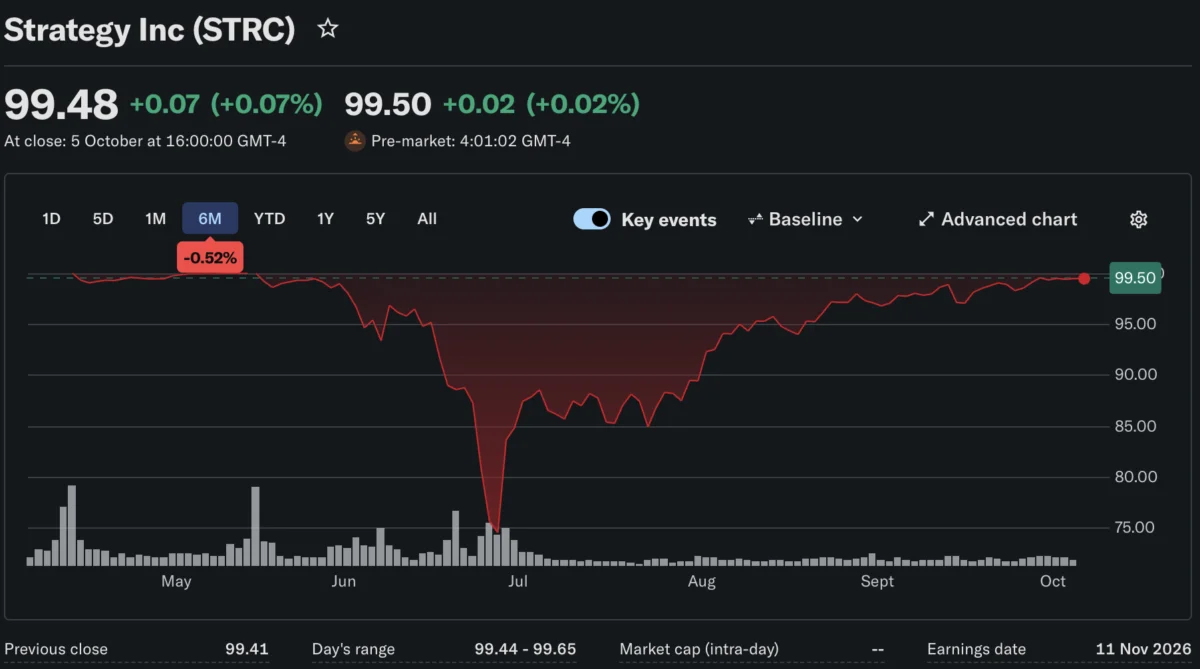
Market fluctuations earlier in the year saw STRC experience a summer dip down to $75 before staging a recovery toward $99.40, a rebound supported by strategic share repurchases and Bitcoin pushing past the $80,000 mark. However, analysts note that these price recoveries do not automatically confirm the company’s frictionless ability to continuously raise fresh capital under shifting market conditions.
Corporate disclosures show that Strategy maintains a formidable treasury, holding roughly 848,000 Bitcoin—accounting for more than 4% of the asset’s total circulating supply—alongside $4.8 billion in reserves and $833 million in cash. Meanwhile, STRC carries a notional value of $8.93 billion, paired with a 12% variable dividend and an effective yield of approximately 12.07%.
Financial analysts emphasize that while the relationship between dividend obligations and capital-raising mechanisms is vital, the two functions remain distinct. The dividend policy and effective yield characterize the underlying security, whereas Strategy’s ongoing decisions to issue or repurchase shares ultimately depend on prevailing market liquidity and internal corporate strategy. The interplay between these dividend commitments and continuous digital asset acquisitions remains a defining feature of the firm’s operational model.
Continued Purchases Complicate the Bearish Case from Schiff
Despite mounting skepticism from market critics, Strategy has pressed forward with its treasury strategy. Recent updates shared by the company highlight a robust third quarter, including a reported $21 billion gain on digital assets. Continuing its accumulation pattern, the firm recently acquired an additional 334 Bitcoin for approximately $28.7 million, alongside the repurchase of roughly $176 million worth of STRC.

This latest acquisition volume, however, represents a notable deceleration compared to previous periods, such as late September when the company purchased 1,665 Bitcoin for about $142.8 million. This varying pace of accumulation has fueled ongoing debates within the financial community regarding the long-term sustainability of corporate Bitcoin treasuries.
As Bitcoin trades near $86,000—up slightly from the $84,500 range observed when Schiff first voiced his latest concerns—market participants continue to weigh short-term price strength against structural risks. While recent recoveries and the stabilization of STRC near the $100 mark offer encouragement to bulls, analysts suggest they do not guarantee uninterrupted buying capacity moving forward.
Ultimately, Schiff contends that any future downturn in technology equities could act as a catalyst for broader sentiment shifts, testing the resilience of corporate crypto strategies against macroeconomic headwinds. For market observers, distinguishing between reported balance sheet gains and underlying financing risks remains critical as digital assets navigate an evolving macroeconomic landscape.