Warren Buffett is advancing his multi-year succession strategy at Berkshire Hathaway, taking a definitive third major step to ensure the conglomerate preserves its foundational values long after he is gone. The move marks another milestone for the historic enterprise, which Buffett took control of in 1965 as a struggling Massachusetts textile manufacturer and meticulously built over six decades into one of the most valuable corporations in the global economy.
Even after recently celebrating his 96th birthday, the legendary investor is not stepping away entirely. Instead, he continues to orchestrate a careful transition designed to protect the unique corporate culture that underpins Berkshire’s success.
The progression of Buffett’s succession plan has unfolded in clear phases over recent years. Initially, he gradually empowered Berkshire veteran Greg Abel, the designated chief executive officer, to take over the day-to-day management of the vast network of operating companies. That was followed in May 2025 by the announcement that Buffett would step down as CEO by the end of that year while remaining as chairman, paving the way for Abel to assume the chief executive role.
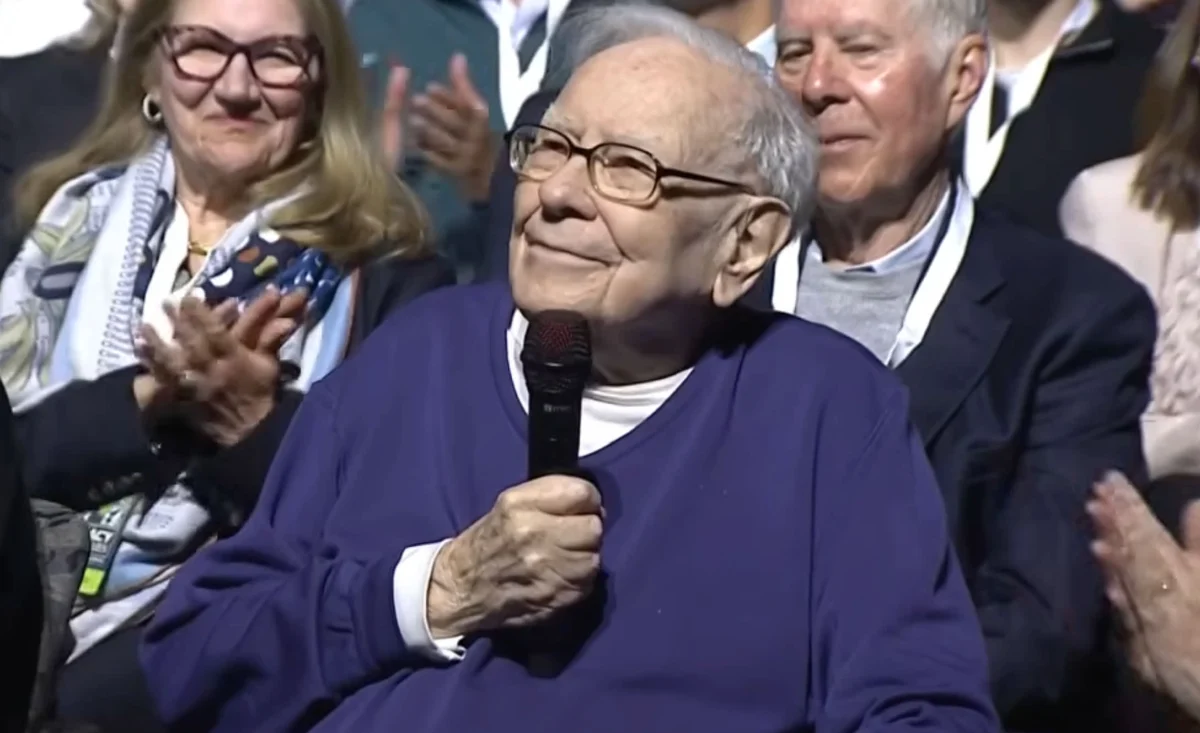
Now, in a special edition of the Berkshire Hathaway updates, it has been revealed that Buffett is stepping down as chairman of the board. He will transition to the role of "chairman emeritus" on the company’s board of directors, a position that allows him to continue offering his valued judgment and perspective. Concurrently, in alignment with the company’s long-standing succession plan, his son, Howard Buffett, will assume the role of chairman.
In a letter addressed to shareholders, Buffett emphasized that Howard’s primary responsibility will be to serve as a guardian of Berkshire’s culture and values, noting that these intangible assets are worth more than anything listed on the corporate balance sheet. Both the official company news release and Buffett’s accompanying letter heavily emphasize continuity, reinforced by having a family member deeply familiar with the firm’s ethos at the head of the board.

Greg Abel underscored this sentiment, noting that the culture Warren built and the values he championed will remain at the very heart of Berkshire, with Howard serving as their protector. Buffett further characterized his son’s role by pointing out that Howard has served as a corporate director for 33 years, describing him metaphorically as a policy that shareholders own and hope never to have to claim against.
Market observers and financial journalists have noted the deep personal connection Buffett maintains with the company. Becky Quick reported on CNBC that Buffett has consistently spoken about Berkshire Hathaway as if it were another one of his children, making the assurance of its future leadership one of the most critical decisions of his storied career.
Since Abel stepped into the chief executive role, both men have maintained a remarkably close working relationship. They have repeatedly noted that Buffett still comes into the corporate office five days a week and that the two leaders converse at least every few days. While Wall Street speculation initially attributed Berkshire’s prominent $37 billion investment in Alphabet’s artificial intelligence initiatives entirely to Abel, Buffett clarified in July that he initiated the move himself with Abel’s full approval. Emphasizing their collaborative dynamic, Buffett explained that he does nothing that Abel disapproves of, and vice versa, while acknowledging that Abel remains the ultimate decider.
Whether this latest title change signifies a more passive role for Buffett or merely a continuation of his active presence under a new designation remains to be seen. In his shareholder letter, Buffett reaffirmed his enthusiasm, stating that he still holds the best job in the world and has never felt better about what lies ahead. Financial analysts viewing the transition from the outside have offered largely positive assessments. Brian Jacobsen of Annex Wealth Management remarked to Reuters that the transition was always a matter of when, not if, describing Buffett’s exit as graceful and noting that the event feels much more like the completion of a carefully planned succession than a sudden shifting of power.
Who is Howard Buffett?
While the broader financial world has long understood that Warren Buffett intended for his son Howard—who prefers to be known as "Howie"—to eventually succeed him as chairman, Howard himself maintains a profile distinct from the typical corporate executive. His eclectic background has recently drawn fresh attention and profiles from major publications.

According to reports from The New York Times, Howard attended three different colleges without graduating from any of them before launching a career in agriculture. He began running a 400-acre farm north of Omaha in 1986, an operation he continues to manage alongside a larger 1,500-acre farm in Illinois.
Beyond agriculture, Howard has ventured into law enforcement. He served as an Illinois county sheriff for over a year starting in 2017, a role that followed extensive training encompassing thousands of hours of patrol work and numerous weapons qualifications spanning tasers, handguns, rifles, and shotguns.
Like his father, Howard is heavily dedicated to philanthropy. The Howard G. Buffett Foundation, which receives annual contributions from Warren Buffett, distributed $700 million in grants focusing on food security, conflict mitigation, and the fight against human trafficking, according to its annual report cited by Barron’s. Ukraine has emerged as a primary beneficiary of these philanthropic efforts, receiving approximately $350 million in 2025 and totaling $1.1 billion since the onset of the Russian invasion in 2022. Having traveled to the region firsthand, Howard remarked to CNBC in 2022 that he had never witnessed anything comparable in his lifetime.
Despite his non-traditional corporate background, The Wall Street Journal notes that Howard is no stranger to boardrooms, having previously served as a director for major corporations including Coca-Cola, Coca-Cola Enterprises, and ConAgra Foods. Nonetheless, observers acknowledge that his primary qualification for the Berkshire chairmanship is his lineage. Buffett himself candidly told The Wall Street Journal that his son is getting the position because he is his son.
Discussing the upcoming responsibility, Howard expressed confidence in his preparation, crediting the decades of influence and direct teaching he received from his father. He noted a readiness to step into the role when the time came, drawing on a lifetime habit of tackling complex challenges.
Berkshire Shares Undisturbed

Wall Street appears to view the leadership transition with calm stability, anticipating no immediate disruption to the company’s financial trajectory. Following the announcement, both Berkshire Hathaway Class A and Class B shares experienced minor dips in early trading before recovering to finish the day nearly unchanged.
This muted market reaction may reflect the reality that the so-called "Buffett Premium" has already largely faded from the stock price. Berkshire shares have declined by more than 5% since Buffett’s initial announcement in May 2025 regarding his planned departure as CEO at the end of that year—a performance that lags significantly behind the broader S&P 500 index’s gains over the same period. Furthermore, Berkshire’s B shares have continued to underperform the benchmark index since the beginning of the year.
The long-term resilience of the company, however, remains anchored in its deeply ingrained corporate culture. Speaking previously at an annual shareholder meeting in 2015 regarding the durability of Berkshire’s values after both he and his longtime partner Charlie Munger were gone, Warren Buffett expressed complete confidence. He explained that Berkshire’s culture is institutionalized and self-reinforcing, embedded across the parent company, its diverse subsidiaries, and its shareholder base. Noting that the vast majority of shareholders historically vote against issuing dividends and that directors actively invest their own capital in the stock rather than collecting standard attendance fees, Buffett emphasized that the culture would only grow stronger over time as living proof that the enterprise relies on institutional strength rather than the personality of a single founder.