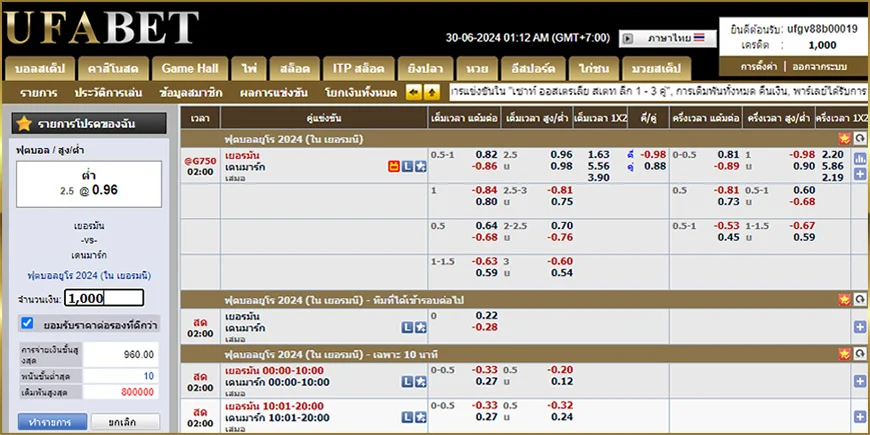
Sports betting has evolved into a massive global industry, offering enthusiasts numerous ways to engage with their favorite football matches. Among the most popular and widely utilized wagering methods are Over-Under totals and Handicap betting markets. These options provide bettors with alternative ways to predict match outcomes beyond simply picking a winner, adding layers of strategy and excitement to the viewing experience.
When exploring online sports betting platforms, particularly through established networks like UFABET, understanding the mechanics of these betting lines is essential for both novice and experienced punters. Bookmakers offer various handicap levels and goal thresholds designed to balance matches between mismatched teams, creating competitive and dynamic betting environments.
What is Over-Under Betting?
Over-Under betting, often referred to as totals betting, focuses on the combined number of goals scored by both teams during a regulation match. Rather than wagering on which team will win or lose, bettors predict whether the total score will exceed or fall short of a specific benchmark established by the oddsmakers.

In an Over market, the bettor wagers that the total number of goals scored will be greater than the designated line. Conversely, an Under wager predicts that the cumulative score will remain below that benchmark. Oddsmakers meticulously analyze team statistics, offensive prowess, defensive vulnerabilities, weather conditions, and historical head-to-head records to set these lines accurately.
The flexibility of Over-Under betting allows participants to engage with games even when the outcome between a dominant favorite and an underdog appears unpredictable. Instead of worrying about match results, bettors can focus purely on the offensive and defensive dynamics of the competing sides.
Decoding Handicap Betting and Goal Lines
Handicap betting plays a crucial role in modern football wagering, particularly when there is a significant disparity in skill between two competing teams. Bookmakers introduce goal advantages or disadvantages—often referred to as spreads—to level the playing field. This system categorizes teams into favorites and underdogs, adjusting the potential payouts based on the handicap assigned.
Understanding how different handicap lines operate is fundamental for anyone looking to place strategic wagers. The system ranges from simple level ball lines to complex fractional and quarter-ball handicaps, each with specific rules regarding wins, losses, and partial pushes.

At the baseline, a level handicap (0) means there is no advantage given to either side; the bettor simply needs to pick the winning team, with stakes refunded in the event of a draw. As the handicaps increase, the complexity scales. For instance, a 0.5 or half-ball handicap eliminates the possibility of a draw, as the favorite must win the match outright for an Over bet to succeed, while the underdog benefits from both a draw and a win.
Moving into more nuanced markets, such as the 1-goal, 1.25, and 1.5 handicaps, the margin for error shifts. A one-goal handicap means the favorite must win by two or more goals for the bettor to collect the full payout. If the favorite wins by exactly one goal, the stake is typically refunded. Higher lines, ranging from 1.75 up to 3 goals and beyond, cater to increasingly lopsided fixtures where elite clubs face significantly weaker opponents. In these scenarios, the favorite must secure a dominant victory by multiple goals to cover the spread.
Quarter-Ball Handicaps and Split Stakes
One of the intricacies of Asian handicap and total betting is the use of quarter-ball increments, such as 0.25, 0.75, 1.25, and 1.75. These lines effectively split the wager into two separate bets, mitigating risk for the bettor.
For example, when wagering on a 0.75 handicap line, the stake is divided equally between the 0.5 line and the 1.0 line. If the team wins by a single goal, half the bet wins while the other half is refunded. This sophisticated mechanism offers a safety net, protecting bettors from complete losses during tightly contested encounters.
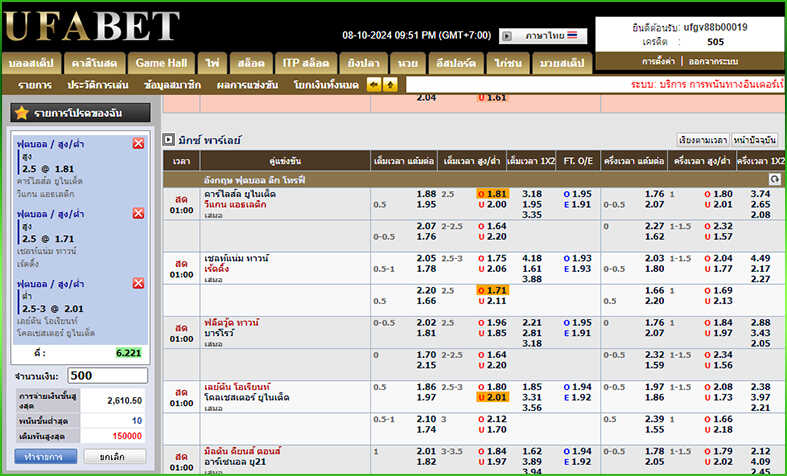
Quarter lines require careful calculation and a solid grasp of how fractional goals translate to match outcomes. Whether dealing with Asian handicaps or standard goal lines, recognizing how these increments affect payouts ensures that bettors can manage their bankrolls effectively and make informed decisions.
Strategic Approaches to Total and Handicap Markets
Successful sports betting relies heavily on research, discipline, and a thorough understanding of market mechanics. When engaging with Over-Under and handicap markets, bettors must look beyond simple team names and delve into granular data. Analyzing recent form, goal-scoring trends, tactical setups, and injury reports provides valuable context that can influence how lines move leading up kickoff.
Furthermore, monitoring odds fluctuations and understanding how bookmakers price different markets can reveal value opportunities. Bettors who take the time to study the nuances of quarter-ball handicaps and total goal thresholds position themselves advantageously within the competitive landscape of online sports wagering. As the industry continues to grow, platforms providing comprehensive markets and clear guidelines remain essential resources for enthusiasts looking to refine their betting strategies.