As the fall semester begins across college campuses nationwide, a new generation of students and recent graduates is stepping into a professional landscape transformed by the rapid ascent of artificial intelligence. While these young adults represent the most technologically literate cohort in history, they are also grappling with profound uncertainty regarding their place in an economy increasingly defined by automation, machine learning, and algorithmic decision-making. A comprehensive new survey conducted by Just Capital offers a window into this mindset, revealing a complex duality of economic anxiety and cautious opportunity as young people weigh the promise of AI against the tangible challenges of a shifting job market.
The survey, which captured the perspectives of over 1,000 Americans aged 18 to 25, highlights a critical disconnect between the academic experience and the demands of the modern workforce. As these students transition from classrooms to career paths, they are forced to reconcile their own personal aspirations with a growing skepticism about the long-term impact of AI on the broader American economy.
The Paradox of Progress: Optimism and Institutional Concern
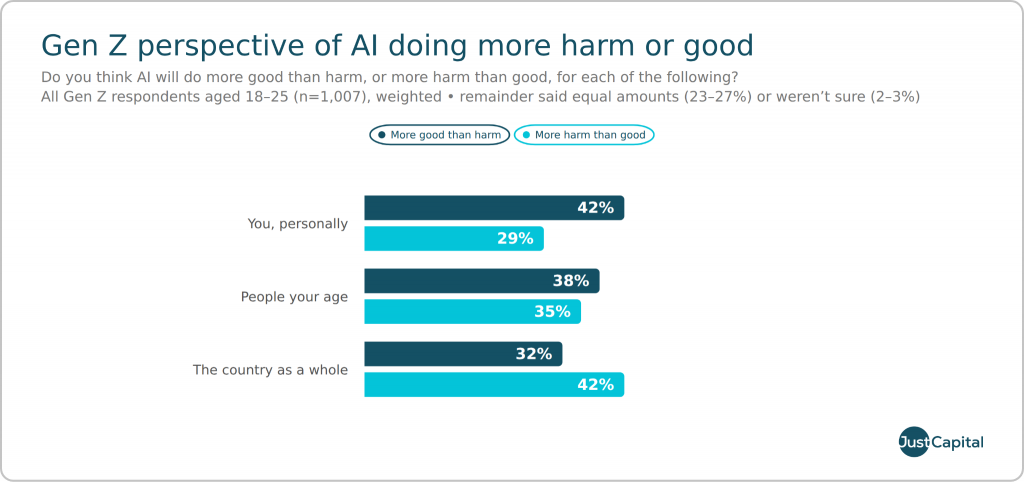
One of the most striking findings from the Just Capital research is the divergence in perspective when young adults consider the impact of AI on their own lives versus the country as a whole. Among the respondents aged 18 to 25, there is a clear thread of "tentative optimism" regarding the personal utility of AI tools. Many young people have already integrated AI into their study habits, personal projects, and daily workflows, seeing it as a potential multiplier for their own productivity and creativity. They recognize that, used correctly, these technologies can streamline research, assist in complex problem-solving, and provide a competitive edge in a fast-paced environment.

However, this optimism does not extend to their view of the national trajectory. When asked about the impact of AI on the United States at large, respondents expressed a notable degree of concern. This tension suggests that while Gen Z feels capable of managing their own interactions with AI, they are deeply wary of the systemic consequences: job displacement, the erosion of labor standards, and the potential for increased economic inequality. This skepticism reflects a broader societal debate about whether the benefits of the AI revolution will be distributed equitably or whether they will exacerbate existing gaps between those who own the technology and those who are managed by it.
The Skills Gap: Feeling Unprepared for the AI Economy
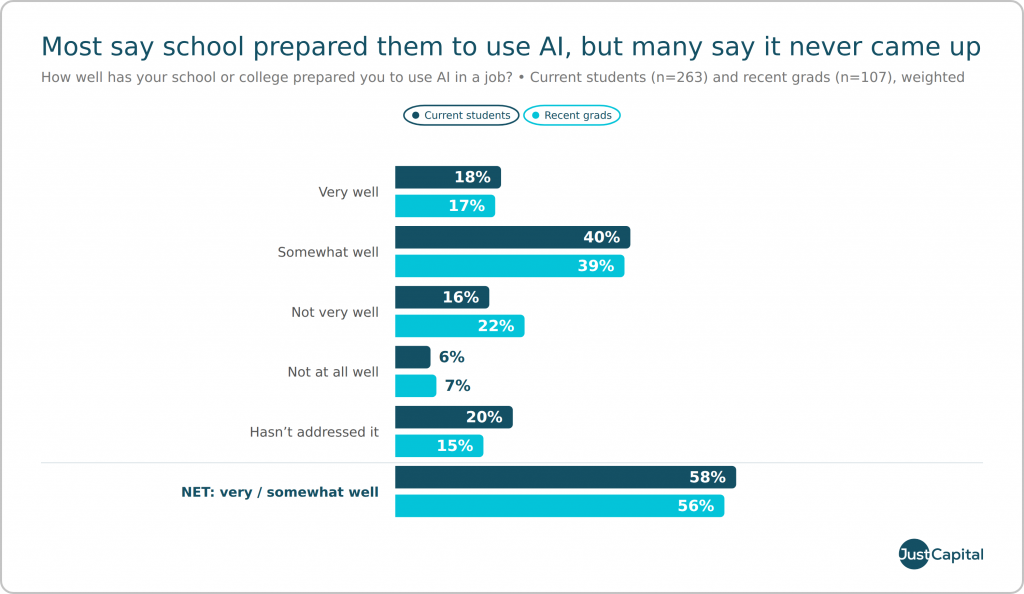
Perhaps the most pressing takeaway from the survey is the persistent sense of inadequacy regarding institutional preparation. A significant portion of respondents indicated that they do not feel fully equipped by their educational institutions to participate in the economy of the future. Despite the ubiquity of AI in the news cycle and the tech industry, many students feel that their curricula have not kept pace with the rate of technological change.
This perceived gap is not merely a matter of technical literacy. While students recognize that they may need to learn specific software or programming languages, their anxiety stems from a lack of clear guidance on how to apply AI in a professional context. Many students feel they are navigating this transition in the dark, without the benefit of institutional support, career counseling that addresses AI-driven industry changes, or curricula that adapt to the reality of the modern workplace. The result is a feeling of being left behind, or worse, being forced to self-teach critical competencies that should arguably be part of their higher education experience.
Gender Disparities in AI Sentiment
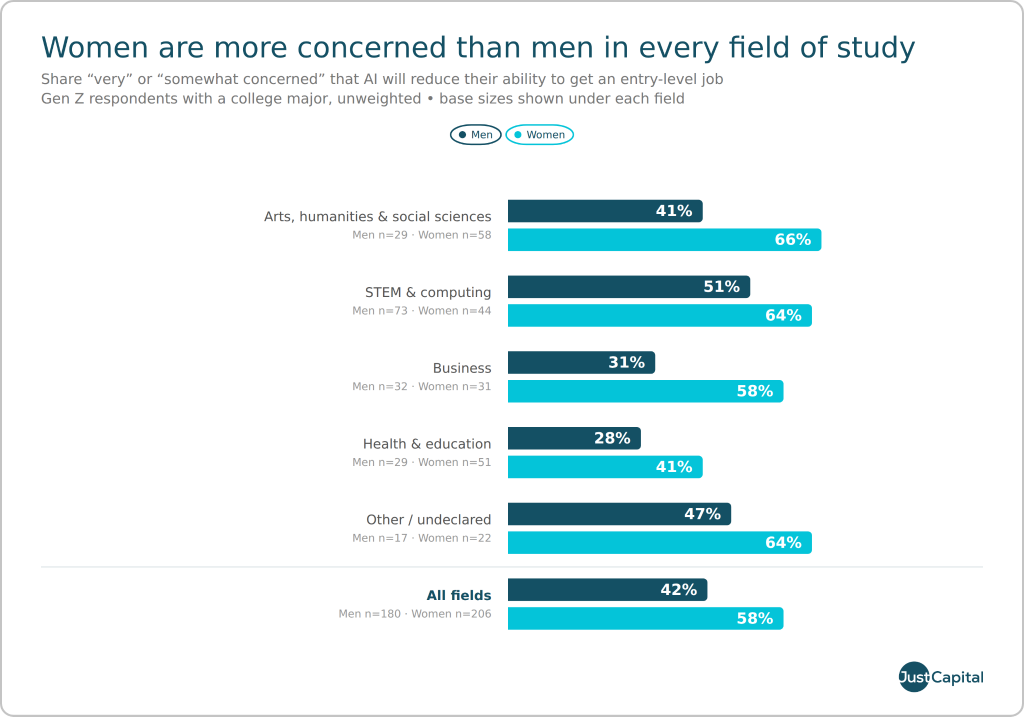
The data also reveals an important, albeit concerning, trend regarding gender differences in AI sentiment. The survey found that young women report significantly lower levels of optimism regarding the impact of AI compared to their male counterparts. This gap in sentiment warrants careful attention from educators and policymakers alike.
The reasons for this disparity are multifaceted. Historically, women have faced systemic barriers in STEM fields, and there is a pervasive fear among many young women that AI, if left unchecked, could inadvertently reinforce existing gender biases. Whether through biased training data or the automation of sectors where women are disproportionately represented, the apprehension is rooted in a desire for safeguards and a more inclusive approach to technological development. This sentiment underscores the reality that the "AI revolution" is not a neutral phenomenon; it is being experienced through the lens of existing social and economic structures, and for many young women, the current trajectory does not yet feel sufficiently inclusive or secure.
Entrepreneurship as a Shield Against Uncertainty
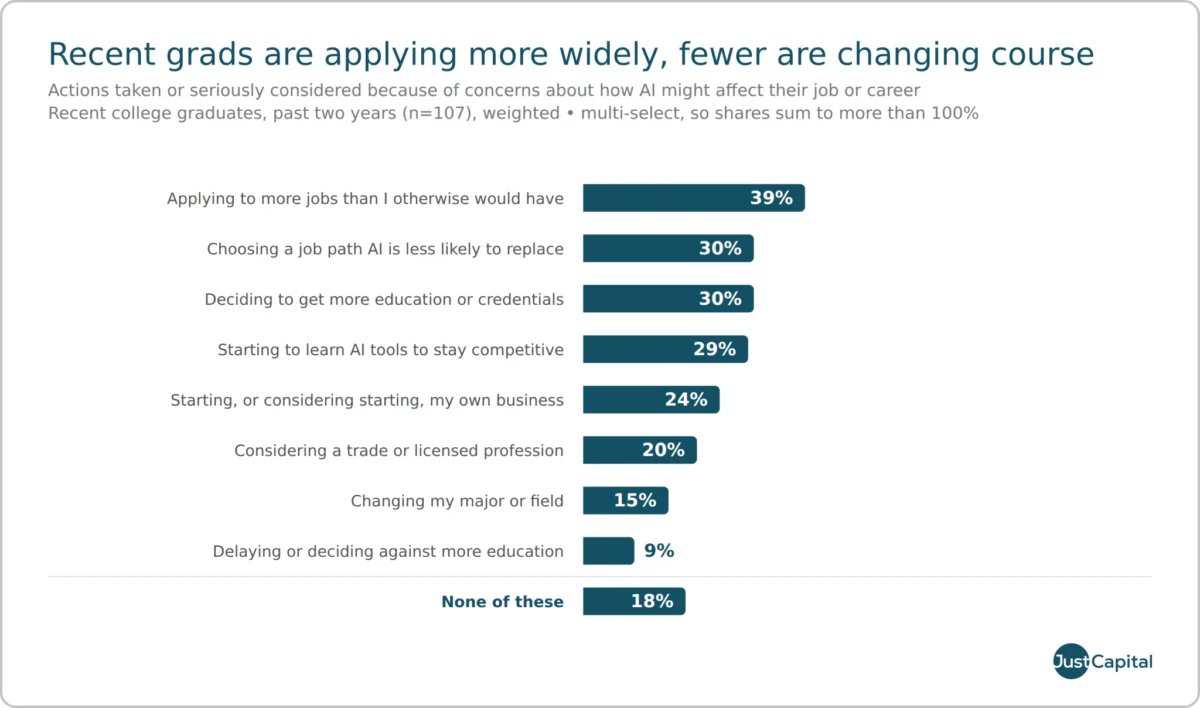
In response to the shifting economic landscape, many recent graduates are looking toward entrepreneurship as a viable alternative to traditional employment. The survey shows that a growing number of young people are viewing the AI era as an opportunity to carve out their own paths rather than vying for roles in legacy industries that may be vulnerable to automation.
For this cohort, entrepreneurship is not necessarily about the traditional pursuit of venture-backed scaling; it is often about agency. By leveraging AI to perform tasks that once required larger teams—such as content creation, administrative management, or market analysis—young entrepreneurs feel empowered to launch solo ventures or small-scale businesses. This shift in behavior indicates a desire to gain control over their economic future. Rather than waiting for a corporation to define their role in the face of AI, they are choosing to define the role themselves, using the technology as a foundation for independence.
The Enduring Value of Human-Centric Skills
While technical proficiency is often touted as the primary requirement for the future of work, the survey participants offered a more nuanced view of what actually matters. There is a strong consensus among respondents that non-technical skills—often called "soft skills"—are just as valuable, if not more so, than pure technical AI skills.
Students and recent graduates emphasized the importance of critical thinking, emotional intelligence, communication, and ethical judgment. They recognize that while AI can generate code, draft reports, and analyze massive datasets, it cannot replicate the nuance of human interaction, the ability to manage complex interpersonal dynamics, or the capacity to make value-based decisions in ambiguous situations. In an economy where AI can handle the "how" of a task, the "why" and the "who"—human-centric skills—are increasingly seen as the ultimate differentiators. This finding provides a roadmap for universities, suggesting that the most valuable education in the age of AI may not be one that focuses exclusively on machine learning, but one that doubles down on the distinctly human capabilities that machines are currently unable to emulate.
Methodology and Context
The insights provided by this survey were gathered by The Harris Poll on behalf of Just Capital between August 24 and August 28, 2026. The study focused on a representative sample of 1,007 U.S. adults aged 18 to 25. By utilizing a Bayesian credible interval, the researchers ensured a high level of statistical rigor, with the data accurate to within +/- 3.1 percentage points at a 95% confidence level.
As the data illustrates, the current generation of students is not merely passive observers of the AI transition. They are active participants, cautiously experimenting with new tools, expressing clear concerns about their professional futures, and identifying the skills they believe will be necessary to navigate a volatile landscape. For higher education institutions, corporate employers, and policymakers, the message from this cohort is clear: the integration of AI into the economy must be accompanied by intentional efforts to prepare the next generation not just with technical knowledge, but with the confidence and the human-centric skills required to thrive in an era of rapid change. As the fall semester unfolds, the experiences of these students will serve as a bellwether for how the American workforce will ultimately adapt to the age of artificial intelligence.