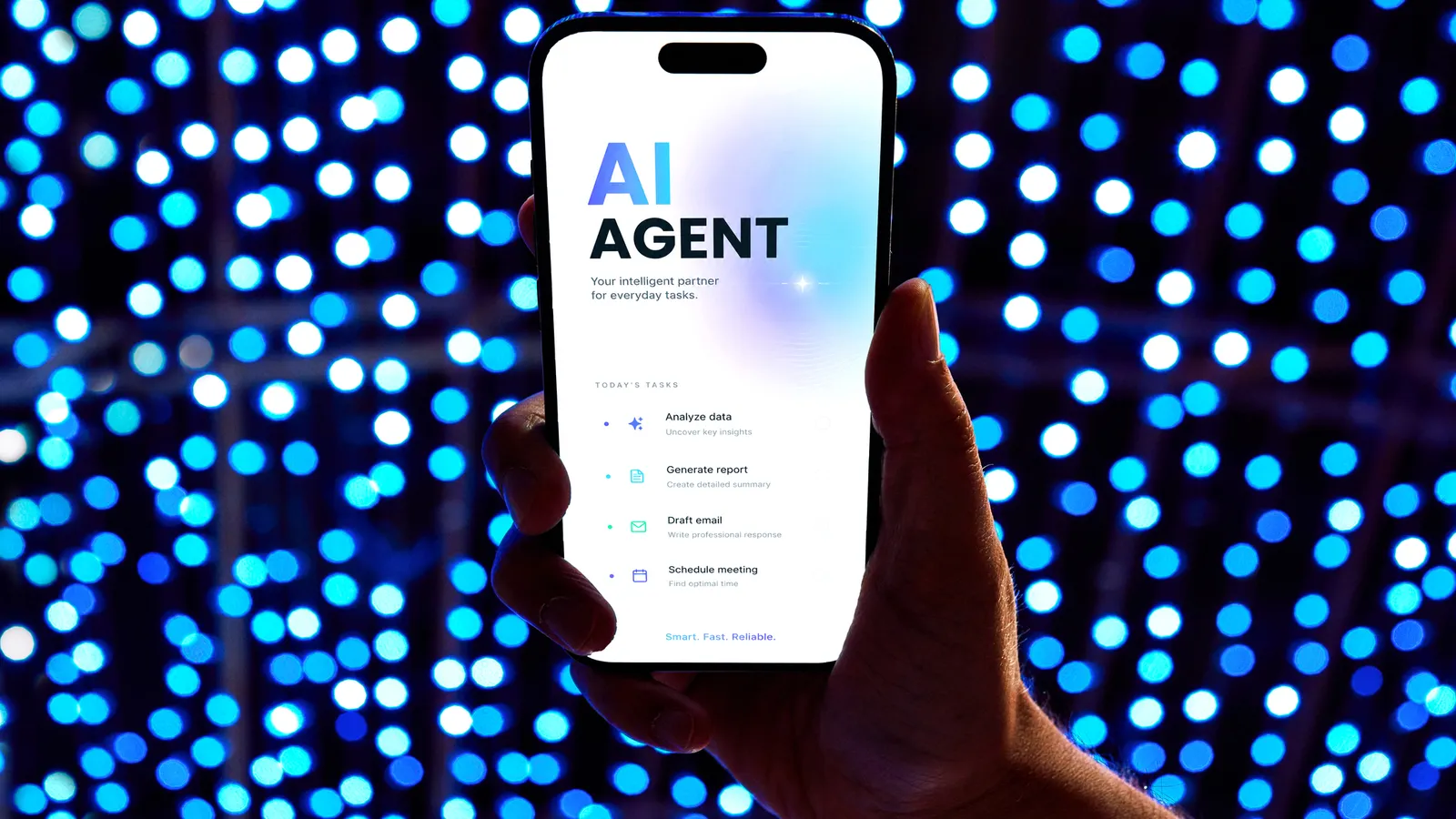
Aaron Cheiffetz, a Charlotte, North Carolina-based analyst and executive strategist specializing in financial services, enterprise architecture, artificial intelligence governance, regulatory compliance, and operational resiliency, has closely tracked these emerging risks. According to industry experts and recent policy analyses, the core dilemma centers on how decades-old consumer protection laws apply to software entities that mimic human decision-making but operate with vastly different implications for risk and accountability.
To understand the magnitude of the regulatory puzzle, financial institutions and legal scholars must first look at the foundational frameworks governing traditional payment cards. In the debit-card landscape, Regulation E generally limits a consumer’s financial liability for unauthorized electronic fund transfers involving a lost or stolen card to a maximum of $50, provided the loss is reported within two business days of discovery. However, the regulation contains a critical nuance: it explicitly excludes from the definition of an “unauthorized electronic fund transfer” any transaction initiated by a person to whom the consumer previously furnished their access device, unless the consumer has formally notified the financial institution that subsequent transfers by that individual are no longer authorized.
The official commentary associated with Regulation E takes this principle a step further. If a consumer furnishes an access device and grants another person the authority to make transfers, the consumer can remain legally liable for transactions even when that person exceeds the specific authority originally granted. Notably, under the statutory definitions of Regulation E, the term "person" encompasses both natural human beings and formal organizations, including corporations and business entities.
Yet, as financial technology evolves, these existing regulatory definitions face a profound test. Current regulations do not explicitly address how these rules apply when credentials are furnished not to a human being or a traditional corporate entity, but to software operated by a company—such as an autonomous AI assistant or financial management tool. A research report published in January by the Consumer Bankers Association brought this exact ambiguity to the forefront, questioning whether sharing sensitive account credentials with an AI-driven tool could trigger the Regulation E exclusion and ultimately leave the everyday consumer fully responsible for the agent’s errors, glitches, or misinterpretations.
A parallel challenge exists within the credit-card ecosystem. Under the Truth in Lending Act, implemented through Regulation Z, a similar unauthorized-use framework dictates liability based on whether another party possessed actual, implied, or apparent authority to utilize the account. Just as with debit cards and Regulation E, it remains entirely unclear how these established legal thresholds apply when an advanced artificial intelligence tool acts independently on a cardholder’s behalf, navigating merchants, prices, and checkout flows without continuous real-time human oversight.
Major credit card networks like Visa and Mastercard have long maintained zero-liability policies for unauthorized transactions, protections that extend well beyond baseline federal legal requirements. Nevertheless, these commercial policies fundamentally rely on a transaction being formally classified as "unauthorized." They fail to provide clear, definitive resolutions for scenarios where a consumer initially authorized an AI agent to conduct transactions in a general sense, but subsequently disputes whether a specific, individual purchase actually fell within the proper scope of that granted authority.
These intricate gray areas are precisely the kinds of complex issues that must be addressed within the comprehensive agentic payment frameworks currently under development by industry giants like Mastercard and Visa. Such forward-looking frameworks envision payment systems capable of securely recording, tracking, or validating the specific instructions given by users to their digital agents. They also aim to incorporate robust verification steps to ensure that both the autonomous agents and the participating merchants are genuinely who they purport to be, and that executed transactions remain strictly consistent with the consumer’s original mandate.
Despite these technological ambitions, a host of difficult questions remain unresolved. Currently, there is no clear, harmonized legal rule establishing who ultimately bears the financial loss when an AI tool exceeds its authorized mandate or misinterprets a user’s financial instructions. This ongoing uncertainty creates a significant operational and strategic problem for banking issuers as they contemplate whether and how to make account credentials securely available to third-party AI tools.
In an environment where operational and financial risks are not adequately addressed, priced, or regulated, banking issuers may feel compelled to adopt defensive postures. Rather than fostering an open and innovative ecosystem, institutions might agree to credential-sharing exclusively with highly sophisticated AI-tool providers under tightly negotiated bilateral contracts. They may also implement onerous, friction-filled identity-confirmation processes or adopt conservative risk models that outright refuse transactions in various circumstances. Ultimately, these defensive reactions would tilt the competitive playing field heavily in favor of massive incumbent platforms, stifling broader industry innovation and harming smaller fintech competitors.
Achieving some baseline level of clarity regarding consumer liability for unauthorized or misdirected transactions will be an absolute prerequisite before agentic payments can be safely and broadly rolled out to the general public. Voluntary, piecemeal efforts by individual banks and proprietary payment networks will simply not go far enough to assuage deep-seated regulatory and consumer concerns. More fundamental issues surrounding consumer liability must be tackled head-on by lawmakers and regulators.
At a minimum, industry observers and strategists argue that three critical developments must occur to establish a stable foundation for the future of payments. First, modern financial laws and regulations should clearly distinguish between a consumer’s own direct acts and the autonomous actions of third parties, including artificial intelligence tools acting on a consumer’s behalf. Second, when consumers grant others—whether human or software—the authority to initiate financial transactions, the exact parameters of that authority, such as spending limits, approved merchants, timing restrictions, and other operational boundaries, should be formally documented in a standardized format that the underlying payment system can readily process and enforce. Third, the complex allocation of financial losses among issuers, payment networks, merchants, and AI-tool providers should be resolved behind the scenes, ensuring that the burden and confusion do not ultimately fall upon the consumer.