Bitcoin experienced a sharp retreat on Wednesday, sliding 2% to trade at $75,000 following Federal Reserve Chair Jerome Powell’s final press conference at the helm of the central bank. The downward pressure on the world’s largest cryptocurrency came as unexpected cracks within the Fed rattled broader financial markets, introducing a wave of uncertainty regarding the future direction of United States monetary policy.
Traders found themselves digesting an unusually divided Fed decision to hold interest rates steady, alongside the complex prospect of impending policy conflict under incoming chair Kevin Warsh. According to Thomas Perfumo, chief economist at crypto exchange Kraken, in a note shared with DL News, the market’s unease is deeply tied to the messy transition occurring at the highest levels of the central bank.
"The absence of a clean handoff to Warsh, who is nearing Senate confirmation as chair, suggests the potential for discord over policy at the Fed," Perfumo wrote.
Bitcoin’s recent pullback highlights how sensitive growth assets have become to internal Federal Reserve politics. This volatility unfolds as macro traders currently price in roughly 90% odds that interest rates will remain unchanged through the remainder of the year. Rather than a smooth, predictable transition of institutional power, a messy handoff is rapidly emerging as a net negative for both cryptocurrency markets and broader risk-on equities.
The divisions within the central bank became glaringly public during the recent policy meeting. Perfumo pointed out that the vote itself represented a massive departure from the consensus-driven environment that characterized the Powell era. Four officials dissented against the majority decision, marking the highest number of dissents on a single FOMC decision since October 1992.
Three of those central bank officials dissented because they viewed the prevailing policy stance as carrying an unwarranted "easing bias." Conversely, Kevin Warsh has previously pledged to cut interest rates quickly once he assumes leadership. Meanwhile, Powell forcefully emphasized that upside inflation risks are actively rising. These inflationary pressures are being fueled, in part, by persistent global energy constraints, with Brent crude oil continuing to trade comfortably above $100 per barrel amid stalled geopolitical negotiations between the United States and Iran.
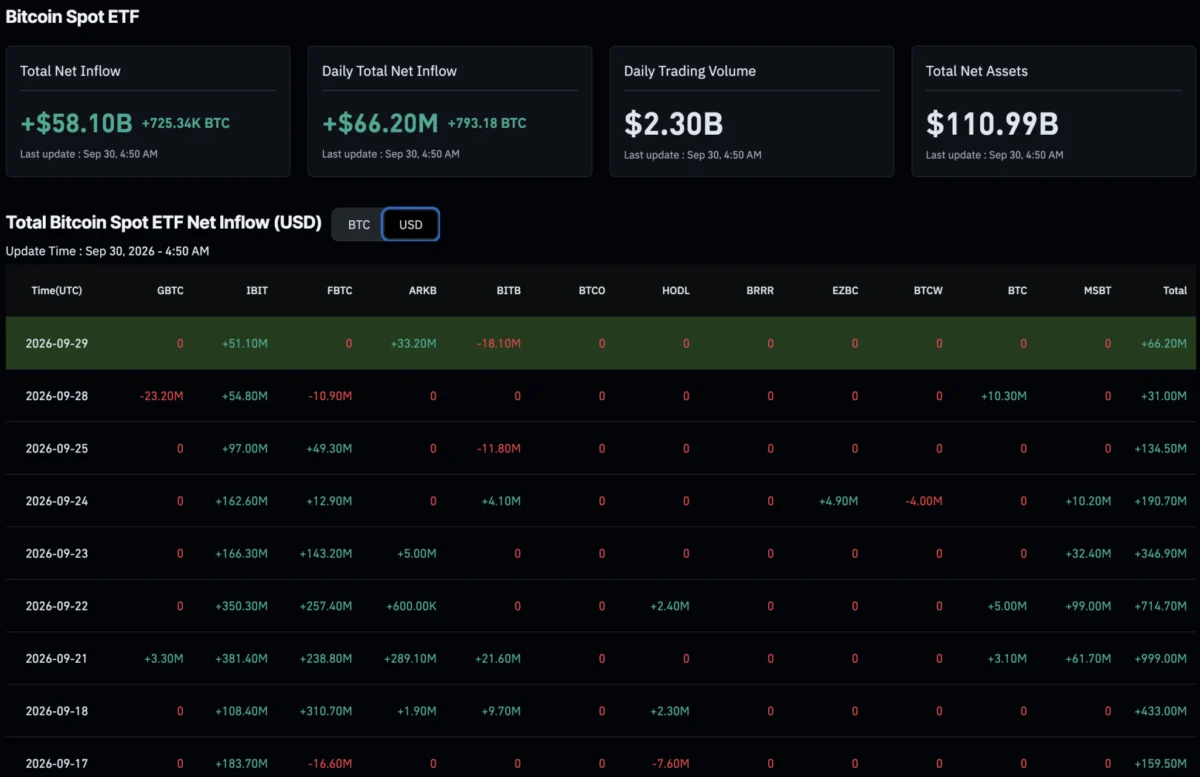
The immediate tension within macroeconomic policymaking quickly rippled into the digital asset investment space. Cryptocurrency traders rapidly dumped $138 million worth of spot Bitcoin exchange-traded funds following the Federal Open Market Committee meeting, according to data from DefiLlama. This sharp outflow effectively reversed a notable portion of the robust recovery that Bitcoin had experienced earlier in the month.
Despite this post-meeting sell-off, April remains an exceptionally strong month for digital asset investment products on a broader scale. Prior to the Federal Reserve’s announcement, institutional and retail traders had poured just under $2 billion into spot Bitcoin ETFs over the course of the month, marking the best monthly inflow performance since October.
A Butchered Handoff?
The unprecedented policy split exposed a Federal Reserve that is no longer marching in institutional lockstep as Powell prepares to step down from the chairmanship on May 15. Compounding the market’s anxiety is Powell’s surprising announcement regarding his personal career trajectory within the central bank.
"Powell’s indication that he’ll stay on as a board governor past his term as chair, albeit with a low profile, complicates the balance of power," Perfumo noted.
During his post-meeting press conference, Powell confirmed that he intends to remain a voting member of the Federal Reserve’s Board of Governors even after his four-year term as chair officially concludes. This decision carries almost no modern historical precedent, as outgoing Fed chairs traditionally vacate the institution entirely to allow their successors unencumbered leadership.
Meanwhile, the political path for his successor advanced significantly on Wednesday as Kevin Warsh, President Donald Trump’s nominee to replace Powell, successfully cleared the Senate Banking Committee. A final confirmation vote by the full United States Senate is widely expected in the near future.
While Powell insisted during his press conference that he has zero desire to act as a "shadow chair" attempting to undermine the incoming leadership, his continued presence as a sitting, voting governor has unnerved market participants. Financial analysts point out that a voting predecessor remaining on the board could potentially limit Warsh’s political and policy freedom to fundamentally reshape the central bank’s direction.
Powell, who was originally appointed to the chairmanship by Donald Trump during his first term in the Oval Institute, has clashed repeatedly with the White House over the past several months regarding the appropriate timing and trajectory of interest rate adjustments. The tension reached a boiling point earlier in April when President Trump publicly issued an ultimatum, threatening to fire Powell if he did not step aside peacefully.
Reflecting on the extraordinary circumstances surrounding his decision to prolong his tenure at the central bank, Powell addressed reporters candidly.
"I had long planned to retire," Powell said. "The things that have happened in the last three months have left me no choice but to stay."
As the Senate prepares for Warsh’s final confirmation vote and the crypto market continues to absorb the implications of a deeply divided Federal Reserve, investors remain on high alert for further signs of policy friction.