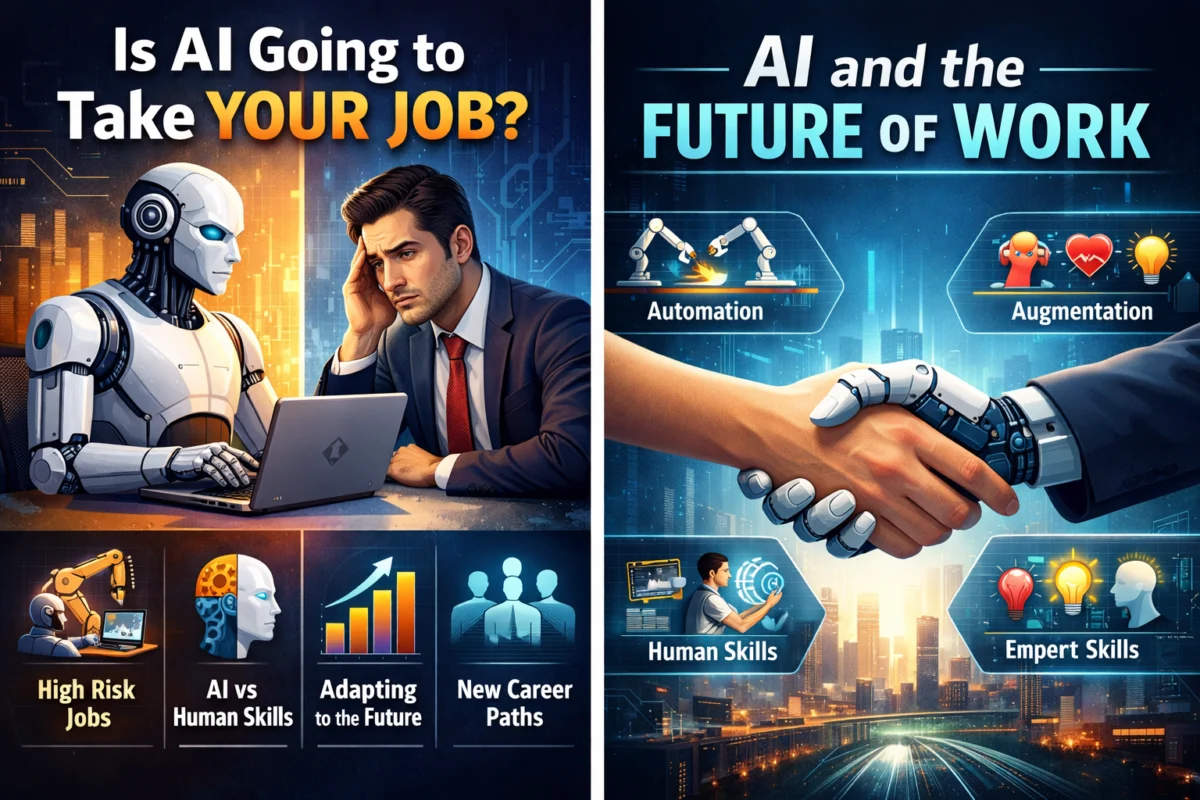
The public discourse surrounding artificial intelligence has long been dominated by a singular, alarming narrative: AI is coming for your livelihood. For many professionals, the initial encounter with this wave of technological advancement sparked a deep sense of unease. Every software update, productivity tool, and enterprise platform suddenly adopted the label of being "AI-powered." This ubiquity fostered a quiet anxiety, with workers across various industries wondering whether they might one day wake up to find their daily responsibilities entirely absorbed by automation.
However, moving past the initial wave of headlines and fear reveals a more nuanced reality. A thorough examination of technological capabilities and workforce trends suggests that artificial intelligence is not merely a destructive threat to employment, but rather a profound structural transformation. Understanding this shift requires looking closely at what artificial intelligence can actually achieve, which sectors face the highest exposure, and how human roles are evolving in response.
What Artificial Intelligence Is Actually Capable Of
To understand the trajectory of modern employment, it is necessary to demystify the technology itself. Artificial intelligence does not think, reason, or feel in the manner of a human being. Instead, it operates through advanced pattern recognition, processing massive datasets at unprecedented speeds and predicting outcomes based on learned inputs.
This functional design dictates both its strengths and its limitations. Artificial intelligence excels at repetitive, data-intensive tasks, calculation, syntax processing, and pattern matching across structured environments. Conversely, it struggles significantly with nuanced emotional contexts, abstract moral reasoning, genuine innovation, physical dexterity in unpredictable real-world spaces, and deep strategic intuition.
The core insight emerging from economic and technological analysis is that artificial intelligence generally replaces specific tasks rather than entire categories of human value. A job is rarely a monolith; it is usually a collection of varied duties. When automation enters the picture, it typically absorbs the repetitive administrative or computational burdens, leaving the broader professional framework intact, albeit fundamentally altered.
Occupations Most Exposed to Automation
While whole professions rarely vanish overnight, certain sectors face immediate and substantial disruption due to the nature of their daily workflows.
Administrative and office support roles stand among the most vulnerable. Tasks involving data entry, scheduling, basic correspondence, and routine document management align precisely with the core competencies of current language models and automation software. As businesses seek operational efficiency, the demand for traditional support functions is shifting downward.
Manufacturing and production environments are experiencing a similar evolution. While physical automation has long been a fixture of assembly lines, the integration of intelligent robotics and predictive maintenance systems allows factories to optimize output with diminishing requirements for manual intervention.
In the transportation and logistics sector, advancements in autonomous navigation and route optimization software are beginning to redefine supply chain management. While widespread implementation faces regulatory and infrastructural hurdles, the underlying technology continues to mature rapidly.
Entry-level financial tasks also find themselves in the path of technological change. Routine auditing, basic bookkeeping, and initial data processing can now be executed by algorithms in a fraction of the time required by a human worker, altering the traditional entry points into corporate finance.
In the realms of journalism and content production, generative tools have altered the landscape of routine reporting and high-volume copywriting. Tasks centered on summarizing public data, drafting straightforward news briefs, or producing standardized marketing material are increasingly assisted or executed by machine learning systems.
Roles That Are Evolving Rather Than Disappearing
Beyond the jobs facing direct replacement, a vast category of professions appears secure from total obsolescence while simultaneously undergoing radical transformation. These are roles deeply rooted in human presence, physical interaction, or complex judgment, yet their daily skill requirements are shifting rapidly.
In healthcare, legal services, education, and middle management, professionals are finding that the core purpose of their work remains intact, but the methods used to achieve results are changing. A physician still diagnoses patients and manages treatment plans, but the diagnostic process is increasingly supported by advanced imaging analysis and pattern recognition software. A teacher still guides student development and fosters critical thinking, but administrative lesson preparation and personalized tutoring support are increasingly aided by intelligent software.
These roles illustrate that technological integration often elevates the baseline of what is expected from a professional. The requirement is no longer just about executing a process, but about supervising, interpreting, and applying the outputs generated by machines.
The Shift Toward Augmentation
The overarching theme of the modern labor market is not wholesale replacement, but augmentation. Across industries, the nature of daily work is moving from manual execution to collaborative oversight.
In the financial sector, analysts who previously spent the majority of their time on manual reporting and data gathering now utilize automated analysis tools, shifting their focus toward high-level human insight and strategic advisory services. Content creators who once faced the daunting task of writing every piece from scratch now utilize AI drafting tools as a foundation, dedicating their primary energy to refinement, editorial judgment, and original perspective.
This transition redefines productivity. Workers are increasingly expected to operate as directors of technological output rather than simple producers of raw material, combining algorithmic efficiency with human context.
Core Competencies That Define the Future
As routine tasks become automated, the human skills that complement technology naturally rise in value. Emotional intelligence stands out as a critical asset. Empathy, complex negotiation, counseling, and relationship-building remain entirely outside the reach of machines, making interpersonal connection more vital than ever in client-facing and collaborative environments.
Creative thought leadership is another differentiator. While artificial intelligence excels at remixing existing patterns and historical data, human beings remain the source of true innovation and paradigm-shifting ideas.
Ethical judgment is equally irreplaceable. Technology can calculate probabilities and execute commands, but it cannot define moral priorities, weigh societal values, or make ethical choices regarding its own application. That responsibility rests entirely with human leadership.
Strategic thinking completes this set of essential capabilities. The future workplace belongs to individuals who possess the inquisitiveness to ask the right questions, rather than simply relying on systems to provide pre-calculated answers.
Strategic Adaptation in the Modern Workplace
Navigating this changing landscape requires a proactive approach from individual professionals. The process typically begins with an honest audit of daily tasks to identify which routine elements are most susceptible to automation. By recognizing these areas, workers can consciously pivot their efforts toward activities higher up the value chain—focusing on complex problem-solving, strategic planning, and interpersonal relationships.
Concurrently, developing technical literacy is no longer optional. Becoming proficient with modern tools ensures that professionals remain competitive and capable of leveraging technology to enhance their own productivity rather than being sidelined by it.
At the same time, a parallel category of roles is experiencing notable growth precisely because of artificial intelligence. Positions dedicated to AI safety, ethical oversight, prompt engineering, systems integration, and human-machine collaboration are expanding as organizations strive to implement these technologies responsibly and effectively.
Ultimately, the ongoing evolution of work suggests that artificial intelligence will not eliminate the need for human labor overnight, but it will persistently reshape it. The central question facing the workforce is not whether technological integration will arrive, but how individuals and organizations will adapt to its presence. By investing in uniquely human capabilities and embracing technological collaboration, professionals can position themselves to meet the future with confidence.