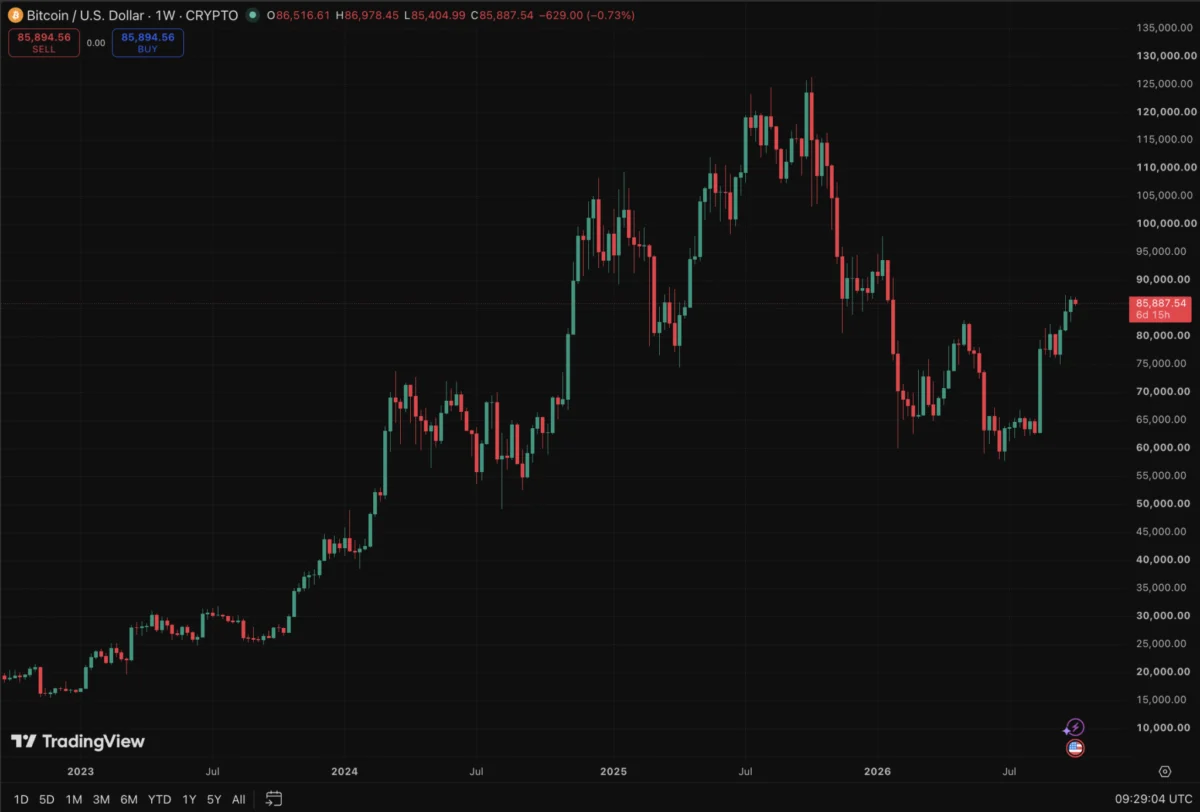
The regulatory landscape for digital assets reached another pivotal juncture this week as the U.S. Securities and Exchange Commission (SEC) cleared a crucial path for leveraged exposure to major cryptocurrencies. Trading at $85,900 and showing a modest gain of 1.3%, Bitcoin found itself at the center of investor discussions as markets evaluated whether a fresh regulatory green light would translate into immediately accessible financial products.
The focal point of the recent market activity was an official SEC order approving a proposed rule change by the Cboe BZX exchange. This regulatory adjustment clears the way for Volatility Shares to list a series of six triple-leveraged exchange-traded products (ETPs), encompassing digital assets like Bitcoin and Ethereum alongside traditional commodities such as gold. However, market participants quickly noted an important distinction within the regulatory filing: while the exchange listing path has been officially cleared, the approval did not establish that any of these complex instruments had actually begun public trading.
This nuance is critical for investors attempting to gauge the immediate impact on market liquidity and price action. Prior to the announcement, Bitcoin had experienced a brief push above $87,000 earlier in the week before settling into a relatively narrow trading range. The muted price response suggested that the broader market viewed the regulatory development as an intermediate step rather than an immediate catalyst for a significant price repricing. As analysts weighed the broader implications, the primary question remained whether the SEC’s decision represented a practical expansion of accessible market instruments or merely another milestone that still needed to clear the critical gap between regulatory approval and public launch.

The recent regulatory order specifically addresses Cboe BZX listing rules for six distinct leveraged products under the VS Trust series. By aiming to achieve three times the daily performance of their underlying reference assets, these instruments introduce a specialized structure to the regulated market. Notably, rather than holding physical tokens directly, these products intend to utilize futures contracts for Bitcoin and Ether. This architectural approach aligns them with existing commodity-based funds, extending the range of regulated offerings to include both pioneering cryptocurrencies and established traditional assets.
The SEC’s formal ruling focused entirely on whether the Cboe listing proposal met the statutory requirements mandated by the Exchange Act, particularly concerning investor protection, the prevention of fraudulent and manipulative acts, and the maintenance of a fair and orderly market. The order did not, however, signal that the operational hurdles for public trading had been entirely cleared. This regulatory action arrives alongside other ongoing developments in the U.S. financial framework, such as evolving discussions around digital asset custody rules. Together, these regulatory steps highlight a growing institutional appetite for integrating crypto-linked trading formats into traditional financial channels, even as each individual policy change moves through its own distinct procedural timeline.
A central takeaway from the market assessment following the SEC’s announcement is that regulatory approval of an exchange rule change is fundamentally different from a product launch. Before shares can be offered to the general public, separate registration requirements must be fully satisfied. The SEC’s order meticulously outlined the structural framework for the six funds within the VS Trust, detailing their exposure to specific futures benchmarks and compliance obligations. Yet, the confirmation of effective registration and the official announcement of a trading start date remain outstanding.
Consequently, until these final administrative requirements are met and public trading formally commences, the products represent a prospective expansion of financial access rather than actively traded instruments. This dynamic mirrors the rollout of various other crypto-linked financial proposals within the United States regulatory ecosystem, where exchange rule approvals often precede the actual availability of the funds by weeks or even months.

The introduction of triple-leveraged daily products also brings structural considerations regarding risk profiles and long-term performance. Achieving three times the daily performance of an asset does not equate to three times the returns of Bitcoin or Ethereum over extended holding periods. Because these ETPs are tied to daily investment objectives based on futures benchmarks, their mechanics differ substantially from direct spot ownership. The use of futures contracts means that portfolio results are governed by the behavior of the underlying futures curve rather than the spot price of the digital assets themselves.
Furthermore, the SEC’s green light for the exchange listing does not imply that these high-risk instruments are universally appropriate for all retail investors or extended holding horizons. While the regulatory order grants Cboe BZX the authority to list and trade the shares, broker-dealers and financial advisors remain bound by strict regulatory standards, such as Regulation Best Interest, when recommending such products to retail customers.
Bitcoin’s relatively subdued market reaction—hovering around $86,300 with a minor daily uptick—underscores the market’s pragmatic interpretation of the news. While the expansion of regulated products hints at a maturing infrastructure that bridges digital assets with traditional commodities like gold and oil, the practical trading implications remain contingent upon registration and formal public availability. As the market monitors upcoming regulatory filings, the distinction between a cleared exchange rule and an operational fund continues to define the boundary between regulatory progress and market reality.