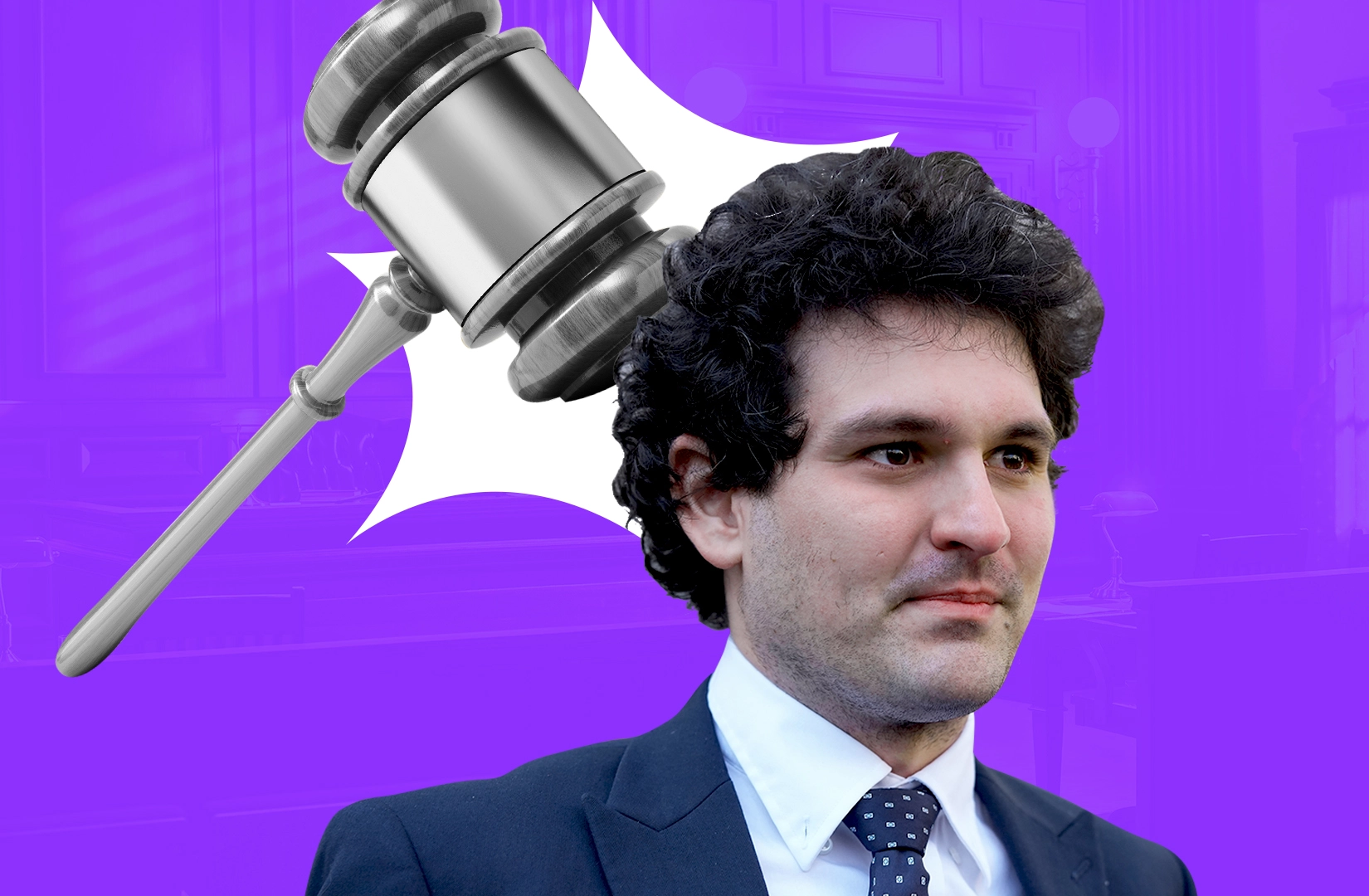
In what has become a long-running and increasingly desperate legal battle, Sam Bankman-Fried’s efforts to overturn his catastrophic 2023 conviction hit another major roadblock on Tuesday. A federal judge formally dismissed the disgraced crypto entrepreneur’s request for a new trial, labeling his latest claims "baseless" and putting a definitive end to that particular avenue of his defense.
The ruling represents a severe, though widely anticipated, blow to the former billionaire’s ongoing attempts to escape his 25-year prison sentence. Bankman-Fried had spent months attempting to convince the court that he had uncovered critical new evidence that would ultimately prove he never harbored any intent to defraud customers of his now-bankrupt cryptocurrency exchange, FTX. Instead of granting him a fresh hearing, the court shut the door firmly on the motion, dealing yet another setback to a legal team that has seen mounting obstacles over the past year.
In addition to his failed motion for a retrial, Bankman-Fried has pursued a multi-pronged strategy to regain his freedom. This has included a formal appeal of his conviction and a concerted, albeit unsuccessful, campaign to secure a presidential pardon. According to recent news reports, President Donald Trump is not expected to grant clemency to the convicted crypto founder. Meanwhile, a decision on his broader federal appeal is anticipated in the coming weeks, leaving that proceeding as perhaps his most critical remaining legal lifeline.
Missed Deadlines and Procedural Chaos
The rejection of Bankman-Fried’s trial motion also follows a chaotic sequence of missed deadlines and procedural missteps by the defense earlier this month. The court had previously set strict timelines for Bankman-Fried to respond to a nearly 50-page filing from prosecutors who vehemently opposed his request for a new trial. Simultaneously, the judge demanded an official avowal confirming whether Bankman-Fried was genuinely representing himself pro se, after prosecutors flagged apparent signs that he had been receiving outside assistance with his legal paperwork.
Rather than meeting these requirements on time, Bankman-Fried missed two consecutive court deadlines. A full week after the dates had passed, he submitted a letter to U.S. District Judge Lewis Kaplan on April 22, asserting that he was the "ultimate author" of the initial retrial request. In that same correspondence, however, he abruptly asked the court for permission to withdraw his motion "without prejudice"—a legal maneuver that would have theoretically preserved his right to refile the request at a later date.
"I do not believe I will get a fair hearing on this topic in front of you," Bankman-Fried wrote to the judge, airing long-standing grievances regarding the conduct of the proceedings.
Judge Kaplan presided over Bankman-Fried’s landmark 2023 trial in New York, and the former billionaire has repeatedly complained that the jurist harbored a pro-prosecution bias. Those grievances first surfaced publicly in September 2024, when Bankman-Fried formally appealed his conviction and requested that any potential new trial be assigned to a different judge. That appeal was subsequently argued before a three-judge panel of the U.S. Court of Appeals for the Second Circuit last November.
During those appellate hearings, defense attorney Alexandra Shapiro pulled no punches in criticizing the original proceedings. "The trial of Sam Bankman-Fried was fundamentally unfair, because the jury only got to hear one side of the story—the prosecutors’ side," Shapiro told the appellate panel. "The prosecutors proclaimed that billions had been lost forever. This was false."
While the outcome of that appeal remains pending, Bankman-Fried indicated in his April 22 letter that he intended to wait for the appellate court’s ruling before potentially trying to launch another bid for a retrial.
A Scathing Order and a Permanent Bar
Judge Kaplan made it abundantly clear on Tuesday that no such future motion would be entertained. In a scathing written order, the judge not only denied Bankman-Fried’s request for a new trial but took the extraordinary step of dismissing it "with prejudice," thereby barring the former executive from ever filing a similar motion again.
Addressing Bankman-Fried’s attempt to withdraw the motion out of alleged judicial bias, Kaplan wrote bluntly that if the defendant truly believed the court was biased, he should never have brought the motion forward in the first place. Furthermore, the judge dismantled Bankman-Fried’s assertion that he had successfully unearthed new, exonerating evidence that warranted a reconsideration of his case.
"Bankman-Fried’s motion is based on three supposedly ‘newly discovered’ witnesses whose predicted testimony, he contends, warrants a new trial," Kaplan wrote in his order, before dismissing the premise as completely meritless. "None of the witnesses, for example, is ‘newly discovered.’ Bankman-Fried well before trial knew all three of them."
The individuals in question are Daniel Chapsky, the former head of data science at FTX; Ryan Salame, a high-ranking FTX executive currently serving a seven-year prison sentence; and Nishad Singh, another former executive who ultimately chose to cooperate with the government and testified against Bankman-Fried at trial.
According to Bankman-Fried’s arguments, these three witnesses could have provided crucial testimony establishing that FTX was not actually insolvent when it filed for Chapter 11 bankruptcy protection in November 2022, but rather suffered merely from a temporary liquidity crunch. Bankman-Fried has long maintained that if he had simply been granted adequate time to orderly liquidate various illiquid assets, such as private company stock and venture investments, he would have been fully capable of honoring the massive wave of customer withdrawals that ultimately brought the platform down.
Supporting affidavits and court filings highlighted some of these claims. On January 1, Chapsky signed an affidavit stating he had been willing to testify to these points during the original trial, but was ultimately dissuaded by his own legal counsel due to concerns regarding potential media storms and retaliation from federal prosecutors. Similarly, Salame indicated he would have taken the stand for the defense had it not been for aggressive prosecutorial tactics, while Singh had initially claimed in early records that he was unaware of a massive financial shortfall on the exchange’s balance sheet.
An Old Argument Rejected Again
The narrative that FTX was merely illiquid rather than bankrupt has faced near-universal skepticism from legal experts, investigative reporters, and industry insiders who chronicled the spectacular collapse of the exchange. Judge Kaplan made it clear that he shared that deep skepticism, noting that the defense was simply dressing up recycled arguments in new clothes.
"A fatal flaw of that spin (and the present motion) is that Bankman-Fried’s so-called ‘facts’ have been seen before," the judge wrote. "Many times."
Kaplan pointed out that prior to the trial itself, Bankman-Fried had already conceded that these very arguments were "irrelevant" and "speculative."
"They in substance thus are the same ‘facts’ that this Court excluded at trial and that Bankman-Fried now argues on appeal to the Circuit should have been admitted," Kaplan continued. "In no way are these ‘facts’ never-before-seen, let alone newly discovered."
With this decisive ruling, Bankman-Fried’s avenues for challenging his conviction at the district court level have been completely closed off. His only remaining legal hope of overturning the jury’s verdict rests entirely with the pending decision from the federal appeals court panel.
While the three-judge panel operates under an informal six-month guideline to issue rulings—suggesting an announcement could arrive at any moment—legal statistics underscore the immense uphill battle Bankman-Fried faces. Historical data compiled by the U.S. court system indicates that only a tiny fraction of federal criminal appeals, roughly 6% between 2011 and 2015, ultimately succeed.