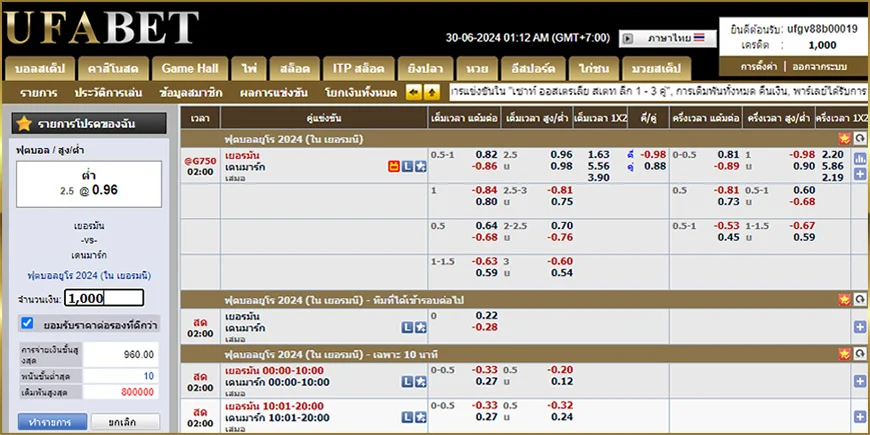
Handicap betting has long stood as one of the most popular and sophisticated methods for wagering on football matches across global sports betting markets. By leveling the playing field between unevenly matched teams, handicap betting transforms fixtures that might otherwise feature predictable outcomes into engaging, highly strategic contests. For both novice spectators and seasoned sports analysts, understanding how handicaps operate is essential for interpreting modern betting markets, evaluating team strengths, and navigating platforms like UFABET.
At its core, handicap betting—frequently referred to as Asian Handicap or HDP—is designed to eliminate the draw in matches where one team is heavily favored over another. In traditional 1X2 betting, a wager is placed on a home win, an away win, or a draw. However, when a dominant league leader faces a struggling relegation candidate, the odds on the favorite are often too short to offer significant value, while backing the underdog presents a high degree of risk. Handicap betting resolves this imbalance by virtually assigning a goal deficit to the favorite and a corresponding goal advantage to the underdog before kickoff.
The mechanism of handicap betting relies on fractional or whole-number margins, ranging from level ball (0.0) lines to multi-goal advantages such as 1.5, 2.0, or even higher. For instance, in a match featuring a 0.5 handicap, the favored team must win the match by at least one clear goal for bets on them to succeed. Conversely, if the match ends in a draw or a win for the underdog, bets placed on the underdog are declared winners. More complex lines, such as quarter-ball handicaps (0.25, 0.75) or split handicaps (0-0.5, 0.5-1), divide the total stake into two separate wagers, providing nuanced risk management where bettors can win or lose half of their stake depending on the precise goal margin at the final whistle.
The pricing and odds associated with handicap lines fluctuate dynamically based on market sentiment, team news, tactical setups, and betting volume. Bookmakers analyze historical data, current form, home and away records, injuries, and weather conditions to establish an opening handicap line. As money flows into the market from participants, these lines and their corresponding odds—often displayed in decimal formats reflecting potential returns—adjust continuously to balance the bookmaker’s liability. Understanding these price movements allows observant bettors to gauge where smart money is heading and how public perception aligns with analytical projections.

Platform integration has further streamlined access to handicap betting markets. Modern digital sportsbooks and specialized portals, including major industry operators like UFABET, provide comprehensive interfaces where users can examine live handicap fluctuations, pre-match statistics, and comparative odds in real time. These digital environments facilitate seamless navigation across various leagues and tournaments, allowing participants to review detailed market data and execute wagers efficiently. The availability of clear statistical indicators and structured market layouts ensures that users can evaluate potential outcomes with greater precision.
When analyzing how handicaps are applied across different competitive tiers, the depth of the market becomes increasingly apparent. Level ball markets, designated as 0.0, apply when two evenly matched teams meet, meaning there is no virtual advantage given to either side; if the match ends in a draw, the original stake is refunded. As the perceived disparity in quality grows, the handicap increases incrementally. Teams receiving a positive handicap (e.g., +0.5, +1.0, or higher) start the virtual contest with a goal advantage, meaning they can afford to draw or even lose by a specific margin while still securing a winning bet for the participant. On the other side of the spectrum, heavy favorites must overcome negative handicaps (e.g., -0.5, -1.0, -1.5) by winning with a comfortable goal differential to pay out successfully.
The psychological and strategic dimensions of handicap betting require careful consideration of match context. Factors such as tactical conservatism, squad rotation, motivation levels in knockout tournaments versus league fixtures, and historical head-to-head records heavily influence whether a favorite will cover a steep handicap or if an underdog will successfully defend a virtual head start. Experienced market participants emphasize the importance of looking beyond raw league standings and evaluating underlying performance metrics, such as expected goals, defensive solidity, and recent momentum.
Ultimately, handicap betting remains a cornerstone of professional sports wagering because it offers flexibility, mitigates the limitations of one-sided fixtures, and provides a sophisticated framework for analyzing football matches. By understanding the mechanics of different handicap lines, monitoring market odds closely, and utilizing established platforms equipped with reliable data feeds, participants can engage with the sport in a structured and informed manner.