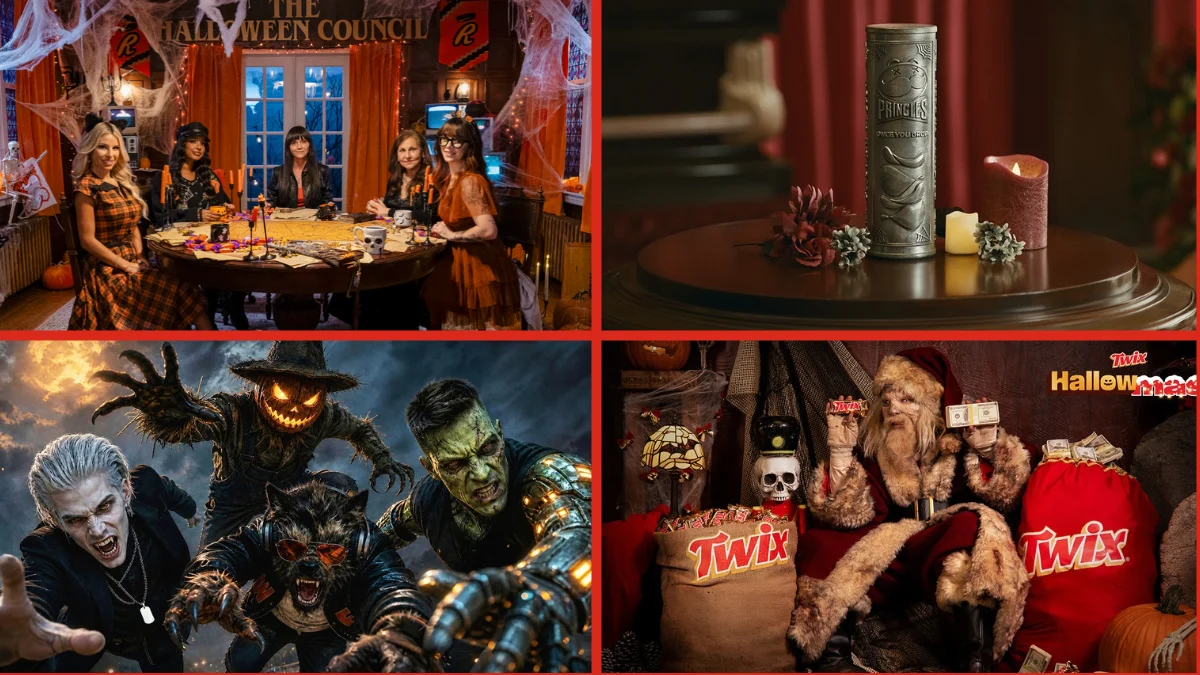
This year’s crop of creative output demonstrates why the season remains a favorite among brands and consumers alike. The landscape is rich with ghoulish competitions, such as playful campaigns from Pringles and Herb Light, alongside star-studded ensemble efforts from brands like Reese’s and e.l.f. Cosmetics. Perhaps most notably, the season has brought back cultural icons for nostalgic cameos, highlighted by the return of the great Bill Murray slipping back into his Ghostbusters duty for an inventive campaign with electric vehicle manufacturer Rivian.
Yet, for all the upfront spectacle and high-profile talent, the underlying challenge for modern marketers remains a delicate balancing act of trick and treat. The ultimate objective is creating creative work sticky enough to keep both the campaign and the brand top of mind for consumers long after the jack-o’-lanterns have rotted and October 31 has faded into memory. It is a formidable hurdle in an era of fast-moving digital feeds, where holiday-specific messaging often disappears the moment the calendar page turns to November.
Few brands have taken this challenge quite as seriously as Twix, which has doubled down on longevity by leaning heavily into its proprietary seasonal character. The brand’s Zombie Claus—an undead twist on the traditional holiday gift-giver—is back once again to celebrate what the brand cheekily frames as Hallowmas. Rather than packing its bags when Halloween concludes, this persistent character is poised to stick around, bridging the gap between autumn spooks and the winter holiday season by presumably lingering for at least the next ten weeks. By blurring the lines between traditional holiday campaigns, Twix illustrates the evolving strategies brands are using to maximize the return on their creative investments, proving that a well-crafted seasonal campaign does not necessarily have to die when the witching hour ends.