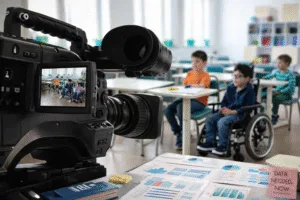
Teaching special education has long been recognized as one of the most demanding and deeply meaningful professions within the educational landscape. Every single day, educators must navigate a complex web of student needs, intricate legal requirements, and high-stakes decision-making. Now, a new element is being added to that already heavy load: classroom cameras. As school districts and state legislatures grapple with the issue, the policy debate surrounding continuous video surveillance in special education classrooms is accelerating at a rapid pace.
Whether the presence of a camera ultimately serves to protect an educator or places them at professional risk often depends entirely on the actions they take today. New legislative mandates are steadily moving through statehouses, while parents, teachers, and disability advocates push back and forth in real time. This is no longer a distant concern or a hypothetical policy discussion confined to academic journals. It is happening right now, leaving special education teachers caught directly in the middle of a high-stakes tug-of-war.
Why Cameras in Special Education Classrooms Are a Live Policy Fight
This unfolding story has captured widespread media attention, appearing across multiple outlets within a remarkably short 48-hour window. Coverage from platforms such as EdSurge, Yahoo News, and KLFY highlights the same pressing debate, signaling that the issue has officially reached a tipping point for educational policy nationwide.
Louisiana is currently ahead of most other states, operating under laws that mandate cameras in certain special education settings. Local advocates and lawmakers in the state are now actively debating how far those mandates should extend and what boundaries need to be established. Meanwhile, Texas is following closely behind, with similar conversations gaining significant traction among state lawmakers and local school boards as they weigh the prospect of mandatory camera installations in specialized classrooms.
The intense tension driving this movement is deeply felt by stakeholders on both sides of the issue. Parents are demanding greater transparency and accountability, often driven by a desire to ensure their children are safe and properly supported. In some cases, this demand is fueled by alarming precedents. A widely shared discussion on the online forum r/Teachers detailed a disturbing incident within the Richmond School District, where a five-year-old autistic girl was subjected to an unauthorized exam by a school employee. Such incidents put the stakes into plain view for families, fueling a persistent demand for video monitoring that shows no signs of slowing down.
At the same time, special education teachers harbor legitimate and profound fears of their own. Being recorded continuously without proper context, comprehensive policy frameworks, or adequate legal protections does not constitute genuine accountability for educators; rather, it often amounts to professional exposure and vulnerability.
Special Education Law and Camera Policies Do Not Always Align
The core of the issue lies in the complex intersection between video surveillance and existing educational law. Special education teachers already operate within overlapping and heavily regulated legal frameworks, including the Individuals with Disabilities Education Act (IDEA), Section 504 of the Rehabilitation Act, and the Family Educational Rights and Privacy Act (FERPA). These federal laws strictly govern what student information can be shared, how it is recorded, and who is granted access to sensitive educational records.
Footage captured inside a special education classroom can never be viewed as neutral video. A single recording might show a student’s behavioral support plan in action, a specialized sensory accommodation, or a delicate crisis de-escalation moment. Understanding the immense professional judgment required during these critical incidents reveals how much nuance is involved in teaching students with diverse needs. While a camera can capture physical behavior, it fundamentally lacks the capacity to explain the legal, educational, and emotional context behind it. That critical gap between recorded action and professional rationale is precisely where teachers face the greatest risk of misunderstanding or liability.
Furthermore, a completed sample Individualized Education Program (IEP) illustrates the sheer volume of sensitive, layered information that surrounds a single student’s daily educational experience. Any unvetted video footage could inadvertently reveal a student’s specific disability status, confidential medical details, or detailed IEP goals to individuals reviewing the recordings without proper privacy training or legal clearance.
As districts rush to implement surveillance measures, many local policies fail to address essential questions regarding video retention timelines, who is authorized to view the recordings, and how student confidentiality will be strictly preserved under federal privacy laws. When a school district fails to answer these critical questions in writing, the resulting policy vacuum places educators in a precarious position.

The Support System for Special Education Teachers Is Under Pressure
This operational challenge would be daunting even within a well-resourced school system featuring robust administrative backing. However, special education departments are currently operating under unprecedented strain. Widespread funding pressures, growing caseloads, and ongoing uncertainty surrounding federal IDEA protections have made the professional support structure far thinner than many teachers anticipated when they entered the field.
The established roles and responsibilities of a special education teacher already encompass an enormous range of legal, instructional, and relational demands. Unfortunately, district legal counsel, union representatives familiar with specialized disability rights, and administrative personnel capable of accurately contextualizing complex behavioral interventions are not always as accessible as they once were.
Because educators cannot afford to wait for comprehensive, perfectly crafted policies to filter down from the top administration, special education professionals are finding it necessary to take a proactive stance in safeguarding their classrooms, their careers, and their students.
What Special Education Teachers Should Do Before Cameras Arrive
For educators facing the imminent prospect of camera installations or navigating evolving district policies, several practical steps can help establish a baseline of professional protection.
Documenting personal compliance is a critical first step. Teachers should maintain meticulous records of their specialized behavioral intervention training, IEP meeting attendance, and ongoing professional development in evidence-based practices. Official resources, such as federal IEP guidance documents, serve as valuable references for understanding what proper documentation looks like from a rigorous legal standpoint.
Establishing a clear paper trail is equally important. Educators are encouraged to submit formal, written inquiries to school administration addressing vital operational details, such as the exact retention timelines for video footage, the specific criteria for who is granted access to the recordings, and the protocols that will be enforced to protect student IEP confidentiality. Written questions ensure that teachers have documented their due diligence if concerns or disputes arise later.
Engaging with a broader professional community provides essential backing. Consulting with union representatives, specialized professional associations, and colleagues facing similar classroom conditions helps ensure that teachers do not have to navigate these complex challenges in isolation. Additionally, pursuing targeted professional development courses focused specifically on documentation, legal compliance, and classroom practice can help bridge any gaps left by insufficient district-level training.
Not All Special Education Settings Carry the Same Risk
It is also vital to recognize that the term "special education" encompasses a wide array of distinct learning environments, each carrying a different risk profile when it comes to video surveillance. A self-contained classroom designed for students with significant behavioral or medical needs presents very different camera implications than a part-time resource room or an inclusive, co-taught general education classroom.
In a self-contained room, nearly every moment of the school day involves sensitive behavioral data and intimate student interactions. In a resource room, a student pulled out for targeted reading or math support is immediately identifiable as receiving specialized services. Meanwhile, in an inclusive setting, cameras inevitably capture general education students alongside those with IEPs, multiplying the surrounding privacy and consent questions exponentially. Because a single, blanket camera policy cannot possibly fit every specialized environment equitably, understanding the specific risks of one’s classroom setting is essential for advocating appropriate safeguards.
Special Education Teachers Deserve Protection Too
As video monitoring systems continue to expand into special education classrooms across Louisiana, Texas, and other regions, the overarching objective for educators is not to live in fear of the lens, but to ensure that any recorded footage tells an accurate and complete story rather than a partial narrative interpreted without professional context. Special education students undoubtedly deserve robust protection, but the professionals dedicating their careers to serving them deserve equal consideration and safeguarding. By asking proactive questions, maintaining sharp documentation, and relying on established professional networks, educators can better navigate this rapidly shifting educational landscape.