
For today’s generation of young professionals, the traditional career trajectory rarely begins with a predictable, permanent desk job. Instead, Gen Z careers kick off with fast-paced internships, short-term contract work, and frequent geographic relocations between major metropolitan hubs. Yet, despite this dynamic professional landscape, the residential real estate market remains stubbornly anchored to an archaic era. Most traditional landlords still demand rigid 12-month leases and stringent income requirements—often mandating that a prospective tenant earn an annual salary worth at least 40 times the monthly rent.
In a city like Manhattan, where average monthly rents have soared to a staggering $5,500 while entry-level wages grow at a mere fraction of that pace, young renters have simply stopped waiting for legacy institutions to adapt. Out of sheer necessity, they have built a sprawling shadow market of their own across decentralized platforms like Facebook housing groups, Instagram direct messages, and WhatsApp group chats.
Enter snag, a Brooklyn-based proptech marketplace designed to give that informal, peer-to-peer housing economy the security and structure it has historically lacked. Operating in the whitespace between short-term rental platforms like Airbnb and rigid, long-term listing sites like Zillow, snag focuses heavily on the missing middle of urban housing: individual rooms, short-term sublets, and seamless lease takeovers.
Since launching operations just ten months ago, the platform has experienced rapid acceleration, expanding at a clip of 30% month-over-month. It currently hosts more than 4,500 active listings across New York City, where the average available room finds a vetted renter in a remarkably swift three days.
Building on this impressive early momentum, snag recently announced the successful closure of a $4M Seed funding round. To learn more about the mechanics of the business, its underlying technology, and its ambitious plans for national expansion, AlleyWatch recently sat down with snag cofounder and CEO Selin Sonmez.
Who Were Your Investors and How Much Did You Raise?
"We raised a $4M Seed round led by Slow Ventures, with participation from Precursor Ventures, Long Journey Ventures, and Chamaeleon," Sonmez explained, detailing the swift and competitive capital-raising process. "We also brought on a strong angel roster including Brian Kelly, known as The Points Guy, and professional tennis star Sloane Stephens."
According to the CEO, the funding round moved with exceptional velocity, officially closing in just ten weeks and finishing notably oversubscribed.
Tell Us About the Product or Service That Snag Offers
At its core, snag serves as a specialized marketplace tailored for Gen Z renters searching for affordable, flexible housing solutions without the burden of signing a traditional, year-long residential lease.
"About 80% of our listings are individual rooms, because that’s the most affordable way to live in the city, and no traditional residential platform will list a room," Sonmez noted.
The platform’s user experience is meticulously engineered to streamline the matching process while eliminating the financial friction and safety concerns that typically plague informal roommate searches. Snag facilitates peer-to-peer agreements while securely processing both monthly rent and security deposits through an integrated escrow system. This ensures that funds never change hands through vulnerable peer-to-peer apps like Venmo or vanish entirely into digital voids.
Trust and verification are deeply embedded into the platform’s technical architecture. Every prospective lister and renter must undergo mandatory identity verification, which pairs a real-time 3D face scan directly against a government-issued ID. Furthermore, the platform offers optional background and credit score checks to provide peace of mind for both parties.
To bridge the gap between digital discovery and human connection, snag features built-in video call capabilities, allowing renters and current leaseholders to meet virtually before making a formal commitment. Proprietary AI agents actively monitor chat flows, gently nudging participants toward scheduling these vital video calls to solidify agreements directly within the platform.
On the supply side, the platform dramatically lowers the barrier to listing a space. A user simply snaps three photos, and snag’s internal AI engine instantly generates a complete, professional listing—complete with pricing suggestions, a comprehensive written description, and an amenity checklist.
The financial structure is equally tailored to the realities of younger demographics. Renters are only required to put down a security deposit to secure a room, while the first month’s rent is charged just three days prior to move-in. This successfully eradicates the traditional, highly prohibitive New York requirement of paying first month’s rent, last month’s rent, and a security deposit all upfront, bypassing rigid 40x income multipliers. Consequently, the average listing on the platform is successfully "snagged" in just three days.
What Inspired the Start of Snag?
The genesis of snag stems directly from real-world observations made by Sonmez and her cofounder, Niko Georgantas, during their previous entrepreneurial venture. Before launching their current proptech enterprise, the pair built a social networking application designed specifically for residents living inside multi-family apartment buildings, fostering localized community connections. That earlier product successfully scaled to ten thousand residential buildings across the United States, serving primarily young renters inhabiting major urban centers.
However, Sonmez and Georgantas quickly noticed a fascinating pattern in how their users were actually utilizing the software. Rather than merely chatting with neighbors down the hall, residents were overwhelmingly using the network to coordinate sublets, list spare rooms, and arrange lease takeovers.
"They were tired of the traditional market and building their own workaround right inside our product," Sonmez recalled. "We watched a massive amount of housing inventory shift outside the traditional real estate system and into wherever people already consumed content and found community: Facebook housing groups, Instagram stories, WhatsApp."
Recognizing that the broader urban housing market was fundamentally broken for a new generation of city dwellers, the cofounders decided to pivot and build the institutional infrastructure that the informal market desperately needed.
How Is Snag Different?
While legacy listing sites continue to serve institutional landlords and traditional leaseholders, snag explicitly builds infrastructure for the massive, decentralized informal housing market that already thrives across social media feeds and messaging threads.
By injecting trust, legal structure, and rapid transaction processing into a subculture that previously operated entirely on informal social contracts, snag is effectively rebuilding the renting experience from the ground up to match the actual lifestyle habits of today’s young adults.

What Market Does Snag Target and How Big Is It?
The ultimate vision driving snag is nothing short of reinventing the traditional residential lease. The platform’s core demographic consists of Gen Z renters seeking immediate, flexible housing solutions in dense urban environments, starting with New York City.
To illustrate the sheer scale of this consumer behavior, Sonmez points to the vast volume of organic activity happening outside formal channels. A 23-year-old moving to New York for a four-month corporate internship or attempting to find a compatible roommate to split the cost of a Manhattan apartment has historically had to hack together a solution using Facebook Marketplace, direct messages, or fragmented group chats.
The informal housing market engineered by these renters out of sheer survival is remarkably vast. Sonmez’s team has personally parsed over 60,000 individual listings exchanged within New York City Facebook housing groups alone. This staggering volume represents billions of dollars in residential inventory moving continuously through shadow markets and personal networks.
Furthermore, snag has achieved its impressive customer acquisition almost entirely through organic digital channels, scaling naturally via TikTok and Instagram creators. The platform has amassed over 90 million organic views on TikTok, with approximately one-third of its overall growth driven directly by word-of-mouth referrals and peer recommendations. Because the target audience is inherently content-native, the product spreads with viral efficiency.
What Is Your Business Model?
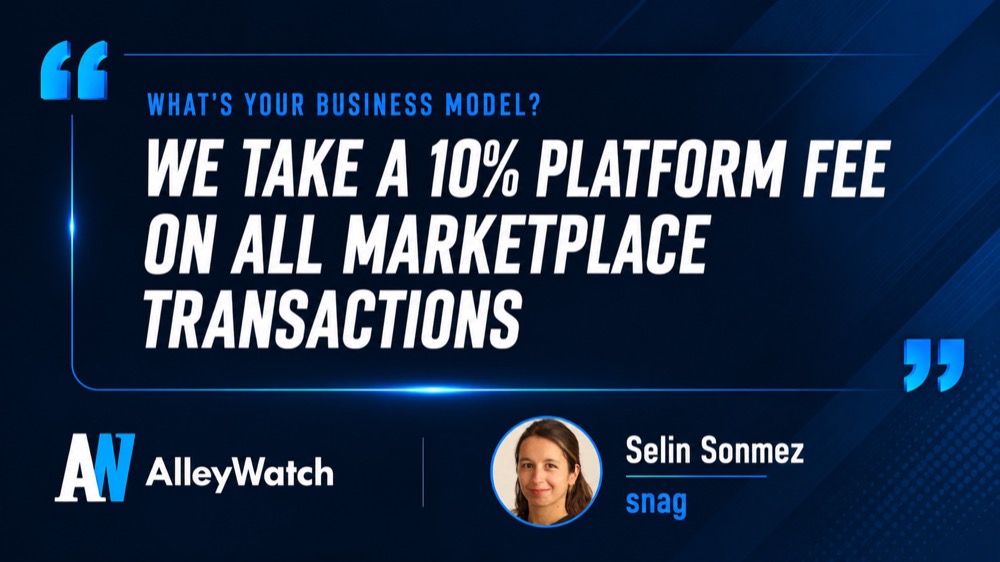
Snag operates on a straightforward and scalable monetization model, capturing a modest 10% platform fee on all marketplace transactions processed through its ecosystem.
How Are You Preparing for a Potential Economic Slowdown?
As broader macroeconomic uncertainties loom, young professionals continue to face the ongoing risk of being priced out of the major metropolitan areas that hold the keys to their professional futures. Sonmez believes that snag’s value proposition actually strengthens during economic downturns, positioning the platform as an essential utility rather than a discretionary luxury. By providing greater affordability, lower upfront capital requirements, and radical flexibility, snag makes urban living sustainable when economic pressures mount.
What Was the Funding Process Like?
Closing a $4M Seed round in just ten weeks is no small feat, particularly in a cautious venture capital climate. Sonmez credits the round’s success to the undeniable traction the startup brought to the negotiating table.
At the time of pitching, snag had already amassed 3,000 active listings in New York City, over 3,000 monthly active renters searching for spaces, consistent 30% month-over-month growth, and 90 million organic views on TikTok.
"We weren’t asking investors to believe in a thesis," Sonmez reflected. "We were showing them a market that had already built itself, and asking them to help us formalize it."
Navigating the fundraising circuit, however, remains an intensely demanding ordeal for any founder. Sonmez candidly shared the psychological toll of enduring grueling days packed with back-to-back pitch meetings, handling rejection emails moments before jumping onto a call with a fresh prospective investor, and maintaining unwavering enthusiasm for the company’s long-term vision.
She also emphasized the importance of building a support system, highlighting the invaluable emotional and tactical backing provided by the a16z Speedrun team throughout the arduous capital-raising journey.
What Factors About Your Business Led Your Investors to Write the Check?
Venture capital backers were immediately captivated by the core insight driving the enterprise: urban consumers had permanently shifted their apartment-hunting behavior to group chats and social feeds. Investors recognized that snag was constructing the crucial trust and safety infrastructure required to institutionalize an already existing consumer habit.
Additionally, investors placed heavy emphasis on consumer distribution capabilities. Because snag established robust organic distribution channels early on and demonstrated a proven ability to authentically reach its target demographic, backers gained absolute confidence in the team’s capacity to convert decentralized social behavior into a high-utility marketplace. The prospect of facilitating rental transactions—often the single largest monthly expense for the American consumer—presented an exceptionally compelling market opportunity.
What Are the Milestones You Plan to Achieve in the Next Six Months?
With fresh capital secured, snag is setting its sights on geographic expansion and community-driven growth initiatives.
"We’re proving the model can scale beyond New York and will launch in our second city soon," Sonmez stated, outlining the company’s near-term roadmap. "We’re also building out our content club, which is a program that lets creators earn income by helping their communities find housing."
What Advice Can You Offer Companies in New York That Do Not Have a Fresh Injection of Capital in the Bank?
For early-stage founders navigating the challenging New York startup ecosystem without a fresh capital injection, Sonmez offers clear, pragmatic counsel rooted in her own recent experiences.
"Decide whether you want to grow your business or raise capital. Doing both at the same time is very hard," she advised, noting that her cofounder successfully managed day-to-day operations while she dedicated two months entirely to full-time fundraising. "Business success unlocks capital, and capital unlocks speed. My advice would be to make your goal very clear and go after it. Clarity and determination win."
Where Do You See the Company Going Now Over the Near Term?
Looking further ahead, Sonmez envisions a future where "liquid housing" becomes an operational reality at scale. Her ultimate goal is to foster a world where physical housing is no longer a rigid barrier blocking an individual’s next chapter in life.
"If you get a new opportunity, you shouldn’t have to choose between the lease and the life you want," she concluded.