Every modern marketing agency aspires to scale, expand its client roster, and increase its market share, yet few leadership teams are entirely transparent about the messy realities, operational friction, and growing pains that accompany rapid expansion. While the public-facing narrative of agency life often centers on glittering pitch wins, high-profile creative campaigns, and glittering award shows, the day-to-day work of transitioning from a mid-sized shop to an industry powerhouse requires confronting deep structural challenges.
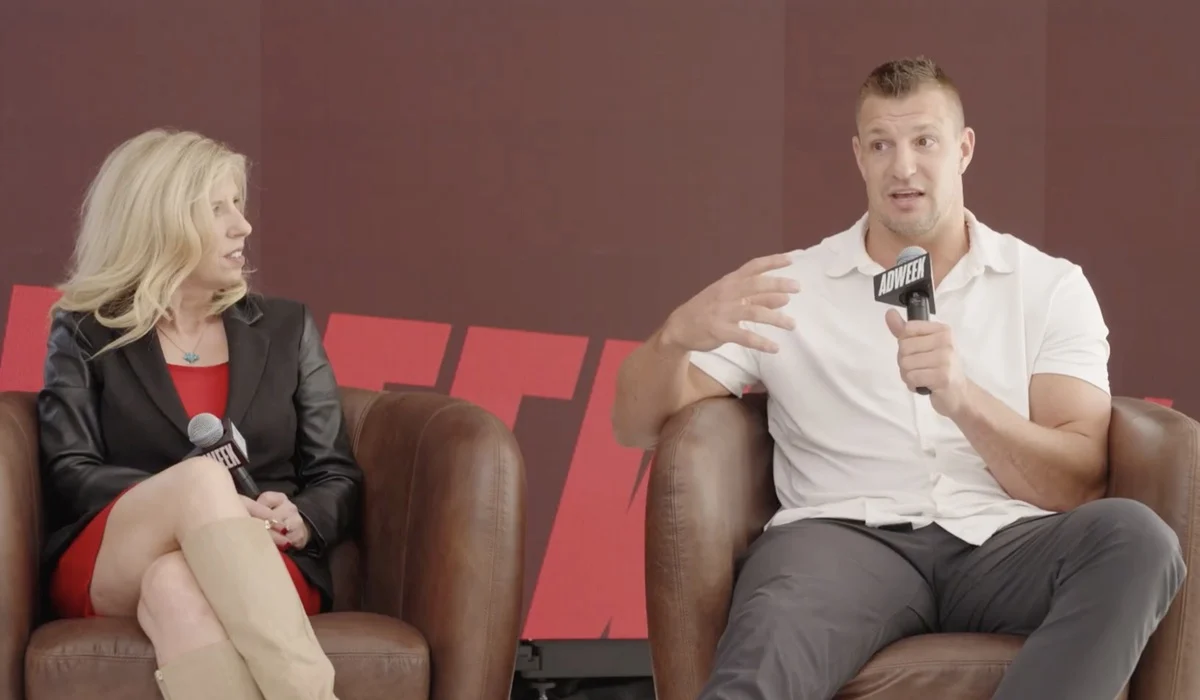
These behind-the-scenes realities took center stage on Monday at ADWEEK House: Advertising HQ, where a panel of prominent independent agency leaders gathered to discuss what it genuinely takes to break through, scale sustainably, and preserve organizational integrity in a hyper-competitive landscape. The panel featured Jeremy Heilpern, founder and CEO of Ammunition; Gogi Gupta, founder of Gupta Media; and Emily Garvey, head of strategy at Zulu Alpha Kilo NY. Together, they peeled back the curtain on the trials of agency evolution, offering an unvarnished look at the hurdles that inevitably arise when a business attempts to reach its next tier of maturity.
The central theme of the conversation focused on the friction points of expansion, particularly how the strategies and operational frameworks that initially propelled an agency to success are rarely the same ones that will sustain its future trajectory. Heilpern crystallized this operational dilemma early in the discussion, pointing out a fundamental truth that many C-suite executives often overlook until a crisis hits.
The part of growth that the industry does not talk about enough is that the things that got an agency to wherever it is today are simply not going to be what gets it to the next threshold of growth, Heilpern noted during the panel. This sentiment resonated deeply among the leaders on stage, all of whom have navigated the perilous waters of scaling independent shops in an era defined by shifting client demands, economic pressures, and technological disruption.
For Gupta Media, scaling up meant confronting severe infrastructural bottlenecks as the agency expanded its headcount. Gupta candidly shared his experiences managing rapid workforce expansion, noting that growing a team from 60 to 100 people is not merely a matter of hiring more creative talent or winning larger accounts. Rather, it requires an immediate, deliberate bolstering of the company’s foundational infrastructure. This means upgrading and formalizing human resources operations, investing in advanced technology systems, and overhauling internal communication channels to ensure that the organizational architecture can support a larger workforce without collapsing under its own weight. Without these backend investments, Gupta implied, rapid hiring quickly transforms into a source of operational chaos rather than a driver of business capability.
At Zulu Alpha Kilo NY, the philosophy of growth takes on a different yet equally deliberate dimension. Garvey explained that her agency approaches expansion not simply through the lens of headcount accumulation, but by viewing every single hire as an exponential value add to the broader organization. In a market where many agencies treat talent acquisition as a numbers game, Zulu Alpha Kilo focuses on how an individual’s unique capabilities, cultural footprint, and creative perspective can multiply the effectiveness of the existing team, ensuring that every addition elevates the agency’s output well beyond basic arithmetic.
This deliberate approach to human capital comes at a critical juncture for the advertising industry, which has spent the past couple of years grappling with the rise of generative artificial intelligence and widespread speculation about the future of employment. Amid pervasive industry anxieties that artificial intelligence and automation tools are being leveraged by CEOs to systematically eliminate entry-level and mid-level positions, the panel vigorously pushed back against this narrative.
Despite the widespread industry obsession with tech integration and artificial intelligence capabilities, the trio argued passionately that human beings remain the single greatest growth drivers at modern agencies. Garvey forcefully articulated this perspective, pointing out that artificial intelligence fundamentally lacks the capacity to replicate human intuition, emotional intelligence, and professional discernment.
Artificial intelligence cannot replace good judgment, Garvey asserted during the panel. Because technology cannot replicate this vital trait, she emphasized that agency leaders have a responsibility to actively give younger talent the opportunity to hone their judgment through hands-on experience and by observing seasoned judgment in practice within a collaborative environment.

This human-first philosophy has led several independent agencies to implement strict guardrails regarding how artificial intelligence tools are introduced to newer employees. At Gupta Media, Gupta instituted a policy designed to curb what he termed cognitive surrender among fresh talent. Under this policy, new hires are given limited access to artificial intelligence tools for their first six months on the job. The goal is to ensure that junior staff members develop their own foundational analytical and creative problem-solving skills before relying on automated shortcuts.
Ammunition has adopted a similarly cautious and measured approach to technological adoption. Heilpern explained that the agency maintains a dedicated AI innovation unit tasked with rigorously evaluating the safety, utility, and accuracy of any tools brought into the agency ecosystem. Furthermore, Heilpern revealed that he has actively held discussions regarding the possibility of sanctioning new hires from using artificial intelligence tools for their first few years at the firm.
You need to be able to know when AI is lying to you, Heilpern explained, highlighting the critical danger of junior employees blindly trusting automated outputs without possessing the foundational expertise required to fact-check, contextualize, or elevate the work.
As a proudly creative agency, Zulu Alpha Kilo believes that its human-first strategy is inextricably linked to the physical workplace. Garvey argued that there is simply no substitute for in-person collaboration when it comes to nurturing creative talent and shaping aesthetic taste. She pointed to the organic, unplanned watercooler moments that happen naturally in an office environment as vital catalysts for fostering the kind of career-defining work that sets an agency apart from its competitors. Without these shared physical spaces and spontaneous interactions, the delicate process of mentorship and cultural osmosis risks being lost to remote isolation.
Clients, too, are signaling a strong preference for human-led processes over automated solutions. Heilpern noted that he has observed a distinct, measurable increase in client demand to meet every single human team member assigned to their specific account, rather than relying on faceless teams or automated workflows.
The Ammunition CEO offered a reassuring perspective on client sentiment regarding the technological revolution sweeping the sector. He noted that in all his conversations with brands and marketing directors, not a single client has ever called to express a wish that they could talk to a robot instead of a human being. The good news, Heilpern concluded, is that for all the industry handwringing about artificial intelligence taking over, clients still overwhelmingly want humans doing the heavy lifting on their accounts, which represents a very positive reality for creative professionals.
While independent agencies often enjoy a distinct advantage over publicly traded holding companies due to their ability to invest more freely, make nimble decisions, and pivot without answering to restless shareholders, Garvey cautioned against complacency. In an increasingly crowded marketplace where virtually every agency—regardless of size—has access to the exact same suite of software tools, technologies, and platforms, she argued that it is no longer enough for a shop to simply rest on its independent laurels.
Instead, the core focus must remain relentlessly fixed on agency culture and the tangible employee experience. Garvey noted that because of Zulu Alpha Kilo’s specific size and independent structure, the agency is uniquely positioned to bring people in and ensure that they will have a genuine, measurable impact on the business rather than simply feeling like an anonymous cog in a massive corporate machine. Maintaining that sense of individual agency and cultural belonging, she suggested, has proven to be an invaluable asset at this critical stage of the agency’s evolution.
As independent agencies continue to navigate the complex interplay between rapid scaling, technological integration, and the preservation of human-centric creative cultures, leaders like Heilpern, Gupta, and Garvey are proving that sustainable growth requires far more than just winning new accounts. It demands a willingness to confront uncomfortable operational truths, protect the development of young talent from the pitfalls of cognitive surrender, and relentlessly prioritize the irreplaceable value of human judgment in an increasingly automated world.