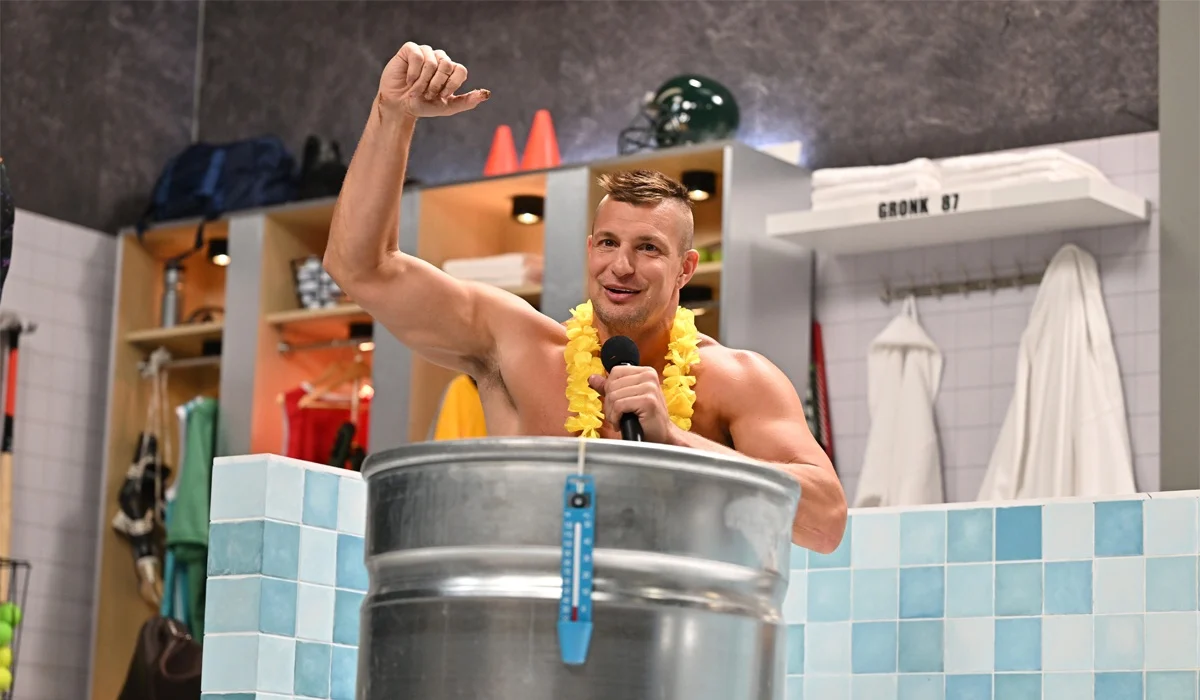
During an illustrious 11-season NFL career, Rob “Gronk” Gronkowski established himself as one of the most dominant tight ends in professional football history. Yet, behind the legendary touchdowns, Super Bowl rings, and signature spikes lay a relentless physical toll. From a fractured arm and a torn MCL to multiple back surgeries, Gronkowski’s body endured a punishing series of setbacks that ultimately dictated the trajectory of his life far beyond the gridiron.
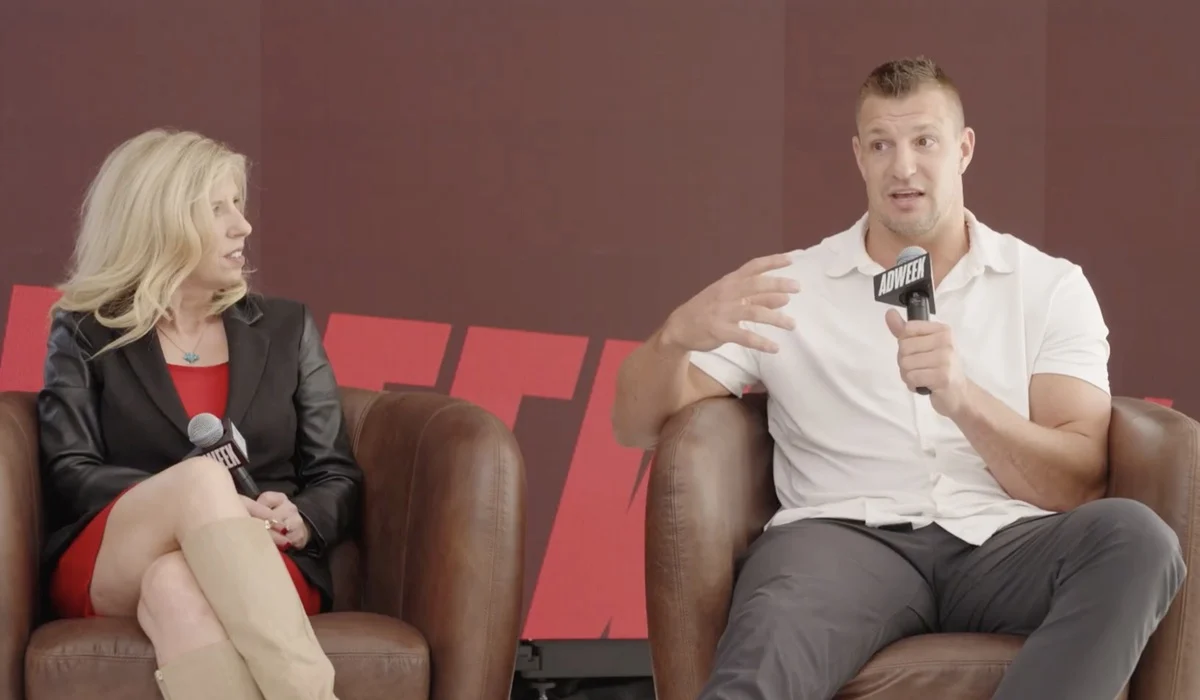
Speaking on a panel at ADWEEK House during Advertising Week in New York, the former New England Patriots and Tampa Bay Buccaneers star opened up about how those traumatic injuries fundamentally reshaped his identity. Rather than viewing his physical struggles merely as obstacles, Gronkowski credited them with laying the groundwork for his successful transition into sports broadcasting, commercial acting, and targeted brand partnerships.
“Injuries kind of shaped my whole entire life. It really has,” Gronkowski told the audience during the Tuesday panel discussion. “It shaped my football career. It shaped who I am now.”
Throughout his time in the league, Gronkowski’s injuries taught him stark, unforgiving lessons about human endurance and resilience. He noted that without experiencing severe physical trauma, he never would have truly understood what it feels like to be knocked down or how to systematically analyze and understand human biomechanics. According to Gronk, taking heavy hits on the field often forces athletes into a cycle of overcompensation to make up for body parts that are essentially shutting down under stress, a dynamic that frequently precipitates even more severe injuries.
This harsh reality forced him to dive deep into the science of recovery and physical rehabilitation—a sentiment that resonated deeply with fellow panelist Lois Cook, a professional women’s football player for the DC Divas. For athletes competing at elite, high-impact levels, managing the aftermath of physical competition is a daily battle that requires intense strategic planning.
“You got to think about the recovery after a game. We call it Mack Truck Monday,” Cook said, highlighting the heavy toll that full-contact sports take on the human body long after the final whistle blows. She emphasized that her long-term goals in the sport are defined by longevity and autonomy: “I want to last in this game, and I want to be able to walk off of the game on my own terms.”
For both Gronkowski and Cook, this shared obsession with recovery, body awareness, and physical preservation naturally bled over into their approach to modern brand partnerships and commercial marketing campaigns. The journey from enduring agonizing injuries to discovering effective rehabilitation methods created a direct bridge to the kinds of products and companies they choose to endorse today.
“You take a massive hit, it’s shutting down in that area, no matter what. So how do you wake up everything? That’s why I believe where I’m at now, because I was at that stage before,” Gronkowski explained, drawing a direct line between his past medical struggles and his current commercial endeavors. “I’m understanding how to wake up the body parts again that got demolished on the field throughout the surgeries, and then, boom, it has led to marketing things.”
Among those distinct marketing opportunities, both Cook and Gronkowski have formed official partnerships with DNA Vibe, an innovative health technology company specializing in multi-mode regenerative wearables designed to support recovery, reduce inflammation, and alleviate stiffness. The athletes are not merely paid figureheads or traditional endorsers; they are active, authentic users of the technology. Gronk’s involvement with the brand recently went beyond standard promotion when he starred in a high-profile, off-script ad campaign for the company alongside DNA Vibe CEO Perry Kamel.
However, the connection between the athletes and the brand extends far beyond the realm of physical recovery and product utility. Both Gronkowski and Cook noted that they were strongly drawn to DNA Vibe because of the company’s broader corporate purpose, humanitarian ethos, and core values. Demonstrating that commitment in a profound way, DNA Vibe made headlines earlier this year by deploying what is widely believed to be the first fully operational civilian product assembly facility inside an active conflict zone in Ukraine.
For CEO Perry Kamel, the decision to establish operations in a war-torn region was rooted in a fundamental human obligation to help those suffering in extreme circumstances. Bringing manufacturing capabilities directly into a zone impacted by active hostilities provided meaningful employment and support where it was needed most.
“There are people in Ukraine that are struggling—moms, dads, kids being injured while having dinner, and young men and women coming back from the front. How could we not?” Kamel said, reflecting on the motivations behind bringing the humanitarian product assembly operation to a conflict zone. Highphasizing the deeper significance of corporate actions in modern business, Kamel added, “I would say purpose is extremely powerful.”
The intersection of authentic storytelling, physical resilience, and genuine corporate purpose formed a central theme throughout the ADWEEK House panel discussion. Industry leaders, brand marketers, and athletes alike converged on the idea that modern consumers—and the discerning audiences targeted by today’s top brands—demand more than just a slick commercial or a transactional relationship. They look for authentic alignment between what a company says, what it sells, and why it exists in the first place.
Jeanniey Walden, chief marketing officer at Fluent, underscored this evolution in consumer engagement and brand loyalty during the panel discussion. According to Walden, closing a sale or securing a partnership is merely the starting point for a much deeper, ongoing relationship between a brand and its audience.
“The transaction is just the beginning of an entire journey that gives you purpose for what we’re all doing every day,” Walden noted.
As athletes like Gronkowski and Cook continue to navigate their post-playing and active-playing careers alike, their partnerships with brands like DNA Vibe illustrate how personal vulnerability and physical hardship can be transformed into a powerful platform for positive impact. By anchoring their commercial endeavors in shared experiences of recovery and a commitment to global humanitarian efforts, they demonstrate that the most effective marketing strategies are those rooted in genuine human stories.