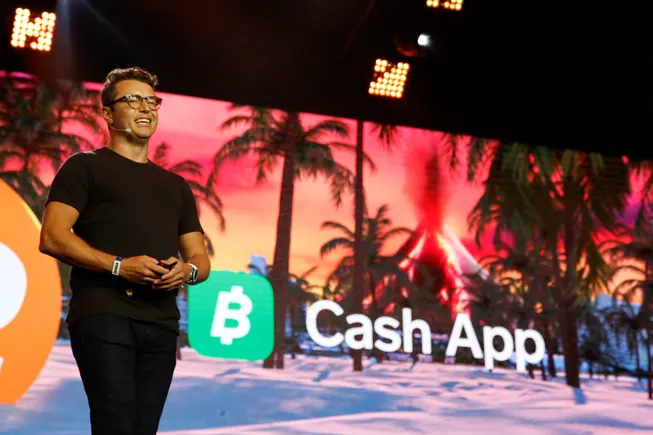
Block executive Miles Suter envisions a future where bitcoin transcends its current role as a speculative digital asset and functions seamlessly as everyday digital money, used just as easily as credit cards, debit cards, and physical cash for routine daily transactions. To turn that ambitious vision into a practical reality, Suter—who serves as the head of bitcoin and stablecoin at Block—has set out to bridge the gap by enabling direct payments in bitcoin between millions of American consumers and merchants utilizing the Square point-of-sale ecosystem.
According to Suter, the fintech giant occupies a singular position within the modern financial landscape, bridging both sides of everyday commerce. "We’re in a unique position as a large company with huge segments on both sides of the counter," Suter said, referencing the millions of U.S. consumers who utilize Block’s financial applications and the vast network of merchants operating within Square’s point-of-sale ecosystem. "I believe that there’s no company in the world doing more for bitcoin than Block."
Suter’s journey with the company spans nearly a decade, having joined Block nine years ago. The firm’s foundational step into the digital currency market occurred in January 2018 with the launch of bitcoin sales on Cash App. Since that initial rollout, approximately 24 million active users have purchased the digital currency through the popular platform. However, Block’s leadership harbors much larger aspirations for bitcoin than merely facilitating retail purchases of the asset as an investment vehicle. These grand ambitions are heavily driven by the company’s billionaire founder and long-time bitcoin booster, Jack Dorsey.
Enabling direct bitcoin payments at the checkout counter is the critical linchpin of this corporate strategy. In an interview discussing the firm’s overarching goals, Suter emphasized that Dorsey’s personal conviction shapes the company’s product roadmap. "Jack really believes in the mission of bitcoin as everyday money, and so those are the things I’m always thinking about as we roll out new products and how they can eventually lead to that endpoint," Suter explained.
To accelerate public awareness and drive mainstream adoption, Block launched its first-ever consumer advertising campaign. The strategic marketing push is designed to thrust the digital currency directly into the consciousness of what the company terms "60 million bitcoin-curious Americans," a demographic figure derived from an extensive August market survey commissioned by the firm.
The promotional video clips featured in Block’s "Bitcoin Does" campaign confront contemporary economic anxieties head-on, spotlighting widespread affordability issues, mounting consumer frustration with persistent inflation, merchant transaction fees, and the crushing burden of rising housing costs. The multimedia campaign has been deployed broadly across major social networking and digital platforms, including Instagram, as well as mainstream television broadcasts on Fox Sports. Furthermore, promotional ads are slated to air before two major Hollywood feature films scheduled for theatrical release in December.
Dorsey, who has championed bitcoin for several years, has systematically overseen the expansion of the digital asset into multiple functional areas of Block’s sprawling business operations. His commitment to the cryptocurrency remains absolute. "I don’t think there is anything more important in my lifetime to work on," Dorsey stated during a prominent 2021 bitcoin conference, according to previous reports by CNBC.
Block’s concerted push to promote real-world bitcoin utility among everyday consumers follows a major infrastructure milestone achieved a year ago, when the company integrated native bitcoin payments into Square point-of-sale services in October 2025. Alongside this merchant-facing capability, Square introduced features allowing local business owners to automatically convert a designated percentage of their traditional card sales directly into bitcoin, thereby building corporate cryptocurrency reserves while participating in the digital asset economy.
The scope of Block’s dual-sided ecosystem is substantial. Cash App currently boasts roughly 59 million active users of its digital wallet infrastructure, while Square maintains a merchant base of approximately 4 million sellers on its point-of-sale systems. To incentivize actual transactional use rather than mere holding, Block offers a lucrative 5% discount paid in bitcoin for Cash App users who choose to settle their purchases with the digital currency at participating Square merchants.
"I don’t think anybody else has an opportunity to kick off a two-sided marketplace like this," Suter remarked, highlighting the synergistic interaction between Cash App and Square. "People have talked about like, ‘Well, maybe bitcoin’s relevant finally when you can use it to go buy your daily coffee.’ And now, that’s definitely a reality."
Internally, Block maps out the consumer transition from traditional fiat money to electronic bitcoin funds as a structured, three-part journey. The first phase focuses on accessibility to the currency through the familiar interface of Cash App. The second phase emphasizes security, giving users robust control through dedicated digital wallet solutions. The final phase centers on daily utility, bringing the loop to completion by enabling everyday transactions between Cash App consumers and Square merchants.
"We believe bitcoin needs to be money" to make long-term viability a reality, Suter noted.
While bitcoin remains Block’s ultimate destination, the company also evaluates the role of stablecoins within the broader digital asset landscape. Suter views stablecoins as a meaningful step on the long-term road toward broad-based bitcoin adoption by the global populace. Because stablecoins maintain a steady value through a 1-to-1 backing with traditional fiat currencies, they are largely shielded from the dramatic price volatility that characterizes unbacked cryptocurrencies.
"It gets people comfortable with this concept of a digital currency," Suter said. Nevertheless, he was careful to distinguish between the two categories, pointing out that stablecoins represent an extension and a technological innovation of the exact same legacy financial system that operates entirely on fiat currencies.
This characteristic stands in stark contrast to bitcoin, which operates as a decentralized digital asset completely devoid of government oversight or central bank control, leaving it subject to extreme market price swings. "For me, bitcoin is a more revolutionary, upgraded system," Suter asserted. "They’re not necessarily in the same ballpark."
Reflecting on broader industry efforts, Suter suggested that stablecoin-payment initiatives attempted to date "don’t necessarily have the right posture," often because a given digital wallet and point-of-sale system fail to locate one another effectively or offer the proper economic incentives to entice consumers to adopt the novel payment method.
"We believe in the principles of Bitcoin, and really one of the principles of bitcoin is having a really long-term time horizon, and that’s no shade to stablecoins," Suter said. "They’re a very useful tool, especially in developing markets. And in the long run, they will assist bitcoin on its path to being everyday money."
Block’s broader ecosystem of bitcoin-centric products is multi-faceted, encompassing direct retail sales to customers and transaction revenue generated through Cash App. It also includes the $250 Bitkey digital hardware wallet launched in April, which features an integrated screen, automatic bitcoin-earning mechanisms on Cash App, and cryptographic proof-of-reserves. Additionally, the company operates a specialized business unit dedicated to developing and selling hardware and software tools for bitcoin mining operations. According to Block’s corporate annual report, direct retail sales continue to account for the vast majority of the company’s total bitcoin-related revenues.
Financial metrics from the second quarter illustrate the shifting dynamics of Block’s crypto business. Gross profit from bitcoin fell 31% year-over-year to $72 million, down from the same period in the previous year. Company leadership attributed this decline to a deliberate "strategic decision" to trim fees associated with bitcoin purchases. As part of this adjustment, Block removed purchase fees entirely for transactions exceeding $2,000, while also acknowledging that broader bitcoin trading dynamics during the quarter contributed to the overall profit dip. Concurrently, Block’s total bitcoin revenue dipped 13% to $1.89 billion in the second quarter.
Beyond building consumer familiarity and encouraging organic adoption, Suter suggested that merchants’ persistent desire for lower-cost payment rails may ultimately serve as the primary catalyst driving the wider commercial use of digital coins.
"The Square side is still a bit more nascent, but when we do talk to merchants, the thing that they do key in on are those cost savings, and that is what we’ve led with in a lot of our messaging to existing and prospective merchants," he said, while acknowledging that the legacy card-based processing system remains a robust and reliable option in many respects.
"Ultimately, I do think costly network fees will be one of the things that helps to kickstart this, but changing the global financial system is probably the hardest thing I could imagine," Suter concluded. "And so I just zoom out again, sometimes, and know that this is a really long-term journey and mission that I’m committed to and Block is committed to."