Washington’s newly enacted income tax targeting high earners may not officially take effect until 2028, but it has already ignited a whirlwind of legislative maneuvering, constitutional litigation, and electoral conflict across the state. As the legal timeline moves forward, the controversial measure continues to dominate state politics, drawing challenges in court, proposals for wider implementation, and an upcoming high-stakes ballot initiative that could repeal the law entirely before it ever collects a dime.
The legal and political landscape surrounding the tax has grown increasingly complex. A definitive date has now been set for oral arguments in a high-profile constitutional challenge contesting the validity of the law. At the same time, the debate has intensified within the state legislature. One state lawmaker recently proposed expanding the scope of the tax by lowering the income threshold dramatically, from $1 million down to $250,000. Meanwhile, voters will head to the polls this November to decide on Initiative 645, a ballot measure designed to overturn the legislature’s decision and block the state’s first-ever broad individual income tax from taking effect.
The path that brought Washington to this legislative crossroads involved a series of strategic maneuvers by lawmakers. In early 2024, the legislature overwhelmingly approved a filed ballot measure stating that neither the state nor any county, city, or local jurisdiction in Washington may tax any individual person on any form of personal income. Rather than allowing the measure to proceed to a public vote, lawmakers adopted it directly. This was largely a procedural tactic: under state law, amending language adopted by a ballot measure requires a two-thirds legislative supermajority for the first two years.
Had voters approved the measure in November 2024, lawmakers would have been barred from considering an income tax until the 2027 legislative session. By taking the measure off the ballot and passing it themselves in early 2024, lawmakers started the clock sooner. This allowed them to return during the 2026 session—ahead of the 2027 restriction—and do precisely what the original text sought to prevent: adopt a personal income tax.
In another procedural step, Washington lawmakers attached an emergency clause to the high-earner income tax legislation. They asserted that the new tax, which does not take effect until 2028 with a filing deadline in 2029, was necessary for the support of the state government and its existing public institutions. This designation effectively shielded the measure from a provision in Washington law that ordinarily allows voters to review tax changes through a referendum. With that traditional avenue blocked, opponents of the income tax organized and filed their own initiative to repeal the measure, successfully securing its placement on the statewide ballot as Initiative 645.
Washington historically has had no individual income taxation, and its state constitution has long been interpreted by legal scholars and courts as largely prohibiting income taxes, which forms the basis of the pending litigation. Under the newly enacted framework, however, some high earners in Seattle could soon face the highest combined state and local top income tax rate in the entire country. For certain taxpayers, the combined rate could reach 18.037 percent, split across employer and employee obligations. This staggering figure aggregates the new 9.9 percent state tax with the 5 percent Seattle Social Housing Tax, the 2.557 percent Seattle JumpStart Tax, and the 0.58 percent WA Cares tax.
The primary tax is levied on individuals or couples with annual incomes exceeding $1 million. Consequently, its financial impact will fall heavily upon small business owners and highly compensated technology workers. Because very few salaried workers earn more than $1 million annually, incomes at that level typically flow through specific channels: capital gains and dividend income, pass-through business income, and restricted stock unit (RSU) vesting.
RSU vesting can create particularly acute tax events when years of accumulated shares vest all at once, such as during a corporate initial public offering. An employee working at a startup for five years, for instance, might experience a single year where all five years of accumulated stock vest simultaneously, yielding an income above the $1 million threshold even though their average annual earnings over that period were well below it.
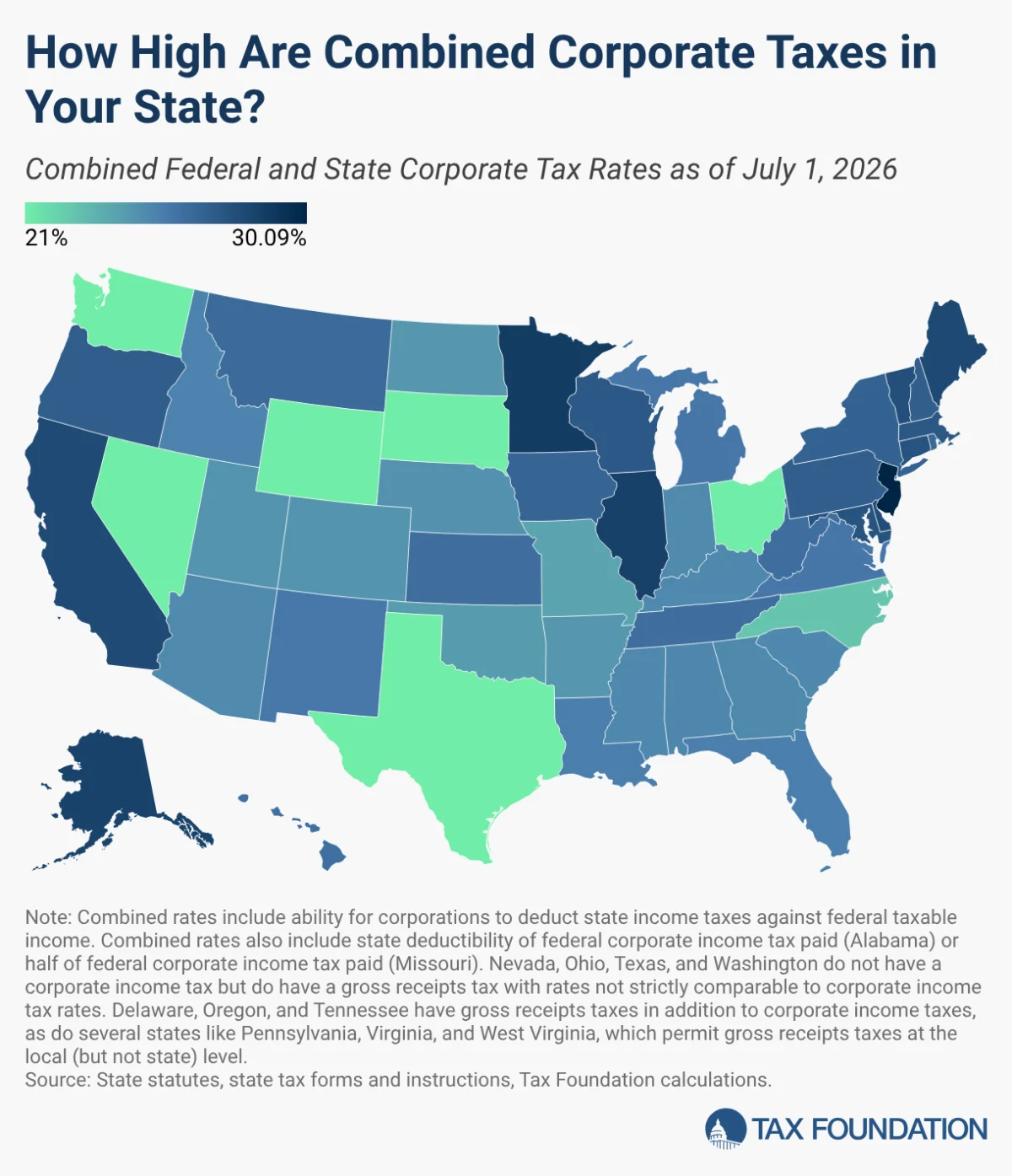
Pass-through businesses will also feel the brunt of the new policy. According to data from the U.S. Small Business Administration, Washington is home to 672,472 small businesses—the vast majority of which operate as pass-through entities—employing 1.4 million people, or 48.4 percent of the state’s workforce. Imposing a 9.9 percent tax on small business owners establishes one of the nation’s highest income tax rates on these enterprises. This burden arrives in a state that already levies a high-rate gross receipts tax, known as the Business and Occupation Tax, and subjects an unusually high share of business inputs to the state sales tax.
Washington’s broader tax code has historically skewed heavily toward business taxation, in part because the state traditionally avoided a broad-based individual income tax. Unlike other states that lack an income tax, however, Washington has not maintained a low-tax, limited-government ethos. As a result, businesses have been forced to shoulder a disproportionate share of the state’s tax burden. By superimposing a high-rate income tax specifically on high earners, critics argue that Washington has created the worst of all possible worlds for small business owners, restricting their capacity for growth and undermining job creation.
Beyond tech workers with vesting RSUs, other residents could find themselves unexpectedly swept into the tax bracket. Individuals selling a family business built over decades or generating significant capital gains from the sale of a primary residence could easily find themselves crossing the $1 million threshold in a given year.
The tax structure itself features several unusual design elements. Its charitable deduction is strictly capped at $50,000. Furthermore, joint filers’ income is taxed above $1 million under the same parameters as single filers, meaning two single earners making $600,000 each would face no tax liability, while a married couple with the exact same combined income would be taxed.
Additionally, the framework includes no safe harbor provisions for taxpayers who unexpectedly become subject to the tax when their income exceeds the threshold in an atypical year. Under federal law and in most other states with income taxes, underpayment penalties are waived if taxpayers pay at least 90 percent of their current year’s tax liability or a designated percentage of their prior year’s liability through withholding or quarterly estimated payments. Washington’s new tax lacks any such safe harbor, meaning taxpayers who fail to anticipate becoming a filer or misjudge their liability could face immediate penalties.
Overturning the new tax via the ballot box presents an uphill battle for opponents, a challenge compounded by contentious ballot language. The state’s official wording warns voters that repealing the tax would necessitate immediate cuts to education funding, despite the fact that the tax is not yet active and no operating budget has incorporated its projected revenues. Under a 2022 law, the attorney general is authorized to supply fiscal impact statements for ballot measures, but critics of the statement attached to Initiative 645 argue it misleadingly assumes revenue from a non-existent tax.
Even so, as lawmakers openly discuss expanding the tax to capture lower-income thresholds before the original policy even takes effect, many voters may find themselves inclined to follow a long-standing historical trend in Washington elections: rejecting the implementation of an individual income tax.