Oil flows through the Strait of Hormuz are currently on the rise, a greater number of commercial ships are successfully and safely navigating the crucial waterway, and global crude oil prices appear to be trending downward—at least for the time being. According to a research note published Wednesday by Goldman Sachs, Persian Gulf oil exports have rebounded successfully, returning to their 2025 average after staging a remarkable doubling in volume back in September. Looking ahead, the financial firm anticipates that Brent crude prices will moderate toward a target of $85 per barrel by the close of the year.
This easing of oil market pressures provides welcome relief, signaling positive developments not only for energy markets globally but potentially for major economies like the United States and China as they navigate shifting demand landscapes.
Yet, this optimistic assessment regarding petroleum does not tell the whole story of the global energy matrix. While crude flows improve, the overarching perspective on natural gas, particularly concerning Europe, tells a distinctly different and more precarious tale. Despite the recent operational improvements and calming metrics surrounding Iranian oil and regional transit, consumers and industrial sectors across Germany and vast stretches of Europe could still be facing a long, expensive, and challenging winter season.
For five years, observers of the European continent’s macroeconomic and structural shifts have consistently highlighted a series of deep-seated energy challenges. Among the most pressing issues is the alarming reality of "energy poverty," where a growing number of families in the United Kingdom and across mainland Europe find themselves forced to make difficult household trade-offs between adequate indoor heating and basic nutrition. Compounding this human toll, escalating electricity costs continue to exert severe pressure on industrial manufacturers, undermining their competitiveness on the global stage. In response to these vulnerabilities, American exports of liquefied natural gas have emerged as a critical stabilizing force, acting essentially as a modern-day energy Marshall Plan to ensure that the lights and heating systems remain operational across European communities.
A primary fear highlighted in previous industry reporting was that various regions within Europe might confront critical natural gas shortfalls at peak intervals throughout the year. Fortunately, those worst-case anxieties ultimately proved unfounded, largely due to external climatic factors. Much of the European continent has enjoyed a multi-year stretch of remarkably benign weather conditions, characterized by winters and summers that were neither excessively hot nor dangerously cold. This meteorological fortune allowed European nations to preserve precious natural gas storage inventories rather than burning through them prematurely.
That favorable weather buffer, however, has come to an end.
During the summer months, Western Europe shattered the long-standing temperature records set back in 2003, experiencing its hottest summer in recorded history. While much of the European population does not utilize residential air conditioning at the intensive levels typical of the United States or certain other global markets, cooling infrastructure does exist and its adoption is steadily accelerating. Consequently, as temperatures soar, both commercial enterprises and retail consumers increasingly rely on air conditioning to cope with the heatwaves. While indoor cooling provides vital relief during extreme weather events, it represents a massive power drain on local electrical grids. As overall power demand climbed in response to the sweltering conditions, natural gas inventories were heavily drawn down to fuel the generation plants.
The Swiss Federal Office of Energy maintains detailed tracking data comparing current natural gas storage levels against historical five-year averages. Recent analytical charts underscore a concerning reality: the European Union’s collective storage inventory has dipped to its lowest point seen across that five-year window. Furthermore, storage indicators reveal that Germany is currently positioned in a slightly more vulnerable state than the broader EU average, with France facing similarly tightened inventory margins.
Despite these depleted storage cushions and elevated market prices, European political and regulatory leaders maintain a remarkably calm public posture. Representatives for the European Commission coalition have asserted that despite lower storage levels when measured against historical benchmarks, both the Commission and individual member states have reconfirmed that the EU’s overall gas supply remains stable.

Industry analysts, however, point to two critical caveats that complicate this reassuring narrative.
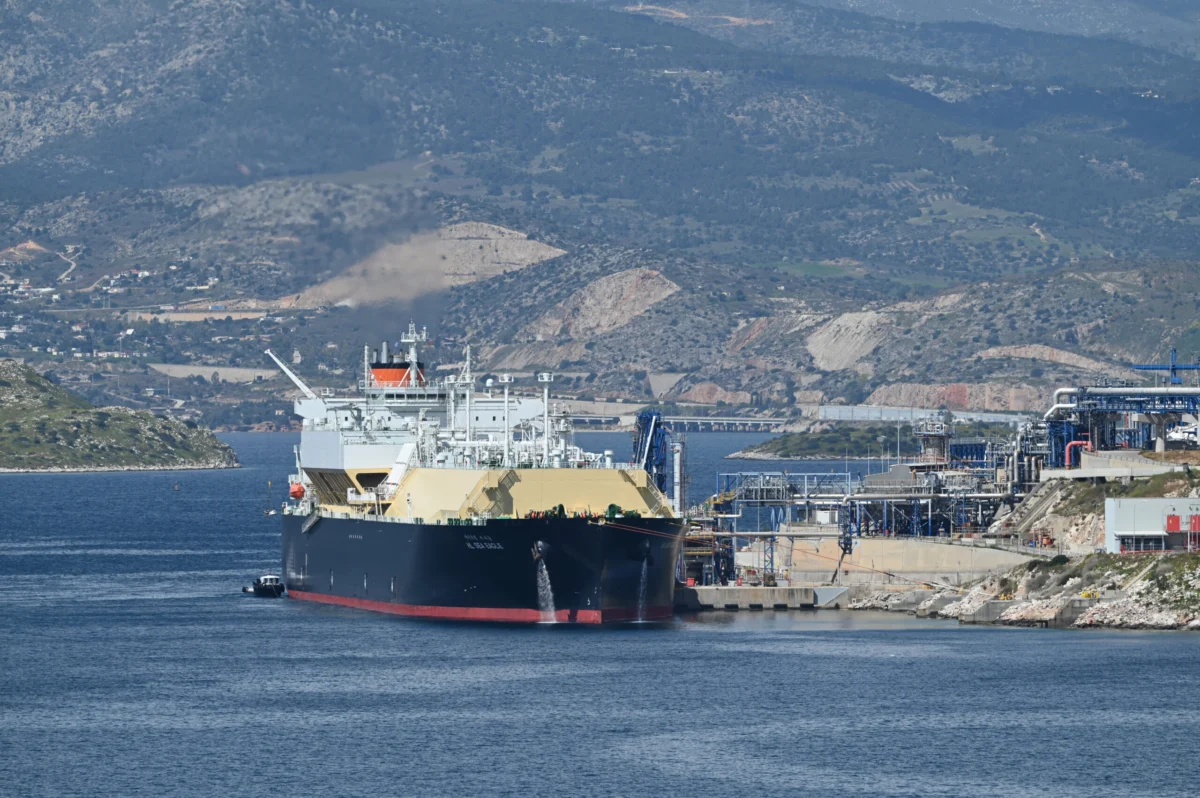
First, natural gas storage across Europe remains stable almost exclusively due to continued, high-volume exports originating from the United States. American energy companies are effectively shielding Europe from a far more dire and disruptive energy crisis. This is not hyperbole; the natural gas that is super-cooled into a liquid state, loaded onto specialized carriers, and dispatched from export terminals in Texas, Louisiana, and other coastal ports represents the literal margin of difference between a Europe experiencing "stable" supplies and a Europe struggling desperately to meet basic energy demand. Compounding this dynamic, the physical sabotage of Qatari gas infrastructure has left Europe even more critically dependent on liquefied natural gas sourced from the United States and, unexpectedly, from Russia.
It remains a striking reality that European buyers continue to purchase billions of dollars worth of natural gas from Russia, though these shipments now arrive via maritime vessels rather than through the severely damaged Nord Stream pipeline infrastructure. Observers watching cargoes of Russian gas steam into major distribution hubs like the Port of Rotterdam are frequently struck by the persistence of these trade channels. While a widespread public perception persists that the destruction of Nord Stream permanently severed Moscow’s revenue streams from Europe’s energy consumption, reality proves more complex.
European leaders maintain their official policy commitments to phase out Russian liquefied natural gas imports by January 1 and to terminate all remaining contractual obligations to purchase Russian gas by late next year. Market analysts remain skeptical of these aggressive timelines. Given that modern electorates and industrial consumers react with intense political backlash when deprived of electricity and reliable heating, it is widely anticipated that Russia will continue finding willing buyers for its natural gas well past these politically sensitive target dates. Time will undoubtedly test the resolve of these policy declarations.
Second, the crisis is not merely a matter of physical supply availability; it is fundamentally a question of pricing economics. On the Intercontinental Exchange, pricing metrics for front-month natural gas futures traded on European hubs are more than double the projected costs for delivery later in the winter, such as in February. While many established utility and power generation companies have already hedged or locked in their purchase costs ahead of time, any industrial consumer or municipal entity forced to acquire gas on the open market will face a punishing double financial shock. They must absorb both significantly higher baseline gas prices and elevated maritime shipping costs required to secure and transport liquefied natural gas cargoes. For spot-market deliveries, Europe finds itself locked in direct competition with aggressive buyers across Asia, with both geographic regions prepared to pay whatever financial premium is necessary to keep their populations warm and industrial operations running through the winter months.
If market participants are searching for an economic silver lining, it rests in the recent downward drift of prices, which have found some support from lingering hopes for a durable, long-lasting peace agreement in the Middle East. Such a diplomatic breakthrough could permanently secure risk-free maritime shipping lanes through the Strait of Hormuz. Genuine peace in the region would deliver optimal outcomes across humanitarian, geopolitical, and economic levels.
Beyond diplomatic developments, an ideal scenario for Europe would involve another relatively mild winter season, which would naturally suppress residential and commercial demand for heating fuels. Maintaining modest weather conditions would keep end-of-season storage inventories at sufficient levels, giving power companies and national governments a vital head start on replenishing gas reserves for the subsequent year.
A substantial portion of that replacement LNG supply will inevitably originate from the United States, which currently commands production capabilities exceeding domestic export constraints. For investors analyzing this macro theme, prominent pure-play U.S. exporters like Cheniere Energy and Venture Global represent direct plays on the structural need for American gas abroad. Less obvious beneficiaries include European energy majors like TotalEnergies and Shell, which control massive allocations of U.S. LNG export capacity.
TotalEnergies CEO Patrick Pouyanné, widely regarded as one of the most influential executives operating within the global oil and gas sector, addressed these looming energy challenges, pricing trends, and market dynamics during a comprehensive industry interview.

Actionable Insider and Market Shifts
Major financial institutions are increasingly bullish on select European energy equities, with HSBC upgrading both BP and TotalEnergies to a "buy" rating. This upgrade is driven in part by higher projected natural gas pricing environments. HSBC dramatically raised its European natural gas price forecasts, boosting expectations by 34% for the remainder of the year and 40% for the subsequent year, while also modestly lifting its long-term outlook through 2028. Analysts at the firm point to anticipated substantial upgrades across both companies’ oil production and refining margin outlooks, alongside robust cash generation profiles and active corporate share buyback programs.
Beyond BP and TotalEnergies, HSBC maintains favorable buy ratings on Shell, Spain’s Repsol, and Chevron, projecting approximately 20% upside potential across its favored basket of energy equities.
This institutional optimism is particularly notable given that financial firms acknowledge the ongoing fragility around the Strait of Hormuz. HSBC’s baseline macroeconomic assumption warns that the regional transit situation remains vulnerable to repeated operational disruptions and continued uncertainty, even as overall shipping volumes show gradual signs of recovery.
Other major investment banks are similarly warming up to BP. JPMorgan recently upgraded the company to an overweight rating, releasing research highlighting a corporate return to the "value of simplification" and renewed prospects for long-term growth under the leadership of CEO Meg O’Neill. While acknowledging that BP’s recent corporate history has experienced strategic turbulence and operational hurdles, financial analysts observe that the company is successfully course-correcting.
JPMorgan’s research also highlights emerging geographical frontiers, pointing to BP’s major hydrocarbon discovery at Bumerangue, a significant deepwater offshore block in Brazil. Industry data providers note that the Bumerangue discovery represents BP’s largest exploration find in a quarter-century.
Market analysts emphasize that BP remains a compelling equity to monitor closely as the company repositions its strategic focus. The firm previously executed a sharp pivot away from its traditional core competencies in oil and gas exploration and production. Historically known as British Petroleum, the company famously attempted a sweeping corporate rebranding initiative under the banner of "beyond petroleum," a strategic shift toward renewable energy investments that ultimately proved challenging to sustain in its original form. While the company maintains targeted involvement in solar energy, battery technologies, and offshore wind joint ventures, its current leadership is heavily refocusing capital and operational attention back toward the hydrocarbons that originally established its global prominence.
For investors, securing strategic consistency in executive leadership has been a primary objective, a requirement addressed by the appointment of industry veteran Meg O’Neill as CEO. Bringing extensive global experience from her previous leadership roles, O’Neill possesses deep familiarity with the competitive realities of the international energy sector. The central question facing market participants is whether the company can execute its strategic transition rapidly enough to satisfy investor demands in a fast-moving commodity market. Industry observers emphasize that while geological petroleum reserves take epochs to form, the global energy markets never pause, demanding swift and decisive execution from corporate leadership.