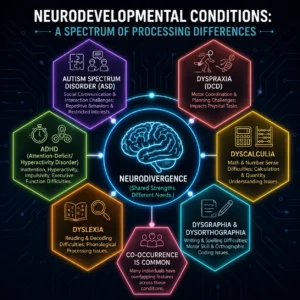
When adults receive a late autism diagnosis in their thirties, forties, or even later in life, they frequently describe a remarkably consistent emotional arc. The initial wave of profound relief—knowing finally why the world always felt fundamentally misaligned with their internal experiences—is almost invariably followed by a heavy grief. They mourn for the child they once were: the student who sat quietly in the back of classrooms, whose subtle struggles were completely misread, and whose daily exhaustion went entirely unnoticed by the adults responsible for their care.
That grief is not merely a personal emotional burden; it is vital data. Today, that data is landing directly on the desks of special education teachers, general education instructors, and school case managers who still possess the unique opportunity to change the narrative for the students sitting in their classrooms right now. A late autism diagnosis is no longer a rare edge case or an isolated clinical anomaly. Adults are being identified in growing numbers across society, and their collective reflections on their school years point to an undeniable reality: the behavioral and social signals were almost always there, but the traditional educational system was simply not built to see them.
The Cost of a Late Autism Diagnosis Compounds Over Time
In the educational landscape, delay is never a neutral stance. A qualitative study examining ten men who received their autism diagnoses in adulthood revealed a heartbreaking pattern of early signs that went completely unrecognized during their childhood years. These individuals detailed the profound toll that missed or mistaken diagnoses took on their overall mental health, self-esteem, and general well-being, compounded by the complete absence of early intervention opportunities. A late autism diagnosis, in practice, represents years of unmet developmental, social, and academic needs.
Large-scale epidemiological data concerning late autism diagnoses points in the exact same direction. According to a notable United Kingdom cohort study, roughly 79 percent of children later identified with autism received their official diagnoses after starting formal schooling, with 28 percent remaining unidentified until they reached secondary school. Even more striking is that among those diagnosed during their secondary school years, 75 percent had already demonstrated clear social and communicative difficulties that were actively noticed by either parents or teachers by the time they were five years old.
While this specific dataset originates from the United Kingdom, the underlying lesson translates universally across educational systems worldwide: the adults in the room—parents, family members, and early educators—often noticed that something was different long before a formal clinical diagnosis ever arrived. The phenomenon of masking in autism, however, frequently makes those early warning signs remarkably easy for observers to explain away or dismiss as mere quirks.
For school-based case managers and special education teachers, the reality of a late autism diagnosis is far from an abstract clinical concept. When a third-grade student goes completely unidentified and unsupported, they carry that invisible gap straight into middle school. There, the social demands increase exponentially, and the academic structures shift dramatically from nurturing elementary environments to complex, fast-paced secondary frameworks, causing the hidden cracks to finally widen into crises.
Masking in Autism Is Why Schools Miss the Students Who Need Help Most
Masking in autism—defined as the conscious or unconscious learned habit of suppressing, camouflaging, or compensating for autistic traits in order to appear neurotypical—stands as one of the primary reasons educators routinely miss the students who need support the most. Comprehensive adult accounts and contemporary research suggest that masking is especially prevalent among girls, students of color, and high-achieving academic students.
These individuals study social rules and human interactions the exact same way other students study foreign vocabulary or complex mathematical formulas. They meticulously rehearse conversations before they happen, carefully mirror the body language and tone of their peers, and force themselves into compliance with prevailing social expectations. On the surface, to an uninitiated observer, they look completely fine. They are passing classes, following instructions, and avoiding behavioral referrals. Internally, however, they are operating at a level of cognitive and emotional exhaustion that is unsustainable.
Teachers frequently describe students who engage in heavy masking as merely shy, introverted, or quirky, rather than presenting any genuine cause for concern. Their academic grades are usually adequate, and their classroom behavior is well-managed. Yet, the sheer amount of daily energy required to maintain this elaborate mask leaves virtually nothing left over for actual, deep learning. By the time that mask finally cracks under the weight of mounting adolescent pressures, the psychological and academic cost has already accumulated significantly. This is precisely why masking in autism renders traditional indicators like behavioral compliance and passing grades entirely unreliable as measures of student wellness and support needs.
To pierce through this facade, educators must look underneath the surface performance. Does a student continually struggle to form genuine peer relationships despite strictly following all the classroom rules? Are they performing significantly below what their apparent intellectual ability strongly suggests they are capable of achieving? Do they appear completely drained, withdrawn, or dysregulated the moment the school day ends? Resources such as NASET’s specialized guidance on structured teaching strategies for supporting students with autism offer practical frameworks for classrooms where masking becomes progressively less necessary and real, human needs become clearly visible.
Three Signals Adults Say Schools Misread
Adults reflecting upon their late autism diagnoses are remarkably specific about where their school years went wrong, and most describe educators who were genuinely warm, caring, and deeply invested in their success. The fundamental gap in their education was never a lack of care or compassion from the teaching staff; rather, it was a systemic lack of knowing precisely what warning signs to look for.
When a student’s unique social patterns consistently raise silent questions, resources like NASET’s specialized strategies for social skills development can help educators systematically document specific, observable behavioral patterns that genuinely support a formal request for evaluation.
It is also worth noting that adults diagnosed late in life with dyslexia often describe a striking parallel narrative: years of being repeatedly told to simply try harder when the fundamental decoding process itself was not working as expected. If a deeply capable student’s reading or writing output consistently fails to match their sophisticated verbal thinking, educators must ask whether an underlying learning difference is hiding beneath the surface. Practical starting points for addressing these overlapping profiles can be found in resources focused on students coping with dyslexia within general education classrooms.
Support Should Not Wait for a Diagnosis, and Neither Should You
A late autism diagnosis typically follows years of missed opportunities where the school system could have acted directly upon clearly observed student needs. Under federal laws such as IDEA, special education eligibility is determined entirely through a school’s comprehensive multidisciplinary evaluation process, rather than relying on a prior medical diagnosis. Consequently, well-documented behavioral and academic patterns can carry immense weight during referral and eligibility meetings.
Helping to prevent the phenomenon of a late autism diagnosis is fundamentally an educator’s role rather than purely a clinical diagnostic duty. Case managers and special education teachers observe students across diverse settings, unstructured environments, and extended periods of time in ways that a clinical psychologist sitting in an office simply cannot replicate.
The pattern is increasingly recognizable across modern educational landscapes, and the urgent moment to act is right now. The growing visibility of late autism diagnoses happens because professional awareness is finally catching up with how neurodiversity actually presents across varied populations. Catching and supporting these students at age forty, however, is fundamentally different from catching and supporting them at age eight.
By maintaining early, consistent documentation, educators can build a robust case for evaluation without waiting for a catastrophic crisis to occur. By understanding that masking hides real needs behind superficial compliance, schools can look beneath the surface behavior. Most importantly, meaningful support does not require a formal medical label to begin. The adults who currently describe a mixture of grief and relief are not looking to assign blame to their former teachers; instead, they are offering vital insights that educators can still use to protect the children sitting in classrooms today.