As artificial intelligence continues to integrate into the fabric of the global economy, the question of how to balance rapid innovation with ethical responsibility has become a central tension for business leaders and the public alike. A new, comprehensive report released by Just Capital—the organization’s fourth quarterly survey tracking the pulse of AI development—suggests that while the initial panic surrounding potential job displacement may be cooling, the demand for rigorous safety and transparency is only intensifying.
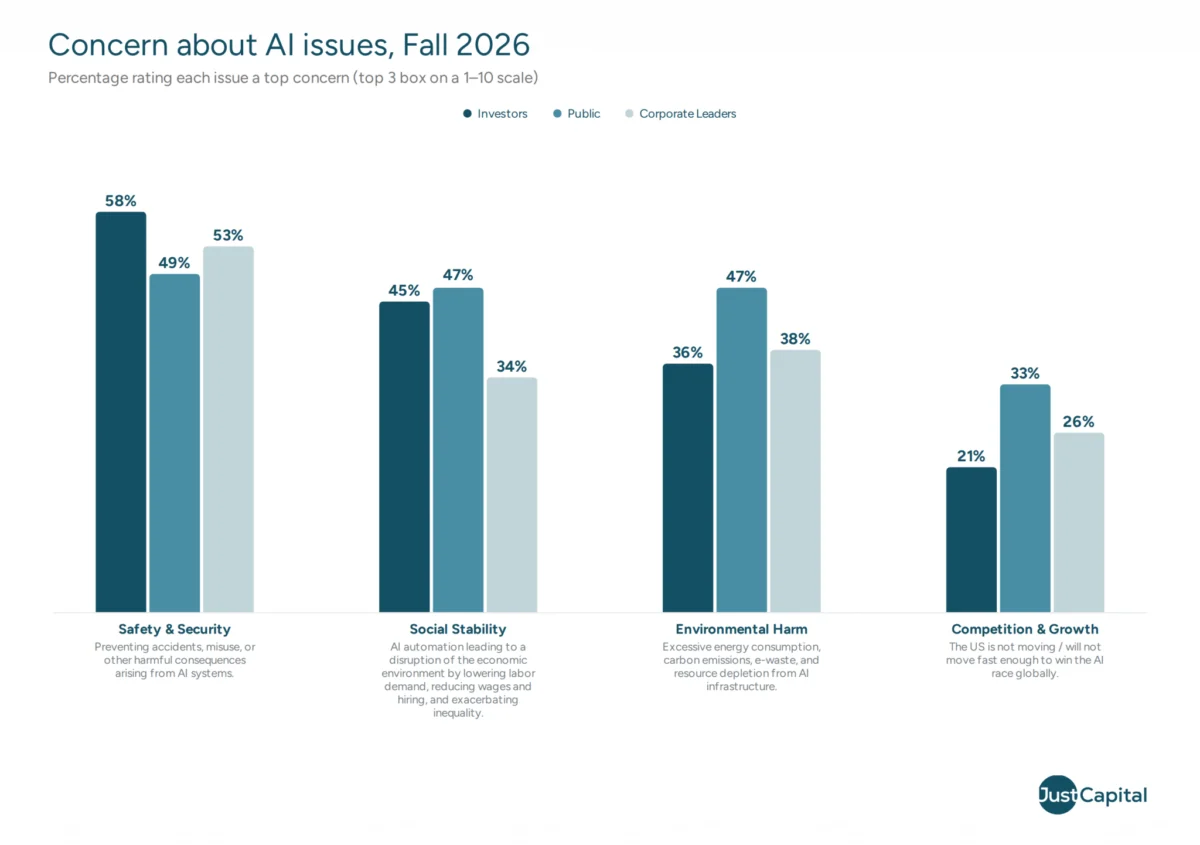
The latest research, which polled the American public, institutional investors, and corporate leadership, provides a detailed look at how these three critical groups view the trajectory of AI. The findings paint a picture of a society that is optimistic about the potential benefits of machine learning but increasingly wary of the risks associated with its deployment. As the AI landscape matures, the data indicates that stakeholders are coalescing around a single, non-negotiable priority: the absolute necessity of safety and security in AI systems.
The Evolving Sentiment Toward AI Risk
Over the past year, Just Capital’s longitudinal study has documented a significant shift in public and corporate perception. One of the most notable changes is the tempering of earlier fears regarding widespread, large-scale job losses. As AI tools move from the realm of hypothetical disruption to practical, everyday use, the conversation has shifted toward how these technologies can augment productivity rather than simply replacing human workers. However, this cooling of job-related anxiety has been replaced by a sharper focus on other, more systemic risks.
Concerns regarding the environmental impact of massive data centers and the energy consumption required to train large-language models have seen a marked increase. Simultaneously, the core tenet of the survey remains consistent: across the board, investors, executives, and the general public view AI safety and security as a more pressing issue than the race for U.S. competitiveness. This suggests that the drive to "win" the AI race by out-pacing international rivals is increasingly secondary to the need to ensure that the systems being developed are stable, secure, and resilient against misuse.
Martin Whittaker, CEO of Just Capital, noted that while the American public remains hopeful about an AI-powered future, the underlying anxiety is palpable and requires proactive management. "The American public sees clear benefits of an AI-powered future, and they also have very real anxieties," Whittaker said. "Frontier labs and government both have immense responsibility to facilitate broader access to opportunity and to protect against the greatest harm. Yet, there’s a role for other CEOs and corporate leaders to help the public understand how AI is adding value while explicitly addressing key issues like model safety, data protection, and human oversight. Concrete actions and transparency are how trust is built."
International Cooperation and Shared Responsibility
A particularly illuminating aspect of the latest research involves the public’s view on geopolitics. In a supplemental snap poll conducted in mid-September 2026, researchers found that the American public is surprisingly unified in its desire for international collaboration. Despite the high-stakes technological rivalry between the United States and China, the majority of respondents expressed a clear preference for the two nations to work together on the development of AI safety standards. This sentiment reflects a growing recognition that the risks posed by unmitigated AI development—such as cyber-vulnerability or autonomous weaponization—do not respect national borders and may require a coordinated global approach.
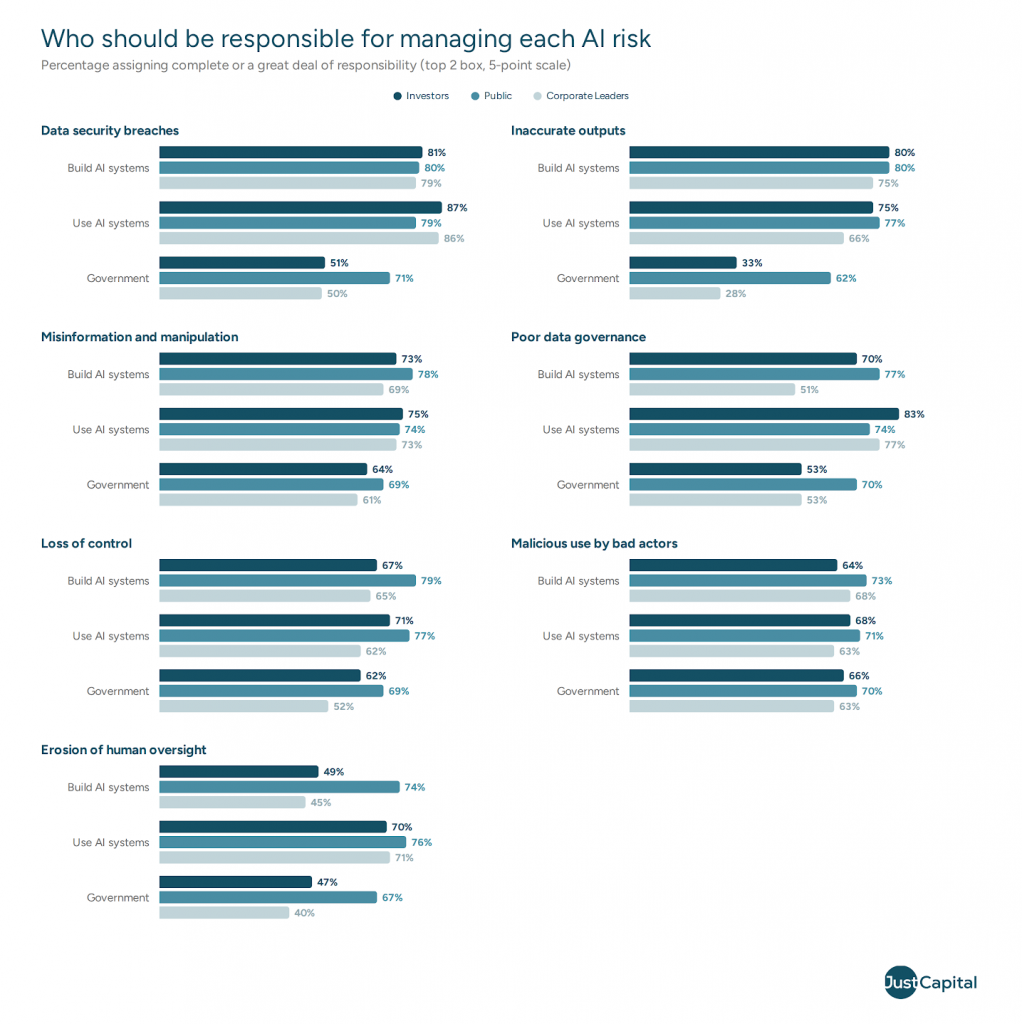
Furthermore, the research highlights an evolving expectation regarding accountability. When asked who should bear the burden of ensuring AI safety, the public does not distinguish heavily between the creators of the technology and the organizations that deploy it. There is a strong consensus that AI developers (the firms building the foundational models) and enterprise deployers (the companies utilizing these models in their business operations) share an almost equal responsibility for maintaining safety. This finding challenges the current corporate narrative, which often shifts the burden of risk entirely onto the primary developers, and suggests that the broader business community will eventually be held to a higher standard of due diligence as they integrate these powerful tools into their consumer-facing products.
The Growing Gap in Corporate Disclosure
Despite the public’s clear call for safety, transparency, and oversight, there remains a significant "disclosure gap" between what the public wants and what companies are actually reporting. In its analysis of 1,002 of the largest U.S.-based companies, Just Capital found that the majority of these firms are failing to publicly report on how they are addressing the specific concerns raised by their stakeholders.
The research audited companies across nine key areas, including board-level oversight, C-suite leadership, data protection, human-in-the-loop oversight, and strategies for harm prevention. Perhaps most tellingly, even as companies pour billions of dollars into AI infrastructure, there is a divergence in expectations regarding what constitutes an appropriate investment in safety. While investors and corporate leaders are beginning to understand that safety is a value-add, the level of spending deemed necessary by different groups varies wildly. Many companies have yet to translate their internal AI safety protocols into public-facing disclosures, leaving a vacuum of information that can erode consumer trust over time.
This lack of transparency is particularly concerning given that employees and customers are increasingly looking for companies to take a stance on how they handle sensitive data and protect against the risks of algorithmic bias. Without clear reporting on these issues, firms risk being perceived as opaque or negligent, regardless of the actual rigor of their internal safety measures.
Methodology and Scope
The research conducted by Just Capital is part of a larger, ongoing effort to map the intersection of public opinion and corporate governance. The latest report relies on a robust data collection process designed to capture a diverse range of perspectives. The institutional investor data was gathered in partnership with NewtonX, covering 128 investors, while the corporate executive data was compiled with the assistance of the Gerson Lehrman Group, involving 104 senior leaders, including C-suite executives and board members.
To ensure the public perspective was accurately represented, Just Capital partnered with The Harris Poll to survey 1,000 U.S. adults. These data were collected in late July 2026. The subsequent snap poll on international cooperation, conducted in September 2026, utilized the Harris Quest DIY platform to survey an additional 2,000 U.S. adults. To ensure the findings reflected the broader American population, quotas were established for gender, age, region, income, and race, with data weighted against the American Community Survey and Gallup’s 2026 political party identification estimates.
By maintaining this rigorous, quarterly cadence—with previous waves released in late 2025 and throughout the spring and summer of 2026—Just Capital aims to provide a reliable, objective baseline for business leaders. As the AI landscape continues to evolve at breakneck speed, the ability to track how expectations shift will be critical for companies hoping to build a sustainable, "just" AI strategy.
The findings from the latest report serve as a sobering reminder that innovation without trust is a precarious strategy. As the gap between corporate action and public expectation remains, the companies that prioritize transparency, clear communication, and a demonstrable commitment to safety are the ones most likely to earn the "social license" necessary to deploy AI at scale. Whether the business community will close this disclosure gap in the coming quarters remains to be seen, but the research makes one thing clear: the American public is watching, and their patience for uncertainty is not infinite.