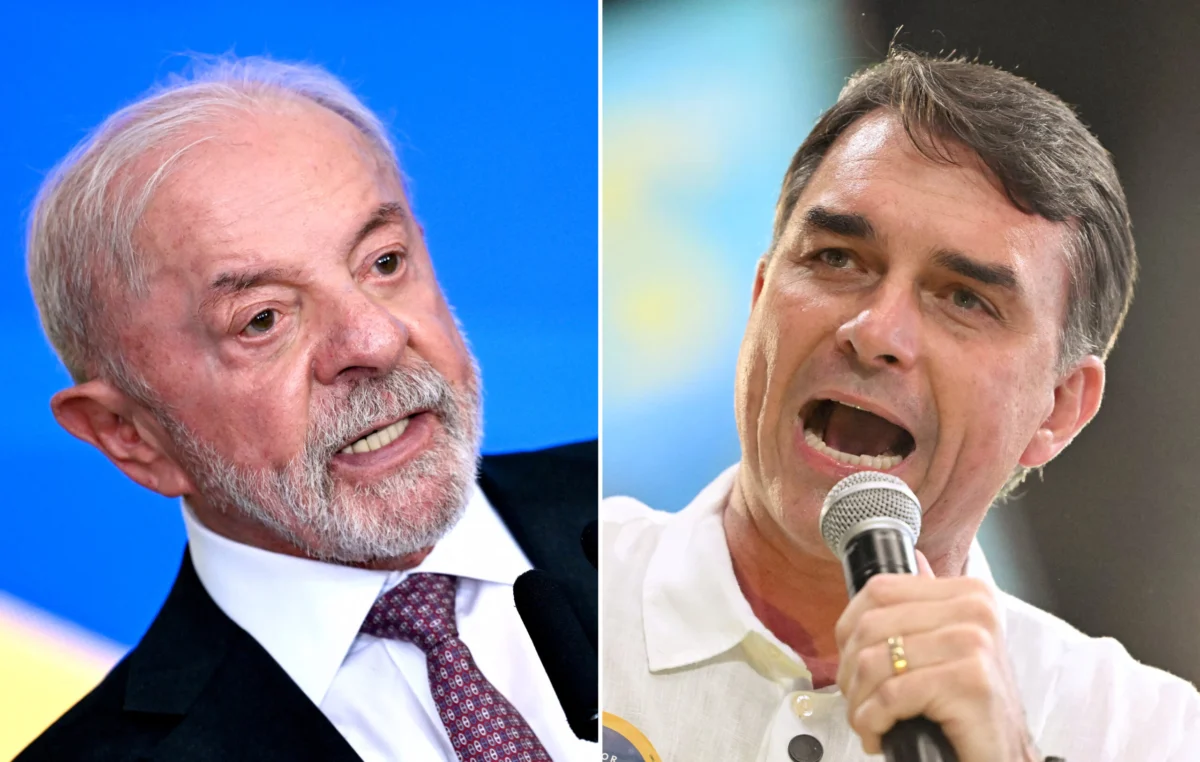
As Brazil prepares for the first round of its high-stakes presidential election, Wall Street financial institutions are aggressively positioning themselves for starkly divergent market outcomes depending on the results of the fiercely contested race. The election pits the incumbent 80-year-old leftist leader, Luiz Inacio Lula da Silva, against 45-year-old right-wing contender Flavio Bolsonaro, the son of former President Jair Bolsonaro. With opinion polls signaling a remarkably tight race, international investors and macroeconomic strategists are closely scrutinizing every shift in voter sentiment, recognizing that the outcome will fundamentally dictate the future direction of Latin America’s largest economy.
The central dilemma driving investor sentiment centers on divergent economic philosophies and fiscal pathways. "The Brazil trade is: Does Lula win or does Bolsonaro win?" said Fernando Marengo, chief economist at Black Toro Global Investments, capturing the binary nature of the market’s current focus. In short, if Bolsonaro secures a victory, Wall Street anticipates a broad-based rally spanning the country’s sovereign bonds, currency, and equities, driven by expectations of stricter fiscal discipline and market-friendly reforms.
Over the past few months, as Flavio Bolsonaro has steadily closed the gap and surged from behind in recent polling data, Brazilian domestic equities have tracked his momentum upward. Institutional heavyweights have taken note of the correlation. In a recent note to clients, analysts at JPMorgan highlighted that the MSCI Brazil index "rose by 0.25% on average each day that Flavio gained in the polls."
Prediction markets have similarly reflected this shifting political landscape. Data from Kalshi currently shows Flavio Bolsonaro favored by prediction markets to win roughly 60% of the vote, compared to 39% for Lula da Silva. However, because formal prediction markets are legally prohibited within Brazil itself, these digital platforms may not fully capture the nuanced reality of local voter sentiment on the ground. Addressing this disconnect, Richard Lapper, senior advisor at Aurora Macro Strategies, noted in a client advisory that "the balance has shifted toward Flavio over the past month, but not nearly as far as the prediction markets are pricing."
The looming question for international investors and domestic economists alike remains the path of public finances. Bolsonaro has emerged as the clear favored candidate of the financial markets primarily because he has campaigned on a platform promising strict fiscal discipline—an imperative that many economists argue Brazil desperately requires to stabilize its long-term economic trajectory. Public sector debt-to-GDP currently stands at 81.9%, marking a notable 10% increase since Lula returned to office for his current term.
Achieving fiscal stability will require difficult political choices and structural changes. "We need a 3-3.5% fiscal adjustment to stabilize the public debt in relation to GDP," explained Leonardo Porto, head economist for Brazil at Citi. Porto emphasized that this structural correction cannot rely solely on temporary, one-off measures, such as the privatization of state-owned assets. "Brazil needs a permanent fiscal adjustment," he added.
Implementing a permanent fiscal adjustment translates directly to politically sensitive measures such as cutting public spending or raising taxes—either of which will prove exceptionally difficult to pass through the legislature. The structural rigidity of Brazil’s budget presents a formidable hurdle, with roughly 90% of government expenditures classified as mandatory, and a significant portion explicitly mandated by the federal constitution. Furthermore, according to data from the Organisation for Economic Co-operation and Development (OECD), Brazil’s tax burden already sits at 32% of GDP, representing the highest level in all of Latin America, even as its broader prospects for long-term economic growth remain subdued.
Despite these structural hurdles, Wall Street analysts maintain that the potential upside for financial assets is substantial if a Bolsonaro administration manages to implement what JPMorgan describes as a "robust reform agenda."
To gauge what might lie ahead, financial analysts frequently look backward to the reform record established under Flavio’s father, former President Jair Bolsonaro, during his administration from 2016 to 2020. During that period, Bolsonaro Sr. successfully championed and passed a landmark pension reform package that ultimately saved the government hundreds of billions of dollars. That legislative overhaul imposed a mandatory minimum retirement age of 65 for men and 60 for women. Prior to those reforms, male workers could retire at any age after completing 35 years of service, while women could retire at any age after 30 years of service, resulting in average actual retirement ages of just 56 for men and 53 for women.
The market reaction during that earlier period of structural reform offers a blueprint for what optimists expect today. According to JPMorgan’s historical analysis, during that prior reform cycle, Brazil’s 2-year sovereign yields plummeted close to 4.7%, while the broader domestic equity market delivered a stunning cumulative gain of 130%.
Looking ahead to a potential second wave of structural reforms under a new Bolsonaro administration, JPMorgan analysts project that domestic interest rates could eventually decline toward their neutral level, estimated at 6% in real terms and 10% in nominal terms. Under such a favorable macroeconomic scenario, analysts suggest that "we would be thinking about the MSCI Brazil upside potential between 21% and 41%." Furthermore, they estimate that the market’s forward price-to-earnings (P/E) multiple could expand from its current level of 8.6 up to as high as 13.3, a valuation threshold not seen since 2020.
Foreign exchange markets are similarly positioned for a sharp divergence based on Sunday’s results. JPMorgan characterizes the potential currency outcome as strictly "bimodal," projecting that the USD/BRL exchange rate would shift toward 5.50 if Lula secures victory, contrasted with an appreciation toward 4.90 if Bolsonaro wins the presidency.
Beyond the executive office, control of the federal legislature will play a decisive role in shaping the country’s economic future. The ongoing election cycle encompasses the entirety of the lower house of Congress as well as one-third of the upper house of the Senate. The ultimate political composition of this new legislature will serve as a critical determining factor regarding the incoming administration’s practical ability to negotiate and pass complex structural reforms.
Reflecting on broader regional trends, Black Toro’s Marengo points out that other recent political victories by pro-business candidates across Latin America have consistently triggered substantial upward re-pricings in local stocks, sovereign bonds, and currencies. He notes, for instance, that Colombia’s risk premium compression "was about 200 points, and it was one of the stock markets that rose the most—something similar to what happened in Peru." At the same time, Marengo offers a note of caution to investors, emphasizing that a meaningful portion of these optimistic expectations may already be priced into Brazilian asset valuations.
As the first round of voting approaches, market participants remain mindful of external macroeconomic vulnerabilities. As with any emerging market asset class, a primary systemic risk remains the trajectory of rising global interest rates. For Latin America in particular, regional weather patterns—most notably the El Niño phenomenon—pose an ongoing threat to agricultural production, which could potentially result in significant crop damage for the region’s major agricultural exporters. If neither presidential candidate manages to secure more than 50% of the valid votes cast on Sunday, the race will proceed to a high-stakes runoff election scheduled for October 25.