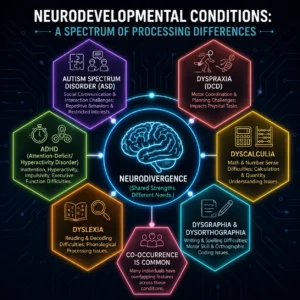
Special education teachers are facing an unprecedented operational reality in their classrooms, driven by a significant rise in students arriving with brand-new autism and ADHD diagnoses. Educators are tasked with some of the most demanding work in the education sector, yet the students sitting in special education classrooms today look markedly different from those of just a few years ago. Many of these young people are arriving with years of unmet educational and emotional needs already behind them, rendering traditional autism teaching strategies inadequate for today’s complex caseloads.
This challenge is not a reflection of a lack of effort among teachers, who care deeply about their students’ outcomes. Instead, the modern wave of late diagnoses is reshaping special education environments in ways that standard teacher training programs rarely anticipated. As a result, flexible, practical teaching strategies are no longer optional for educators trying to bridge the gap between historic guidelines and current classroom dynamics.
How Late Diagnoses Are Changing Special Ed Classrooms
Older students are increasingly entering special education programs with fresh diagnoses coupled with years of learned coping mechanisms. For instance, a teenager identified with autism at age fifteen did not suddenly develop a different neurology; rather, they spent years developing behavioral workarounds. They learned how to mask their symptoms and figured out how to survive in school environments that were never originally built for them, often at a significant personal cost.
This dynamic has profound implications for Individualized Education Program (IEP) development. Goals written specifically for a newly identified six-year-old do not translate cleanly to a twelve-year-old who has spent half their life developing alternative strategies to navigate academic and social settings. Consequently, teachers and case managers are forced to adapt mid-stream, rewriting goals, rethinking classroom accommodations, and actively rebuilding trust with students who may harbor deep skepticism that the school system can actually support them.
The most effective teaching strategies for these students begin with a foundational posture shift. Educators are encouraged to ask what the student already knows about their own learning processes, as student self-awareness is frequently far more sophisticated than what is documented in a cumulative file. Building IEP goals around genuine skill gaps, rather than relying solely on developmental benchmarks written for much younger children, allows educators to create more meaningful pathways forward.
Structured teaching frameworks remain vital, particularly when adapting visual supports and predictable routines for older learners. While older students may initially resist interventions that feel overly elementary, they still benefit immensely from the clarity, predictability, and structure that these systems provide.
Autism Teaching Strategies That Work When Resources Are Thin
When school district budgets face cuts, support staff are frequently the first resources to disappear. Instructional aides get reassigned to different departments, and professional development opportunities evaporate. Individual teachers and case managers are left holding the responsibility for a student population that continues to grow in both size and complexity.
While underfunding does not excuse poor educational outcomes, it clearly illustrates why educators urgently require strategies that can function effectively without perfect conditions. Several practical approaches continue to hold up under intense professional pressure. Predictable transitions, such as offering brief verbal or visual cues prior to any activity change, can successfully reduce anxiety-driven behaviors without requiring the presence of additional staff.

Similarly, low-tech visual supports—including printed schedules, task cards, and anchor charts—cost almost nothing to produce and significantly reduce the cognitive load for students managing autism or ADHD. Choice architecture, which involves offering students two structured options instead of open-ended choices, helps build genuine student agency while maintaining essential classroom order.
Another critical approach involves prioritizing emotional regulation before attempting direct instruction. A student who is currently caught in a fight-or-flight response is biologically incapable of learning. Dedicating just two minutes to intentional co-regulation before introducing academic demands routinely saves far more instructional time than it consumes.
These strategies are specifically designed to remain sustainable, even in school districts where budgets are heavily constrained and support staff are stretched to their limits. Furthermore, free and low-cost assistive technologies can offer additional support without requiring dedicated budget lines or complex IT department interventions. For classrooms serving students with both autism and ADHD, behavioral intervention strategies targeting executive function and attention regulation can travel effectively across both student populations.
What Families Need to Know About IEP Rights Across School Settings
Parents of students with special needs frequently discover that the IEP their child received in a public school setting does not automatically transfer to a private placement. Depending on the specific institution, some private schools are legally required to provide special education services, while others are entirely exempt. These obligations typically depend on whether the placement was initiated by the local school district or by the family, as well as whether the private school receives federal funding. Most families remain unaware of these distinctions until a conflict arises.
Case managers and special education teachers are frequently the primary professionals families turn to when these complex questions emerge. Possessing a solid grasp of the basics—including the legal differences between the Individuals with Disabilities Education Act and Section 504 protections, alongside methods for properly documenting unmet needs—empowers families to advocate more effectively for their children. Official guidelines from the federal education department continue to serve as a foundational starting point for both educators and parents seeking clarity regarding these legal rights.
Autism Teaching Strategies for the Whole Student, Not Just the Diagnosis
A clinical diagnosis serves merely as a starting point rather than a complete definition of a student. Because autism and ADHD exist on broad, highly varied spectrums, no two students sharing the same diagnostic label will require identical support systems. Late-diagnosed students carry an additional layer of complexity: a deeply personal history of navigating academic environments without support, which has fundamentally shaped their identity and self-perception.
Consequently, teaching strategies tailored for older students must account for this personal history. Emotional safety, relevance, and personal autonomy matter just as much as instructional design. Strategies built strictly on compliance and behavioral control tend to fail when applied to students who have already spent years performing compliance merely as a survival mechanism.
Educators are urged to reframe their approach by moving away from asking what is wrong with a student, and instead asking what the student has been carrying and how the school can help them set some of that weight down. While this shift in perspective does not make the work any easier, it introduces a level of honesty that is far more likely to produce lasting, meaningful results.
As special educators look toward the future, the reality of managing late diagnoses requires ongoing mid-stream adaptation, ensuring that students are met exactly where they are rather than where a standard developmental chart dictates they should be. With underfunded systems placing the burden squarely on individual educators, flexible teaching strategies and a clear understanding of legal rights remain essential tools for sustaining effective special education practices.