Miami Beach played host this week to the inaugural Jupiter Festival, a fresh addition to the crowded media, entertainment, sports, and advertising conference circuit. Founded by Cannes Lions alumnus William Mellis and former Fox Sports Media Group CMO Eric Markgraf, the four-day event spanned three stages and brought together industry leaders to debate the future of the attention economy, creator ecosystems, sports rights, fandom, and the disruptive impact of artificial intelligence on creative production and content discovery.
Backed by heavyweight industry names—including Art Basel parent MCH Group, which holds a 20% stake in the venture, alongside Cannes Lions, YouTube, Boston Consulting Group, and the Interactive Advertising Bureau (IAB)—Jupiter arrives with high ambitions. The event organizers curated a high-profile speaker lineup featuring notable figures such as MS NOW Morning Joe co-host Joe Scarborough, former Paramount president Wendy McMahon, Fox One boss Pete Distad, former 60 Minutes executive producer Bill Owens, and former LVMH North America CEO Anish Melwani.
On the surface, the festival enters a competitive arena, looking very much like a challenger to Miami’s established Possible conference. That event made a major splash when it debuted in 2023 with a keynote-heavy lineup anchored by billionaire entrepreneur Elon Musk. Under the leadership of Hyve Group’s Beyond Ordinary Events and Christian Muche, Possible has grown rapidly, tripling its footprint and reporting a 55% year-over-year increase in sponsorship revenue for its latest iteration.
While acknowledging the impressive trajectory of Possible, Mellis sought to draw a distinction between the two events. He described Possible as primarily "a buyer-seller media marketplace." Although it shares certain structural adjacencies with Jupiter, Mellis noted that his festival features a distinctly differentiated audience and bespoke programming tailored specifically toward the broader evolution of content.

Marketers Are Split During Conference Season
The timing of Jupiter’s debut created an immediate scheduling conflict for marketers and agency executives, overlapping directly with Advertising Week New York, which ran from October 5 to 8 at The Penn District in Manhattan. The simultaneous scheduling instantly sparked industry-wide questions about whether Jupiter was intentionally positioned to capture a slice of that massive migratory crowd.
However, festival leadership firmly insisted that the scheduling clash was a matter of circumstance rather than a deliberate strategic maneuver. Mellis and Markgraf explained that this specific autumn window was the only viable timeframe available for them to successfully secure the necessary real estate at the Miami Beach Convention Center. Looking ahead, the co-founders stated their explicit intention to avoid any calendar overlap in future years.
While conceding that Jupiter is actively competing for sponsorship dollars and intellectual mindshare against other established fixtures on the circuit, Mellis emphasized that the event attempts to carve out a unique niche. By zeroing in explicitly on the intersections of media, entertainment, and sports, the festival’s underlying philosophy was neatly encapsulated by its temporary Wi-Fi password for attendees: FutureOfContent.
Mellis noted that the primary goal is to ignite critical industry debates regarding the directional trajectory of the sector and to tackle head-on the systemic challenges currently confronting professionals across the board.

Ultimately, the inaugural Jupiter Festival recorded a total verified attendance of 2,231 participants, with approximately 30% of the crowd comprising C-suite executives or higher-ranking decision-makers. Although an initial, placeholder webpage on the B2B event platform Luminik had optimistically projected a turnout of 5,000 attendees, Mellis and Markgraf maintained that the actual numbers aligned closely with their internal, realistic expectations for a launch year.
Markgraf remarked that the leadership team always anticipated drawing between 2,000 and 3,000 professionals, calling anything above the 2,000 threshold a definitive success for a brand-new festival. Executives declined to disclose how many participants purchased full-price passes or to define concrete attendance targets for the subsequent year’s gathering.
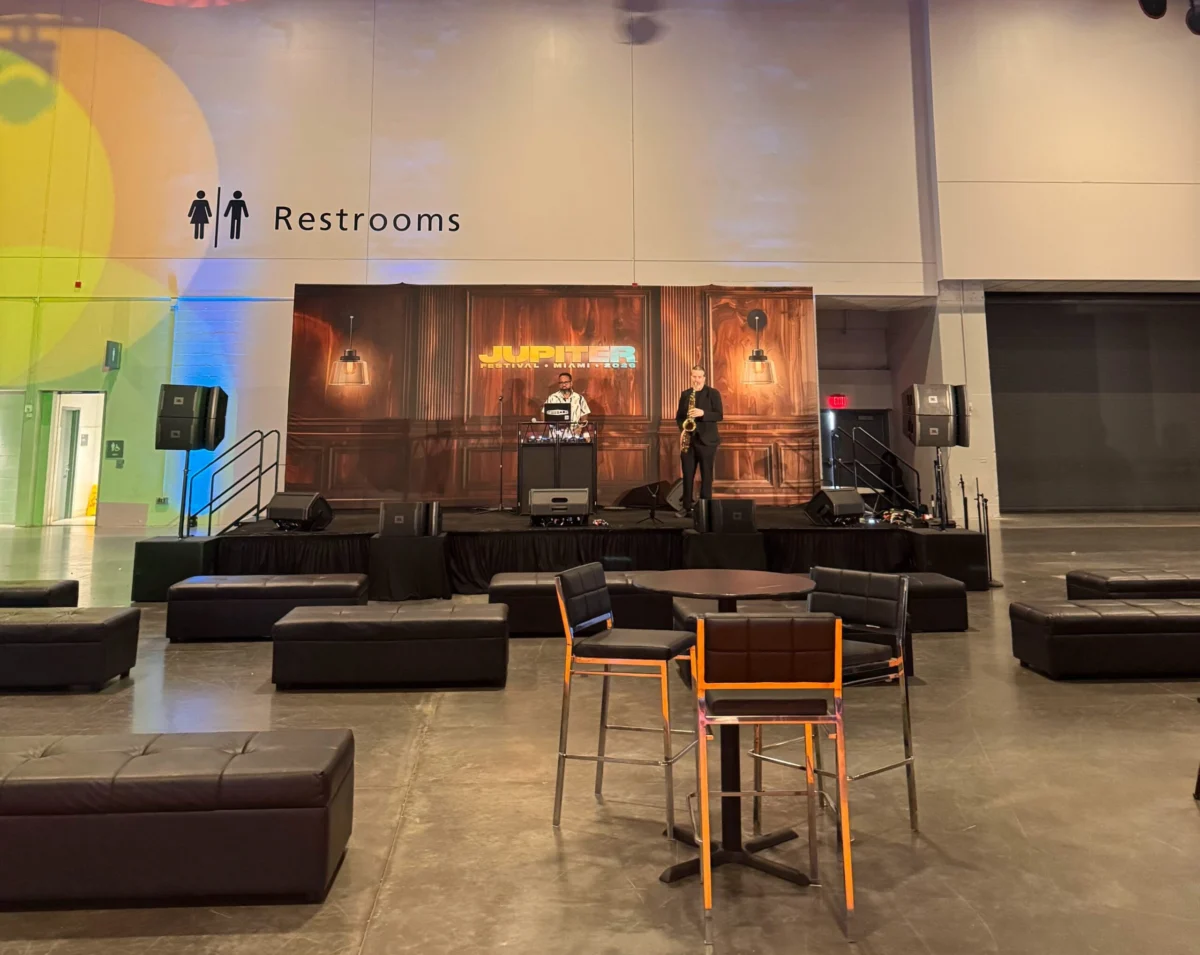
Inside the expansive, windowless halls of the Miami Beach Convention Center, however, the palpable industry buzz did not always match the lofty billing. By mid-morning on Wednesday—the opening full day of official programming—early arrivals encountered a nearly deserted lobby. On the exhibition floor, a live jazz duet performed to rows of vacant seats situated near the restroom corridors, while an enthusiastic emcee took to the stage as a sparse stream of attendees trickled in holding morning coffee cups.
While foot traffic noticeably improved later in the afternoon and into Thursday, several attendees who spoke on the condition of anonymity observed that the venue footprint felt oversized relative to the headcount. One participant remarked that the physical setup was undeniably ambitious. Another panel speaker shared that they had been initially briefed to prepare for an audience numbering in the hundreds, only to find a few dozen people seated before them for their onstage session.

Conversely, some participants noted silver linings in the intimate scale. One attendee pointed out that the lower volume of crowds actually fostered deeper, more productive, and less hurried conversations among peers.
Cultivating the right psychological and spatial environment for meaningful dialogue was a core priority for Mellis and Markgraf during the conceptualization phase of the festival. Mellis explained that the entire show was fundamentally engineered for networking from the ground up, noting that significant design and psychological principles went into shaping the venue layout. He added that while professionals often claim to attend conferences primarily for the content, the true driving force remains relationship-building, networking, and the establishment of long-term business partnerships.
Built for Content
Observers also noted that the physical layout and design of the event space were heavily optimized to generate broadcast-ready content. A prominent, imposing podcasting studio and stage occupied a central position on the conference floor, serving as a backdrop where attendees paused for selfies and creators filmed street-style video interviews in front of a pop-up gallery featuring works by artist Justyn Farano.
Meanwhile, several of the festival’s foundational backers and institutional sponsors—such as MCH Group, BCG, and Cannes Lions—maintained a relatively low profile on the ground. YouTube, however, made its corporate presence felt strongly, hosting a series of networking happy hours on the rooftop of the nearby Unframed Marriott Bonvoy Hotel while also underwriting the venue’s exclusive VIP lounge area. On the main exhibition floor, traditional media outlets like PBS and Sports Illustrated, alongside adtech firm Transmit, maintained modest activation booths.

While Mellis and Markgraf declined to comment on specific minimum spending thresholds or average corporate investments required for this year’s sponsors, they reported robust financial momentum for the future. According to the co-founders, sponsorship commitments already secured for the 2027 installment have outpaced total sponsor revenue from this inaugural event by 250%. They cited one notable corporate partner that agreed to a twelvefold increase in its financial allocation, though current-year revenue figures were withheld.
Overall, organizers described the cumulative feedback regarding the first Jupiter Festival as overwhelmingly positive, with Mellis asserting that the event manifested precisely according to their strategic vision.
Looking forward, organizers confirmed that the Jupiter Festival will return to the Miami Beach Convention Center next year, with grander aspirations to expand its footprint into additional satellite venues across the city. Mellis hinted at plans to elevate the entertainment factor by introducing new strategic partnerships and potentially establishing an industry awards program.
Concluding his remarks on the long-term vision for the enterprise, Mellis stated that his primary objective is to build an indispensable industry fixture, ensuring that within five years, anyone operating within or relying upon the content ecosystem considers the festival an absolute must-attend destination.